




A bare concrete basement containing a gray gas furnace with metal ductwork and a vertical flue pipe, lit by a single hanging bulb.

Furnace Installation in Choteau, MT

Tell us about the job

Takes about a minute. No obligation.

New system or replacementFurnace or heatingTeton County, MT
Step 1 of 2

What ZIP code is the job in?

Natural gas in Montana ran $7.77 per million Btu in 2024. That's the fuel cost, before you even factor in how long the furnace has to run to keep a Choteau house warm. A furnace that wastes gas burning it is spending more of that money every time it kicks on. The efficiency rating on the unit you install determines how much of that $7.77 turns into heat in your house and how much goes up the flue. Over a long winter, that difference runs through a lot of gas.

10 months
September through June, your furnace is on duty
14°F
the average winter night it heats against
80% AFUE
the federal minimum any new unit must meet
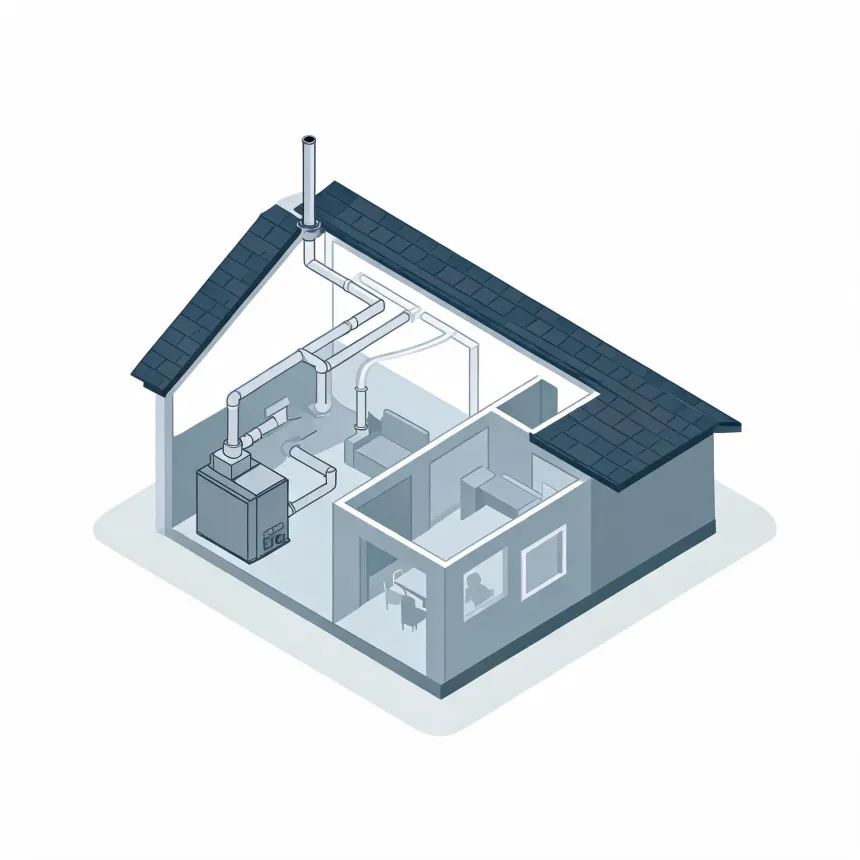
Isometric cutaway illustration of a single-story house showing interior rooms, a furnace unit with connected ductwork, and a flue pipe extending through the dark shingled roof.
Your furnace works hardest from October through April.

NOAA nClimDiv, 1991–2020 normals

Gas heats more homes in Teton County than anything else, 43.1 percent of them.

Replacing a gas furnace with another gas furnace means the gas line, meter and venting are already there.

Ten months of heat and nights averaging 14°F wear a furnace out faster here

Heat runs September through June
Winter nights average 14°F
Climate zone 6B

Teton County falls under zone 6B, a cold, dry climate zone in the 2021 energy code. Any furnace installed here has to meet the federal minimum for that kind of equipment, not a lower bar for a milder place. Right now that floor is 80 percent efficiency, meaning at least 80 cents of every dollar of gas has to become heat in the house. That minimum is changing. Furnaces built on or after December 18, 2028 will have to hit 95 percent. A furnace installed today under the current rule can still go in, but the rule itself is about to move.

The efficiency rating is what decides your gas bill

You're already paying $7.77 per million Btu for gas in this state. The efficiency rating on the furnace you choose decides how much of that turns into heat and how much you lose up the flue, all winter long. That's worth weighing now, while you're picking the unit, not after it's installed.

Find a contractor
A gas furnace with attached ductwork, gas piping, and condensate lines installed in a concrete-block basement.

Half the homes here were built in 1962 or earlier, and that changes the sizing question

Half the homes in Teton County were built in 1962 or earlier. A house that age was built for a furnace sized and vented differently than what's sold today, and the ductwork may not match what a new unit expects either. Getting the size right matters more than matching whatever is coming out. A furnace too big for the house cycles on and off instead of running steady. One too small can't keep up on the coldest nights of winter. Whoever installs it should size it to the house you have now, not to the equipment that happened to be there before.

The unit is only part of what you're paying for

The furnace itself is one line on the bill. The rest is the work: sizing the system to the house, running or adapting the ductwork, venting it correctly, and setting it up so it actually hits the efficiency rating printed on the box. A cheaper furnace installed wrong will cost more to run than a better one installed right.

Matching parts costs less than mismatched ones

A furnace has to work with the ductwork, the vent, and the thermostat already in the house. When those pieces don't match what the new unit expects, something has to be modified or replaced to make it work. Finding that out before the install, not during it, is what keeps the job from growing once it starts.

An unfinished basement featuring a forced-air furnace, exposed wooden ceiling joists, bare concrete walls, and miscellaneous items including cardboard boxes and coiled cables on the floor.

A high-efficiency gas furnace would save about $80 a year to run in Teton County compared with a gas furnace.

  • A high-efficiency gas furnace$380 a year
  • A gas furnace$460 a year

Estimates for a typical Teton County home, from EIA household energy data, Montana fuel prices and NOAA climate normals. Your home will differ.

Installation starts with the old furnace coming out, along with anything about the venting or ductwork that doesn't match the new unit. The new furnace gets set on its base, the gas line and venting get connected, and the ductwork gets tied in or adjusted to fit. Once it's hooked up, the contractor fires it and checks the flame, the temperature rise through the plenum, and the gas pressure against what the manufacturer specifies. That last step is where the efficiency rating on the box either holds up or doesn't. A furnace burning too rich or too lean, or starved for airflow because a duct run is undersized, won't hit the number it was rated for no matter how good the unit is. The furnace gets tested running, not just checked sitting still, before the job is called done.