Heat pump vs propane heat in Fort Benton, MT
Fill out one formWinters are hard in Chouteau County, and if your furnace is on its way out, you're probably weighing a heat pump against another propane system before the cold sets in. That's a real decision, with real differences for a house out here, and it's worth getting right rather than fast. The harder part is usually everything around it: finding a contractor who installs both and will give you a straight answer instead of a sales pitch, calling around Fort Benton and beyond for quotes, explaining your furnace and your house to each one, then trying to compare bids that aren't even for the same equipment. You can skip that part. Tell us what you're working with and what you're deciding between, and you'll be matched with one licensed local contractor who installs heating systems in this county and knows what holds up through a Chouteau County winter. No list of companies to sort through, just one call to make.
A propane furnace is the better bet for most houses around Fort Benton. Winters here bring long stretches well below freezing, and a heat pump loses heating capacity as the outdoor temperature drops, so on the coldest nights it has to lean on electric backup heat to keep the house warm. Propane doesn't have that problem. It burns just as hot in January as it does in October, so the furnace keeps up no matter how far the temperature falls. Some homes pair a heat pump with a propane furnace as backup, letting the heat pump handle milder days and the furnace take over when it gets cold, but running propane alone is simpler and it's what most houses in the area already have the lines and tank for. Either way, the equipment has to be sized for Chouteau County's winters, not an average one.




What will heat your Fort Benton house through a Montana winter?
Winter nights average 12°F
Winter nights here average 12°F, and a heat pump has to work hardest right when it has the least to give, leaning on backup heat to make up the difference.
Heat runs September through June
Heat runs about ten months a year in Chouteau County, so whatever system goes in has to handle far more than a short cold snap before spring lets up.
42.7% of homes heat with propane
42.7% of homes here already heat with propane, more than any other fuel, which says something about what holds up against this county's winters.
NOAA nClimDiv 1991-2020 · ACS 2020-2024
How a Propane Furnace Keeps Up
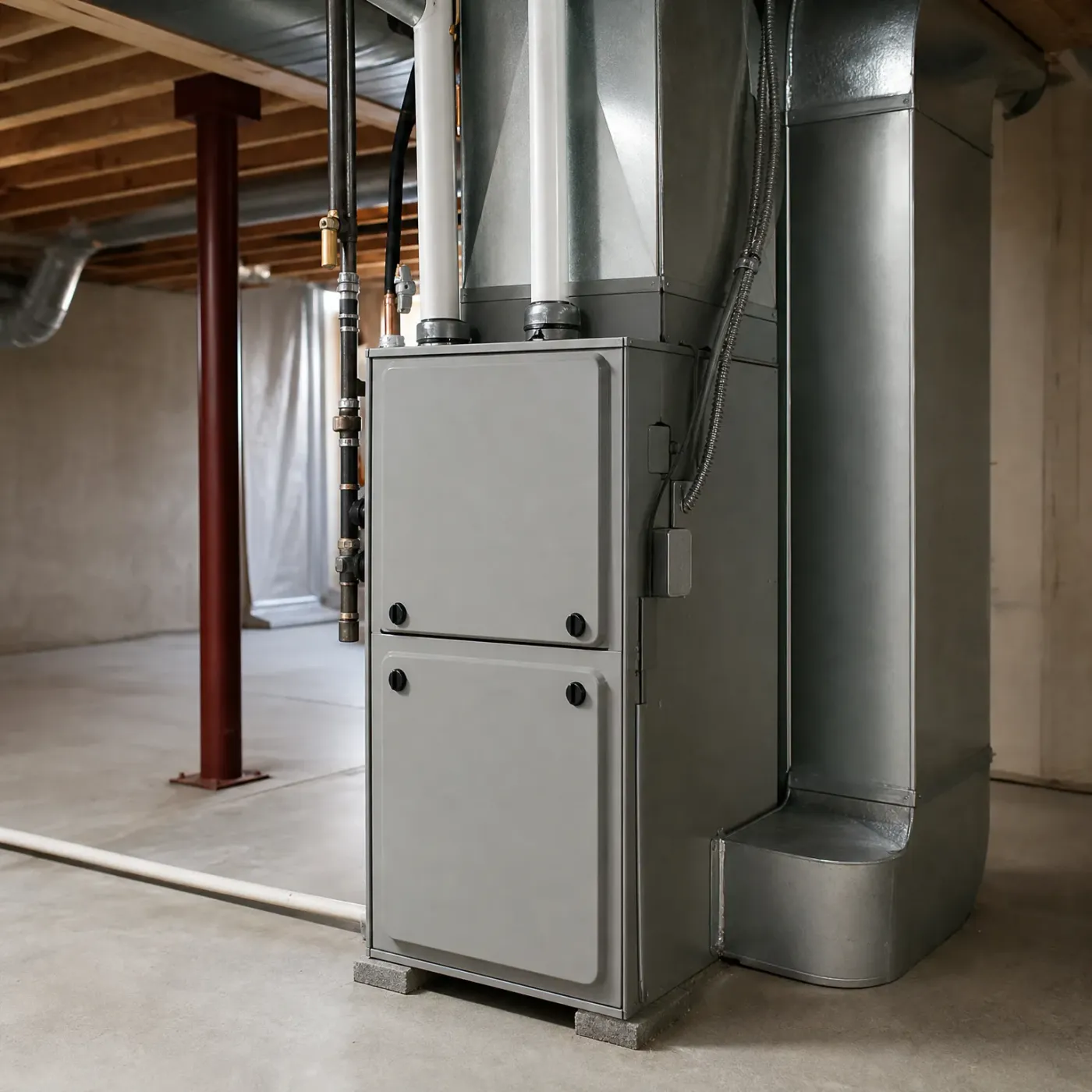
- A propane furnace fires the burner, heats the exchanger, and pushes warm air out through the same ducts a heat pump would use.
- A heat pump moves heat from outside air instead of burning fuel, which is why its output drops as the outdoor temperature falls.
- Below a certain outdoor temperature, most heat pumps switch to backup electric resistance heat, which costs more to run than the pump itself.
- A propane furnace produces the same heat output at 12°F as it does at 40°F, since it's burning fuel, not pulling heat from the air.
- Furnace output is rated in BTUs, and that number doesn't change with the weather the way a heat pump's capacity does.
- A gas valve, igniter, and inducer motor work together to start a propane furnace burner cycle each time your thermostat calls for heat.
A propane furnace works the same way no matter what the thermometer says outside. Your thermostat calls for heat, the gas valve opens, the igniter lights the burner, and the inducer motor pulls combustion gases through the exchanger and out the vent. Warm air moves across that hot exchanger and a blower pushes it through your ducts. None of that depends on how cold it is outside. At 12°F the furnace burns the same amount of fuel and makes the same heat as it would at 40°F, because it's making heat from flame, not borrowing it from the air.
A heat pump works differently. It collects heat from the outdoor air and moves it inside, and the colder that air gets, the less heat there is to collect. Its output falls as the temperature drops, which is backward from what a Chouteau County winter asks of it. Past a certain point outside, most heat pumps switch over to electric resistance heat to make up the difference, and that backup heat costs more to run than the compressor does on its own.
The parts inside a furnace, the gas valve, the igniter, the inducer motor, the exchanger, all have one job: start the burner reliably and move the heat it makes into your house. That cycle repeats every time the thermostat calls, all winter, without losing capacity when the cold sets in.




Skip calling around
A licensed installer who works in Chouteau County gets your project.
Fill out one short form instead of calling around.
You're not committing to anything by asking.
Why does a heat pump lose heat when it's cold out?
A heat pump doesn't make heat the way a furnace does. It pulls heat out of the outside air and moves it indoors, and that's the part that confuses people when they're comparing it to the propane furnace they've got now. It sounds like it should work the same in January as it does in October, and it doesn't, and that's worth understanding before you decide what to put in.
It runs out of heat to move
A heat pump works by pulling heat out of the outdoor air, even cold air, and sending it inside through the same ducts a furnace would use. The colder the air outside, the less heat there is in it to pull. At 12°F, there's a lot less to work with than at 40°F, so the unit has to run longer and still puts out less heat than it would on a mild day. Once the outdoor temperature drops far enough, the compressor can't keep up on its own, and the system switches to electric resistance strips to make up the difference. Those strips heat like a space heater, not like a furnace burner, and that's where a heat pump's output falls behind on the coldest nights.
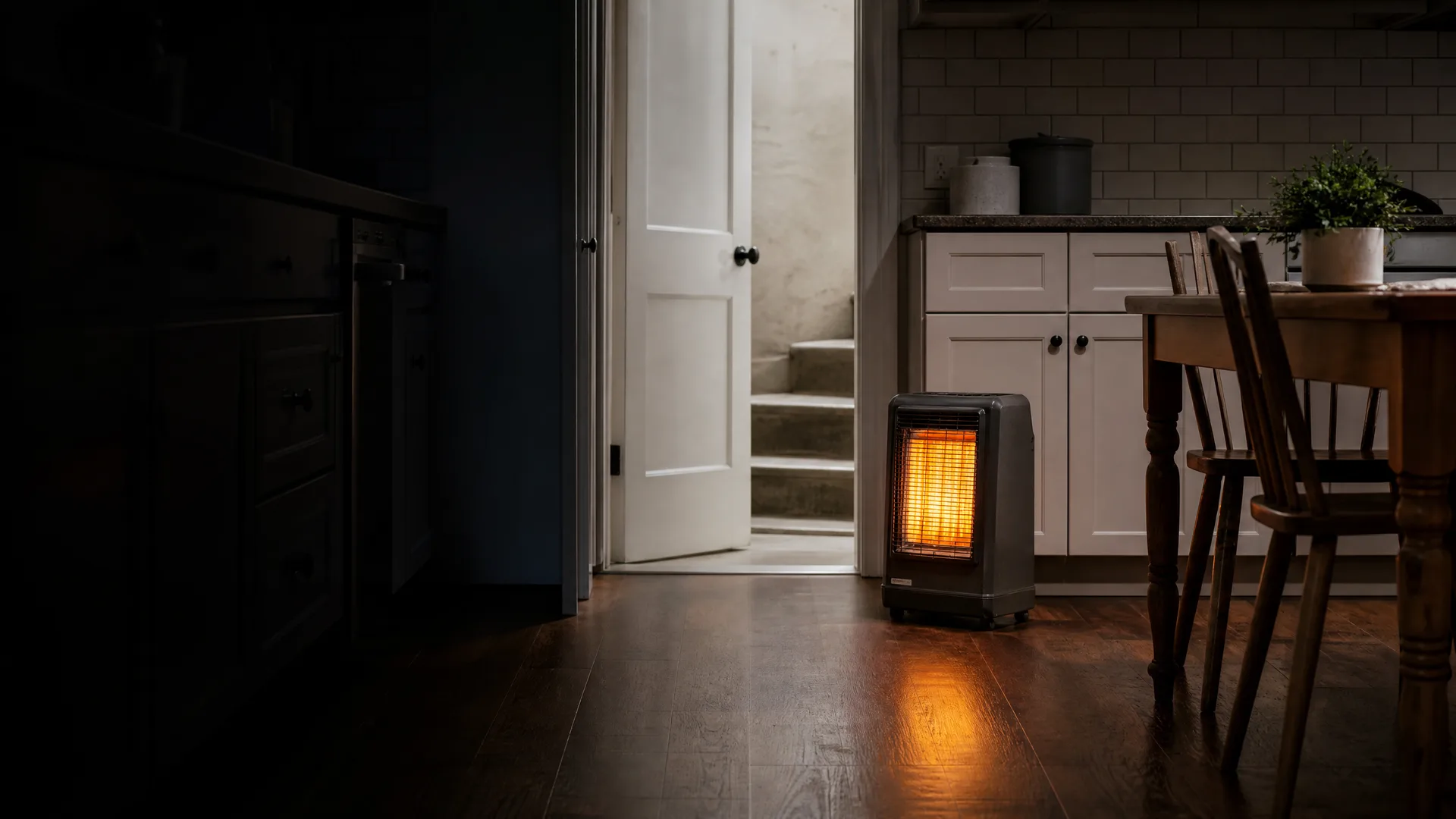
It's just past six and still dark outside. The thermometer by the back door read 9 below when you checked it. The furnace has been running long cycles since midnight, and somewhere around five it gave up and quit blowing warm air at all. You've got the space heater pulled out from the closet, sitting by the kitchen table, cord run across the floor to the only open outlet. The basement door is propped open so some of that heat finds its way down to the pipes. Your coffee's gone lukewarm because you keep leaving the table to check if the furnace kicked back on. It hasn't. School's in two hours and the house is sitting at 58.

A propane furnace is the right call for Fort Benton
For a house in Chouteau County, a propane furnace is the one that gets you through January without asking an electric backup to cover for it. That's the whole answer. A heat pump has its uses, but not here, not on a night that drops to 9 below.
Once you know that, the only thing left is finding someone who installs furnaces correctly for this climate and this altitude, sized right for your house and your ductwork. That usually means calling around, explaining your situation more than once, and sorting through quotes that are hard to compare. A local contractor who works on furnaces all winter in this county already knows what a Fort Benton house needs. Getting matched with one skips the searching and the repeat calls, so you can get straight to the part that actually keeps your house warm.


Furnace Installation
Describe it once

- A local installer who puts in furnaces gets your project.
- Your new furnace project goes to an installer who works in Chouteau County.

- One request and the search for a pro is handled.
- Send it once and finding someone is no longer on you.

- Skip searching for a furnace pro and answer a few questions instead.
- One form replaces the calls you'd make to find a furnace pro.

- The pro who gets in touch is licensed in Montana and works in Chouteau County.
- One installer gets your project, so there's no bidding war over it.