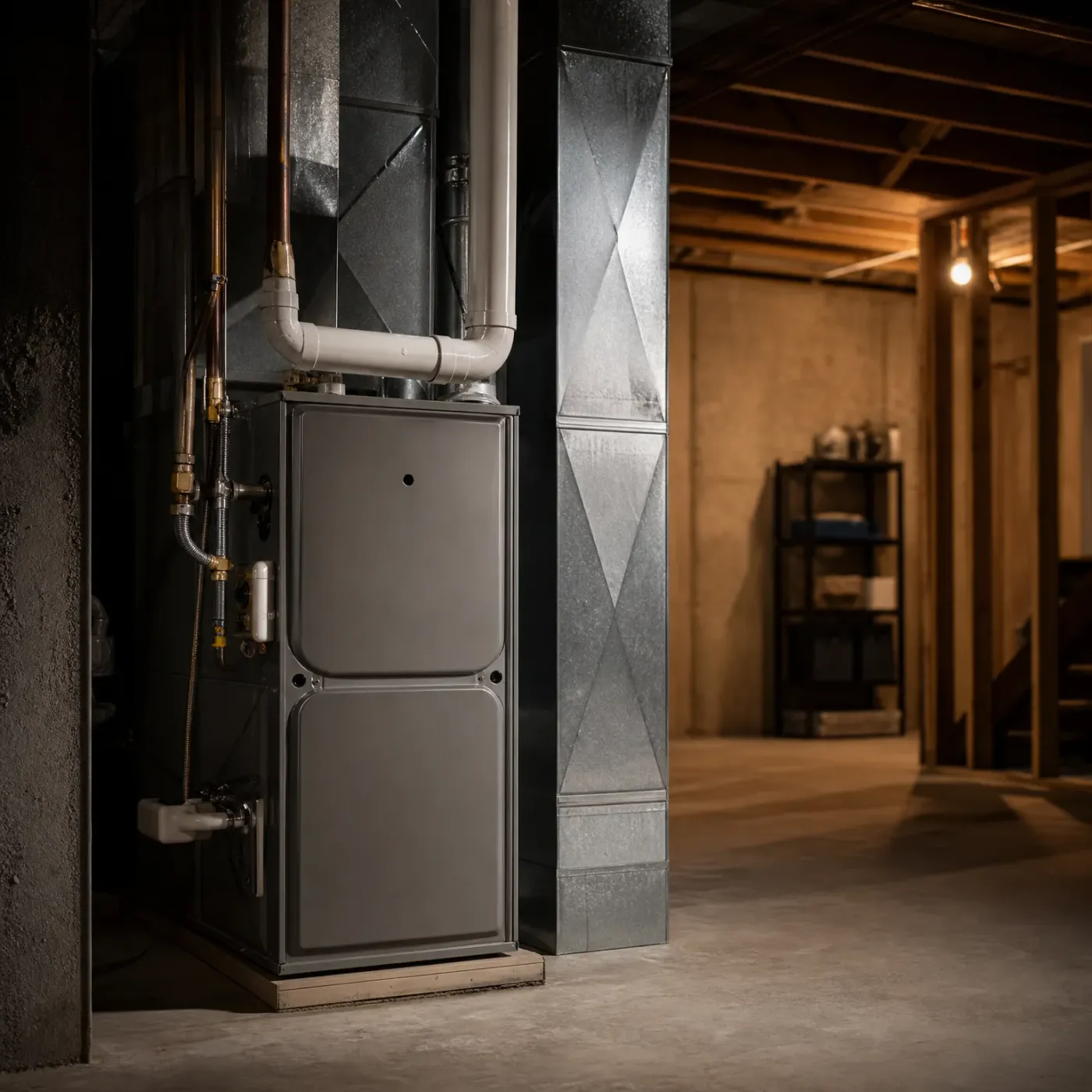
A gray gas furnace with copper and PVC piping stands beside large galvanized sheet-metal ductwork in an unfinished basement with concrete floor, wood framing, and a glowing bare bulb in the background.

The right pro for this job

Repair or replace a propane furnace in Townsend, MT

A furnace that's quitting on you in a Broadwater County winter doesn't leave much room to think it over. This page gets into what tells you whether yours is worth fixing or ready to be swapped out, and what that depends on in a propane system like most homes here run. Once you've got a read on it, send your details and a contractor who works on propane furnaces in the Townsend area will follow up.

Get a local pro

Whether to repair or replace your propane furnace usually comes down to its age and what's actually broken. A furnace past 15 years that needs a major part like a heat exchanger or inducer motor is normally worth replacing, since that part alone can cost close to what a new unit would, and the rest of the furnace is wearing out alongside it. A younger furnace with a bad igniter, flame sensor, or pressure switch is almost always worth repairing. Propane furnaces run hard through Broadwater County winters, and that steady cycling is what wears these parts down over the years. If your furnace is struggling to keep up or short-cycling, that's often a sign the heat exchanger or the furnace's sizing is behind it, not something a quick fix solves. Either way, a contractor who works on propane systems can look at what's actually failing and tell you which side of that line your furnace falls on.

Winter nights average 16°F

At 16°F, your furnace is running most of the night just to hold the house steady, not cycling on and off like it would in milder weather. An older unit or a weak part has to work through that stretch every night for three months straight, which is when a repair that was holding on finally gives out.

NOAA nClimDiv 1991-2020

When fixing it makes sense

A furnace under 10 to 15 years old that's otherwise been reliable is usually worth repairing. A failed igniter, a bad flame sensor, a blower motor that's seized up, these are parts a contractor can replace without touching the rest of the system. If this is the first real repair it's needed, or the cost is a small fraction of what a new furnace would run, fixing it gets you through this winter and likely several more. Propane furnaces in Broadwater County see heavy use from November through March, and a sound unit with one bad part can keep handling that load for years yet.

When replacing makes more sense

Once a furnace is past 15 years and the broken part is something major, a heat exchanger, a gas valve, an inducer motor, replacing it usually makes more sense than repairing it. These parts cost enough on their own that paying for one on an old unit often doesn't buy you much more time before the next failure. A furnace that's needed two or three repairs in as many winters is telling you something too. Replacing it means a unit built for how cold it gets here, instead of patching the same one every heating season.

A woman with long blonde hair in a light blue shirt leans back on a beige sofa with her eyes closed, in a softly lit living room with cushions and a blurred plant and shelf in the background.
A woman with long dark hair in a gray knit sweater sits on a gray sofa with a cushion, looking toward a window in a living room with framed pictures and a lamp in the background.
A woman with long dark hair in a light grey knit sweater sits on a sofa indoors, looking to her right, with a framed landscape picture, a potted plant and a curtained window behind her.
A woman with long dark hair leans back against a gray sofa with her eyes closed, in a living room with a curtained window, a potted plant, and a dark screen in the background.

How a propane furnace actually fires

  • A propane furnace lights by sparking or heating an igniter, which then has to prove flame through a sensor before the gas valve stays open.
  • If the flame sensor doesn't detect burning gas within a few seconds, the control board shuts the valve again as a safety check.
  • The inducer motor runs before ignition to pull air through the heat exchanger and vent exhaust out, and the furnace won't fire until it senses that draft.
  • Heat moves off the heat exchanger into the air your blower pushes through the ducts, and that metal is what keeps exhaust gas separate from the air you breathe.
  • A cracked heat exchanger is a safety issue, not just a performance one, because it can let exhaust mix into the air moving through your house.
  • The blower motor is usually the last thing to run and the first thing you notice when it fails, since the furnace can heat but not move the air.

A propane furnace goes through the same sequence every time it starts, and most repairs trace back to one step in that order failing. First the inducer motor kicks on to pull air through the heat exchanger and push exhaust out the vent. The control board waits to sense that draft before it does anything else. Once it does, the igniter heats up or sparks, the gas valve opens, and the burners light. Within a few seconds, the flame sensor has to detect that burning is actually happening. If it doesn't, the board closes the gas valve again rather than let propane keep flowing with nothing burning it off. That's a safety check, not a glitch, even when it means the furnace shuts down instead of trying again.

Once the burners are lit, the heat exchanger is doing the real work: it's a metal chamber that transfers heat into the air your blower moves through the ducts, while keeping the combustion exhaust on its own side, away from that air entirely. That separation matters more than anything else in the furnace. A crack in the heat exchanger lets exhaust gas mix into the air your blower is pushing through the house, which is why a contractor treats that find differently than a worn igniter or a weak flame sensor.

The blower motor comes in last, after the air is already hot. When it fails, you'll often still get heat at the furnace itself, just none of it reaching the rooms it's supposed to.

An older woman with short gray hair in a cream cable-knit turtleneck sweater smiles while looking to the side in a wooden kitchen, with a round loaf of bread on a board in the foreground and a lit candle by a dark window.
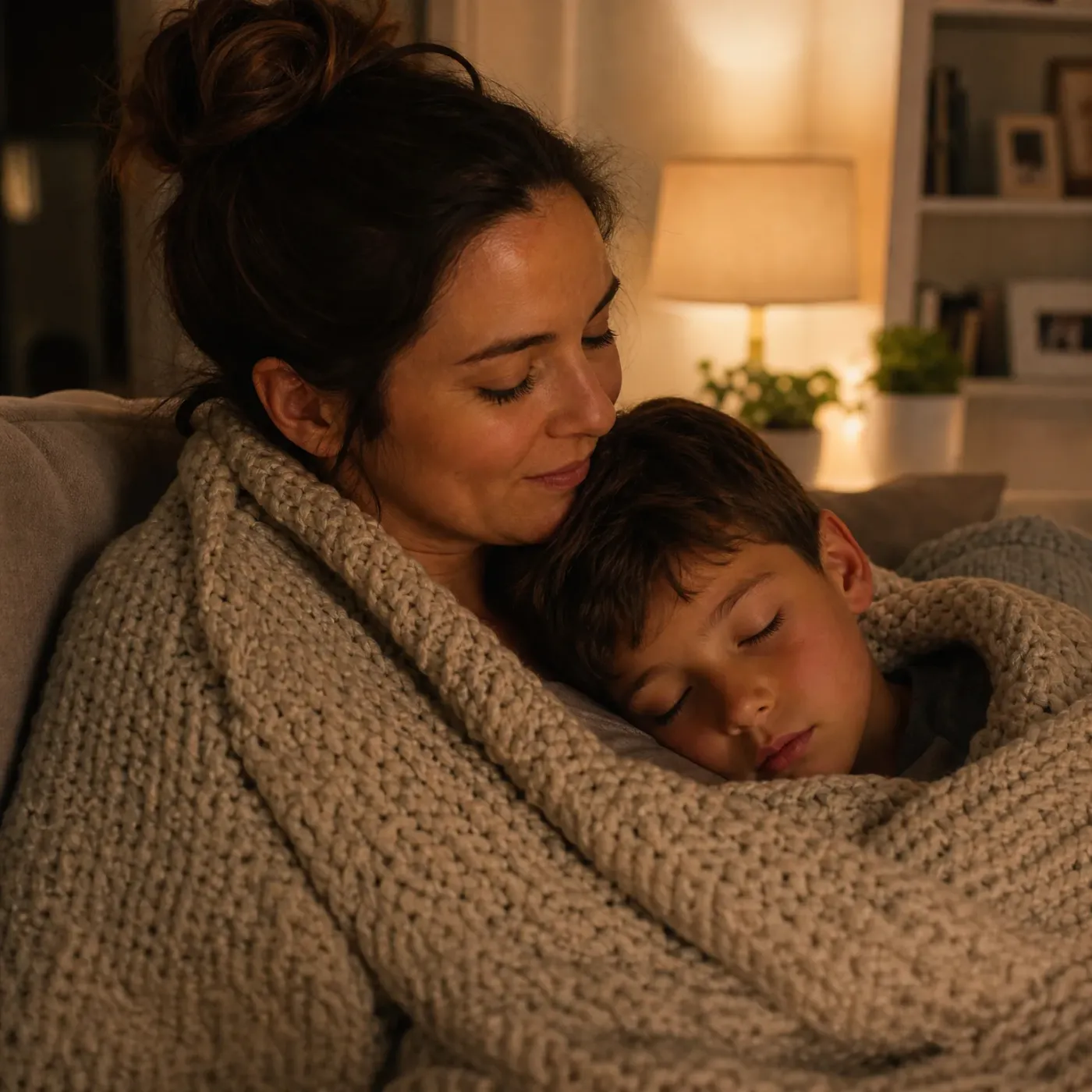
A woman with her hair in a bun holds a sleeping boy against her shoulder, both wrapped in a thick cream knit blanket on a couch in a dim room with a lit lamp, potted plants and a shelf behind them.

Matched to your furnace job

Send the form and the search for an installer is over.

You're not committing to anything by asking.

A propane furnace that's run 15 years has already gone through three or four Broadwater County winters at 16 below. That's a lot of nights at full output.

Parts wear faster under that kind of load, and a furnace that age is closer to its next failure than its last one. Replacing it before the next cold snap is often the steadier bet.

How long does a propane furnace have to run here?

  • Winter nights average 16°F

    Winter nights here average 16°F, so the furnace is doing real work, not just cycling on and off for a few minutes at a time.

  • Heat runs September through June

    Heat runs September through June in Broadwater County, which is most of the year for a furnace that's already getting old.

  • 43.3% of homes heat with propane

    43.3% of homes here heat with propane, more than any other fuel, so parts and service for a propane system aren't hard to find.

NOAA nClimDiv 1991-2020 · ACS 2020-2024

A gray high-efficiency furnace stands on a concrete basement floor beside galvanized sheet-metal ductwork, white PVC vent pipes, copper and black piping, and unfinished wood stud framing.

The furnace holding steady

This is a furnace doing its job. Clean connections at the gas pipes, ductwork fitted tight overhead, condensate draining out through the PVC without a leak in sight. A unit set up and maintained like this will keep running through a Broadwater County winter without much drama.

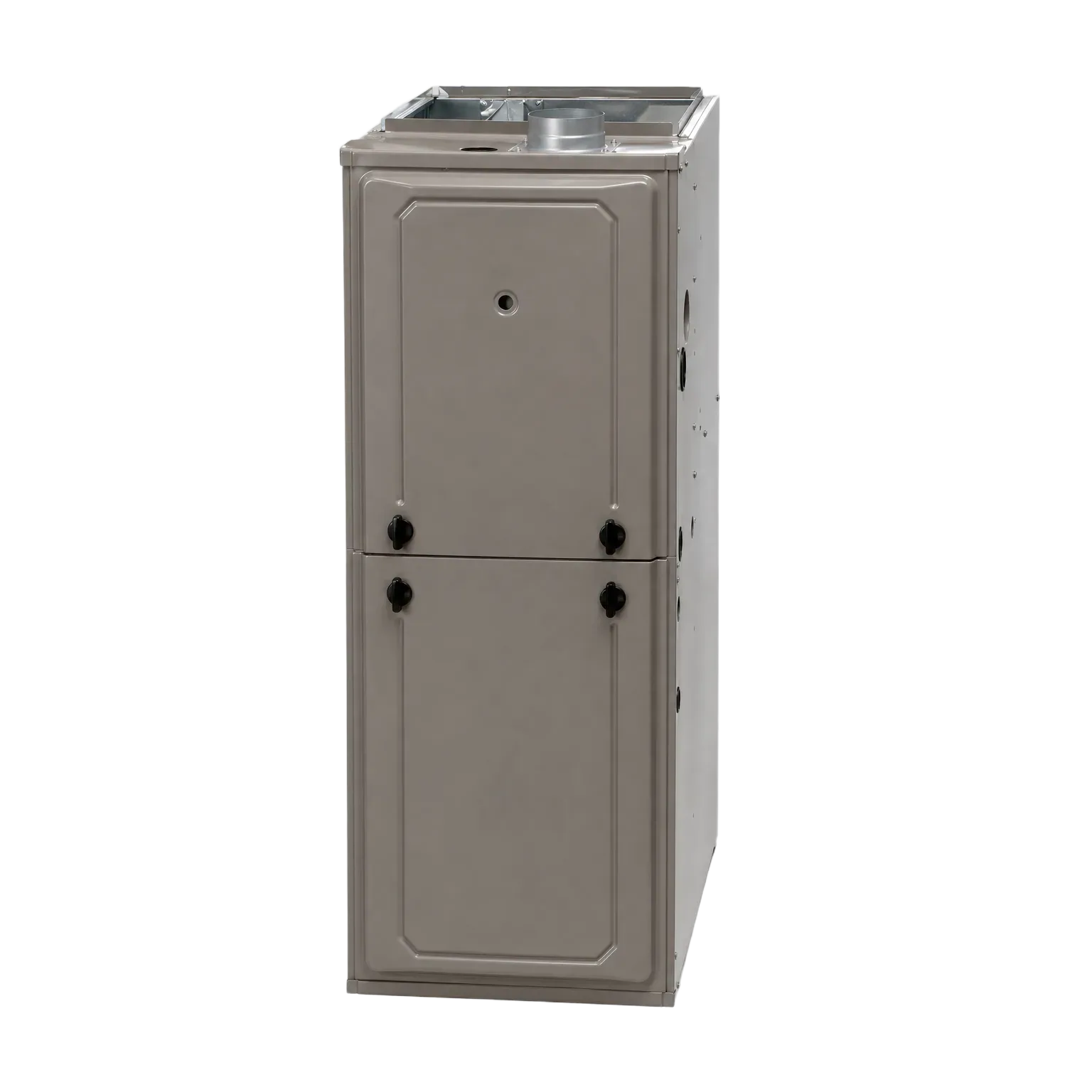
A gray furnace with two access panels stands on a concrete basement floor beside sheet-metal ductwork, with pipes, flexible conduit and an electrical box on the concrete wall to the left.

The furnace in trouble

Same layout, same basement, but something inside has gone wrong. Maybe it's short cycling, maybe it won't fire at all. With two access panels and the gas and drain lines all still attached, a contractor can get in fast to find out whether it's one part or the whole unit.

Why does my propane furnace click a few times before it lights?

A few clicks before the burner catches is something almost every homeowner notices sooner or later, and it tends to raise a flag, especially once a furnace has a few winters on it. In a Broadwater County winter, nobody wants to lie there wondering if tonight's the night it doesn't catch at all. Most of the time there's a simple reason for it, tied to how the igniter and gas valve work together.

A few clicks is usually the igniter cycling normally before the gas valve opens

Most propane furnaces click once or twice as the igniter heats up or sparks, right before the gas valve opens and the burner lights. That's the control board going through its normal sequence, and one or two clicks before ignition is nothing to worry about. More than that, or clicking followed by no flame at all, usually means the igniter is weakening or the flame sensor isn't proving the flame fast enough, so the valve shuts again before it can stay open. A furnace doing this through a stretch of 16°F nights is working that part harder than it would in milder weather, which is often when a marginal igniter finally gives out.

A gray high-efficiency furnace with white PVC vent pipes stands beside sheet-metal ductwork and a water heater in an unfinished basement with concrete walls and wood framing.
A high-efficiency furnace tied into tight sheet-metal ductwork and PVC flue pipe, running the way it should.
A beige gas furnace with a metal flue pipe stands in a basement against concrete block walls, beside sheet-metal ductwork, copper and white plastic pipes, and a water heater at right.
An older furnace on galvanized duct and copper gas line, carrying signs of age that matter once it's 16 below outside.
  1. Thermostat calls for heat and signals the control board.

  2. Inducer motor starts and purges the heat exchanger of air.

  3. Igniter heats up or sparks to light the burners.

  4. Flame sensor confirms burning gas within seconds.

A woman in a gray sweater and jeans stands in an open wood front door of a white stucco house while a man in a dark jacket walks toward her on the entry path.

Repair if it's young, replace if it's not

Age and the broken part decide this more often than anything else. A furnace under 10 to 15 years old with one failed component is worth fixing. One past that age needing a heat exchanger or inducer motor usually isn't, not with 16 below outside for months at a stretch and the rest of the unit just as worn.

If you're still unsure which side of that line yours falls on, that's a reasonable place to stop guessing. Send in what you know about the furnace and a contractor who works on propane systems in Broadwater County will reach out and look at the specifics with you, your furnace, your house, not a general rule about age and parts.

A shallow dark wooden bowl and a stack of books rest on a wooden table in front of a beige sofa with linen and green cushions, with a tall ceramic vase of thin branches beside a window in the background.
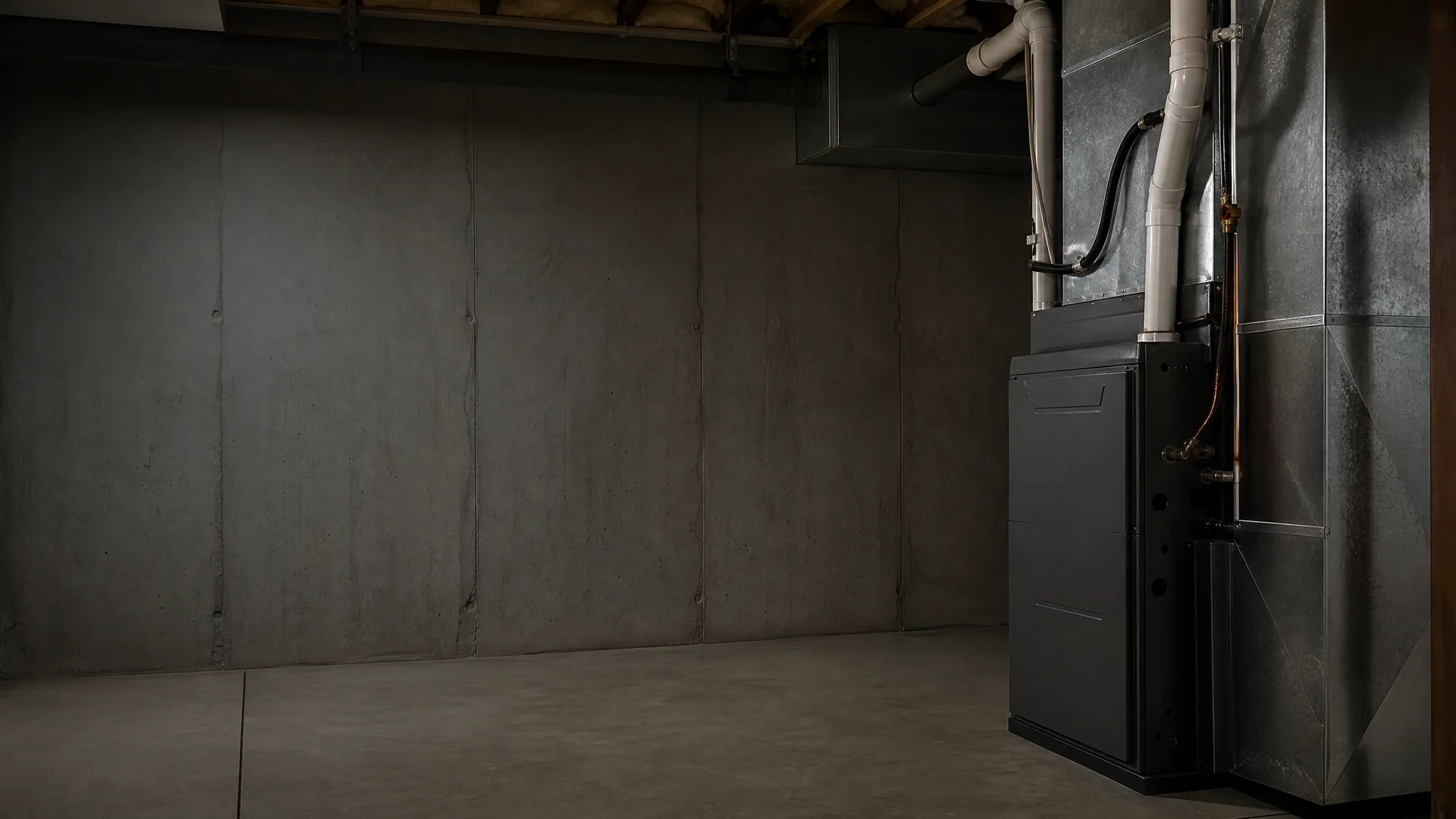
A dark basement with bare concrete walls and floor, with a furnace, ductwork, and PVC vent pipes along the right side.

A furnace pro near you

Send the request and finding a pro stops being your problem.

New system or replacementFurnace or heatingBroadwater County, MT
Step 1 of 2

What ZIP code is the job in?