




Repair or replace a propane furnace in Ennis, MT

One form replaces the calls you'd make to find a furnace pro.

Describe it once

Should I repair or replace my propane furnace in Ennis?

Your propane furnace is giving trouble and you're trying to figure out whether it's worth fixing again or if it's time for a new one. Winters in Ennis don't leave much room for a furnace to be down or unreliable, so the decision matters more here than it might somewhere milder. You want a straight answer before you spend money on a repair that might not hold.

Repair it if the furnace is young and the problem is small. Replace it if it's old or the repairs keep adding up.

A propane furnace that's a handful of years old and needs an igniter or a pressure switch is almost always worth fixing. One that's been through many Montana winters and is now losing its heat exchanger, or needs a second repair inside a year, is telling you something different. Madison County winters put a furnace through long stretches of hard, steady running, and that wear catches up with older units faster than it does in milder places. A furnace that struggles to keep up now will struggle more next winter. If yours is older and the repair bill is climbing, replacing it before it fails on a cold night usually makes more sense than patching it again.

A smiling woman with long dark hair in a gray sweater sits behind a white countertop holding a glass of red wine, with a dimly lit living room and dark kitchen island in the background.
A woman in a beige knit sweater with her hair up laughs while looking to the side, seated in a dimly lit living area with a sofa, windows and a kitchen counter behind her, a glass of red wine in the lower right foreground.
A woman in a black sweater laughs while seated at a light stone counter with a glass of red wine, in a dimly lit living and dining room with bookshelves, a table lamp and framed artwork behind her.
A smiling woman with long dark hair in a beige sweater sits at a granite counter with a glass of red wine, with a living room, fireplace and dining area behind her.

What's your furnace telling you right now

Maybe it's running longer than it used to, cycling on and off more often, or blowing air that isn't as warm as you remember. Maybe there's a smell when it kicks on, or a bang or rattle from the cabinet that wasn't there last winter. Maybe the pilot or igniter won't hold and you're relighting it yourself. Rooms that used to heat evenly now have cold spots, or your propane tank is emptying faster for the same weather. Any of these on their own might just need a repair. Together, or happening more often, they usually mean the furnace is working harder to do what it used to do easily, and in a Madison County winter that's not something to leave alone for long.

A gray furnace cabinet in a basement with sheet-metal ductwork, white PVC vent pipes, and black gas piping against a concrete wall and wood-framed partition on a bare concrete floor.

Running right

A propane furnace that's doing its job heats evenly and kicks off without a fuss. The burner lights the same way every time, the air coming through the vents is hot, and the cabinet stays quiet. If yours still does this through an Ennis winter, a repair now and then is likely all it needs.


A gray metal furnace with two white PVC vent pipes stands on a concrete floor beside galvanized sheet-metal ductwork in a basement or utility space with wood framing.

Running on borrowed time

Rust on the cabinet, a plenum that's seen better days, short cycling, or a pilot that won't stay lit are signs the furnace is wearing out, not just having a bad day. Once the cabinet itself is going, you're patching a unit that's failing from the inside, and the next cold snap is the one it may not survive.

An older metal furnace with a louvered front panel stands against a concrete basement wall, connected to sheet-metal ductwork and a flue pipe, with copper and steel pipes running alongside.
Before you get your furnace installation
A beige high-efficiency furnace stands on a concrete basement floor beside sheet-metal ductwork, with white PVC vent pipes and a gas line running along an insulated wood-framed wall.
After you get your furnace installation

One form, no calling around

A licensed installer who works in Madison County gets your project.

No charge to send it. You decide if you hire them.

How a propane furnace actually fires

  • A propane furnace lights by sparking an igniter or a hot surface element, which opens the gas valve only after it senses flame.
  • The inducer motor runs first to pull air through the heat exchanger and vent, and the burner won't fire until it proves that draft.
  • Flame burns inside a sealed heat exchanger, and the blower pushes house air across the outside of it without the two ever mixing.
  • A flame sensor confirms the burner stayed lit, and it shuts the gas valve within seconds if the flame drops out.
  • The blower keeps running for a minute or two after the burner shuts off, clearing the leftover heat out of the cabinet.
  • A cracked heat exchanger lets combustion air mix with house air, which is why a furnace that age or shows corrosion there gets replaced, not patched.

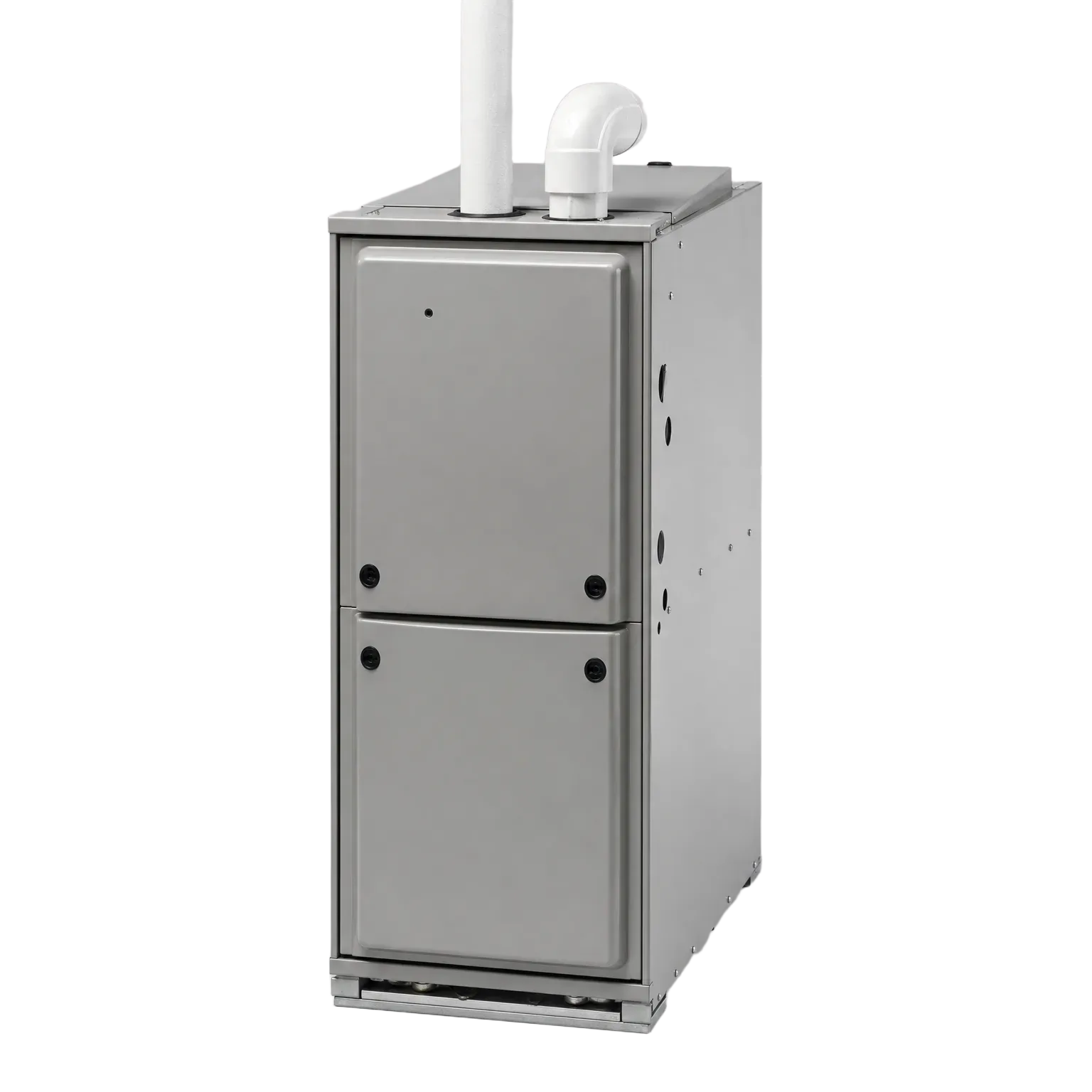
A propane furnace doesn't just light and blow hot air. It goes through a sequence, and every step has to check out before the next one happens. The thermostat calls for heat, and the inducer motor starts first, pulling air through the heat exchanger and out the vent. A pressure switch has to confirm that draft is moving before anything else happens. Once it does, the igniter sparks or glows hot enough to catch the gas, and the burner lights inside a sealed heat exchanger. That's the part that matters most: the flame never touches the air that reaches your rooms. It heats the metal, and the blower pulls house air across the outside of it, picking up heat without picking up combustion gas. A flame sensor watches the burner the whole time it runs. If the flame drops out, the sensor cuts the gas valve within seconds, before unburned propane can build up. When the thermostat is satisfied, the burner shuts off first, but the blower keeps running another minute or two to push the leftover heat out of the cabinet instead of wasting it. The one place this breaks down for good is the heat exchanger itself. Once it cracks, combustion air can leak into the air the blower is moving through your house, and at that point a furnace gets replaced, not repaired, especially if it's old enough that cracking is starting to show elsewhere too.

A gray high-efficiency furnace with white PVC vent pipes stands on a concrete pad in a basement, beside sheet-metal ductwork, copper piping and a poured concrete wall with wood framing at left.
This furnace fires clean and heats the ductwork above it without any trouble, pad and connections all sound.
A beige gas furnace in a basement with a metal flue pipe, galvanized sheet-metal ductwork to its left, and gas and water pipes along the concrete wall to its right.
This older unit still runs, but the flue and the valves nearby are the kind of thing worth having checked before deep winter.

Winter nights average 14°F

At 14 below zero, give or take, on a typical winter night, your furnace runs most of the night just to hold the house steady. If it's struggling to keep up now, in the shoulder months, that gap only widens once January's real cold sets in.

NOAA nClimDiv 1991-2020

A furnace that's cycling oddly, smelling off, or losing the fight against an Ennis night is telling you something, and whether that means a repair or a new unit comes down to what's actually wrong and how old the equipment is. Either way, you don't have to sort through that alone or guess which company in Madison County even works on propane furnaces. You'll be connected with one licensed local contractor, someone who's out on these systems all winter and knows what tends to go wrong in this cold, not a handful of companies competing for your callback. They'll look at your furnace, tell you straight whether it's worth repairing or whether replacement makes more sense, and go from there. No explaining your furnace's history to five different voices on the phone, no comparing quotes from people who've never seen your house. One contractor, who knows this equipment and this weather, looking at your actual furnace and giving you an actual answer.

A single-story stone-clad house with low-voltage path lights along a gravel bed and lawn at dusk, with a tree line and orange sky on the horizon.

Furnace Installation

Skip the search

New system or replacementFurnace or heatingMadison County, MT
Step 1 of 2

What ZIP code is the job in?

  • A living room corner with a beige upholstered armchair holding a green pillow and knitted throw, a ceramic table lamp on a side table, white built-in bookshelves, a framed landscape print, a curtained window, and a round wooden table with a lit candle and bowl in the foreground.
    • A local installer who puts in furnaces gets your project.
    • Say what's going on with your furnace, and a pro who works on them reaches out.
  • A lit table lamp with a tapered beige fabric shade and a speckled rounded ceramic base sits on a wooden surface beside a potted plant, with curtains and a window in the background.
    • After you send the request, you're done searching.
    • Send the form and the search for an installer is over.
  • A cream upholstered armchair with a gray pillow and knit throw sits beside a wooden table with a eucalyptus-filled vase, in front of a lit stone fireplace with stacked firewood.
    • Answer a few questions instead of calling shop after shop.
    • Describe your furnace job once, to one pro.
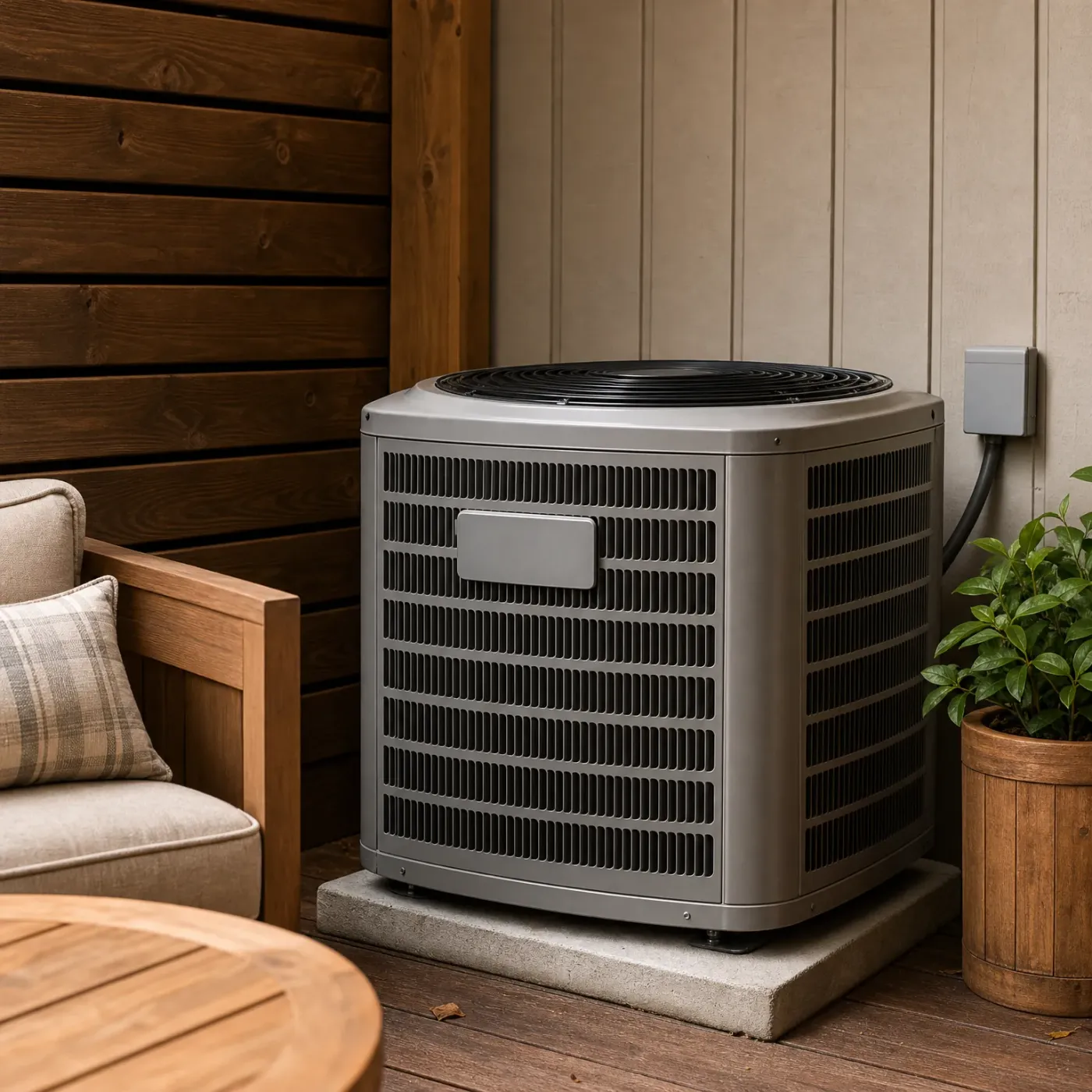
  • A gray outdoor air conditioner condenser unit on a concrete pad beside a wood-sided wall, with a horizontal wood slat fence, a cushioned patio chair, a wooden table, and a potted green plant nearby.
    • The pro who gets in touch is licensed in Montana and works in Madison County.
    • One installer gets your project, so there's no bidding war over it.