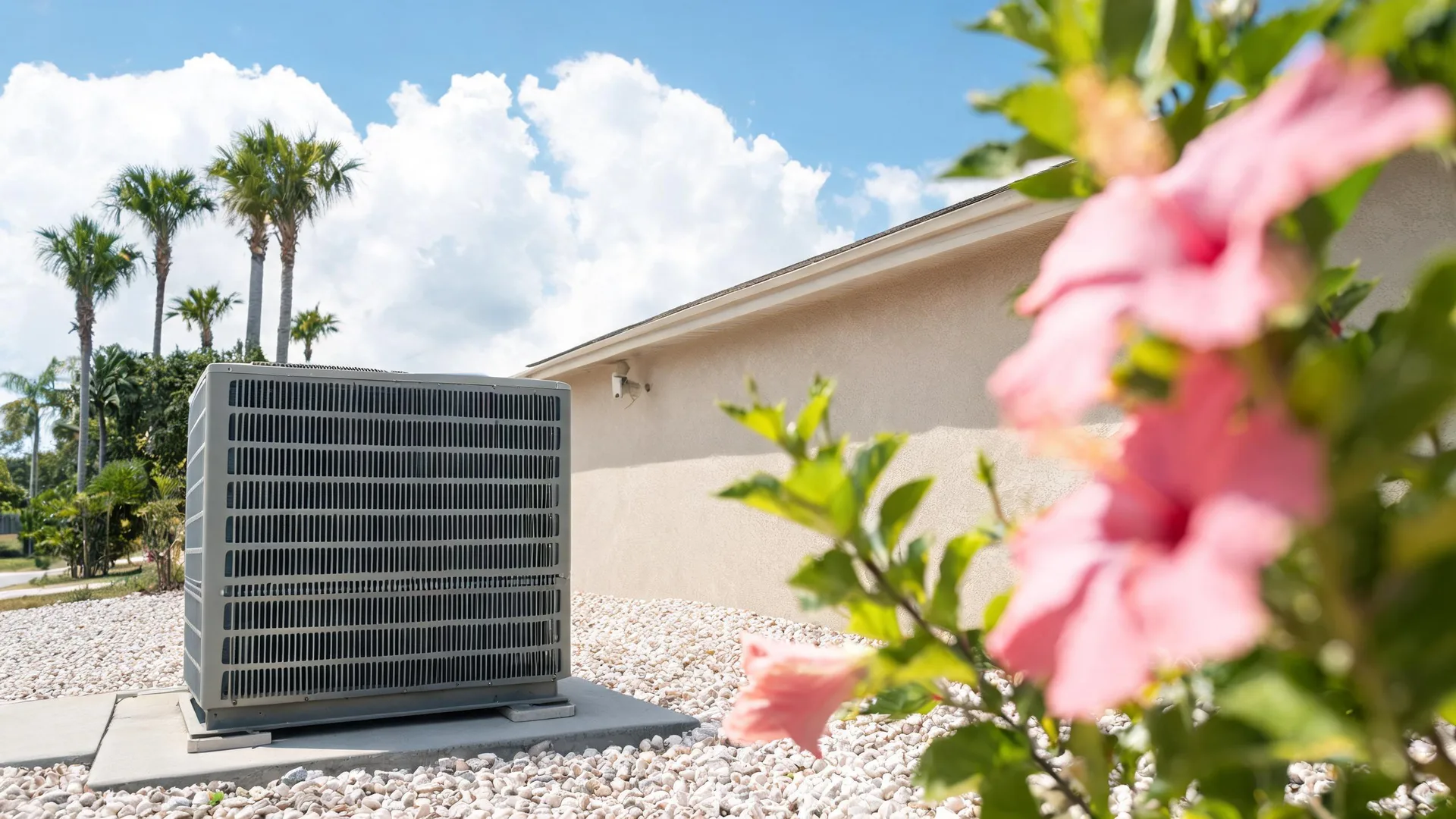
An outdoor HVAC condenser unit on a concrete pad in front of a two-story suburban house.

Heat Pump Repair in Townsend, MT

Tell us about the job

Takes about a minute. No obligation.

RepairHeat PumpBroadwater County, MT
Step 1 of 2

What ZIP code is the job in?

Dry air is easier on the system

Summer dew points here average 44°F across June, July and August, lower than most of the country. A heat pump moving dry air doesn't work as hard pulling moisture out of it, so the compressor sees less strain over a Townsend summer than it would somewhere muggy.


What that means for your repair

A heat pump that hasn't been worked hard for years is more likely to have one bad part than a system failing all over. Whatever's going wrong with yours probably isn't load related, which is a good reason to get it diagnosed rather than assume it's worn out.

10 months
September through June, your system heats
1 months
July through July, it cools
16°F
the average winter night it heats against
77°F
the average summer afternoon it cools against
Isometric cutaway illustration of a single-story house showing interior ductwork, an indoor air handler and furnace unit, and an outdoor condenser connected by a line, on a white background.
Your system heats September through June and cools July through July.

NOAA nClimDiv, 1991–2020 normals

A compressor doesn't wear out from one hard day, it wears out from years of strain adding up.

When a heat pump breaks down, the cause is usually one failed part, not the whole system giving out.

Watch for Trouble in SeptemberHeat starts running in September, and a weak part usually shows itself the first cold week it has to work.

Most heat pump breakdowns trace back to a handful of usual suspects. The capacitor that kicks the compressor or fan motor into action weakens over time and eventually can't deliver the jolt needed to start them. The reversing valve, which switches the system between heating and cooling, can stick and leave you stuck in one mode. A dirty outdoor coil blocks heat exchange and makes the whole system struggle, even though the fix is just cleaning it. Refrigerant leaks show up as a system that runs but doesn't heat or cool like it should, and they come from worn fittings or rubbed-through lines, not from the refrigerant itself running low on its own. A failed defrost sensor or control board can leave the outdoor unit icing over in cold weather without ever clearing itself. Each of these is a single part doing its job poorly or not at all, and each one is something a tech can test for directly.

A Newer System Is Usually Worth Fixing

Half the homes in Broadwater County were built in 2001 or later. If yours is one of them, your heat pump likely hasn't been running long, and a single failed part doesn't mean it's near the end. Get it looked at before you write it off.

Find a contractor
A man in a dark long-sleeve shirt and tan work pants, seen from behind, carries a worn canvas tool bag up concrete steps toward a dark blue front door.
A gray air-source heat pump mounted on a concrete pad next to a house with gray vinyl siding, surrounded by gravel and flanked by green shrubs and white hydrangea flowers.

Ten Years of Weather, Most of It Shrugged Off

The outdoor unit sits outside through whatever weather passes through. Broadwater County saw damaging wind 32 times between 2015 and 2024, hail 13 times, and winter storms 28 times. Spread across those years, that is weather the unit shook off and kept running, not a pattern of storms stacking up on top of each other. None of that is what wears down a compressor or a coil. A heat pump that has stood through that stretch without damage from any of it is a system where a current problem is more likely one failed part than the unit giving out.

What you can check yourself

Look at the thermostat first. Make sure it's set to the mode you want and the batteries aren't dead. Check your breaker panel for a tripped breaker on either the indoor or outdoor unit. Go outside and look at the unit itself. Leaves, grass clippings or ice built up around the coil will choke it off, and clearing that away is safe to do. Inside, pull the air filter and hold it up to the light. If you can't see through it, swap it or clean it. A clogged filter can make a heat pump run weak or freeze up, and it's the one thing you can fix in five minutes.

What to leave for a tech

If the outdoor unit is iced over and the filter and breakers check out, that's a defrost control problem, not something to chip at with a screwdriver. If the system runs but blows air that isn't warm or cool enough, that points to the refrigerant circuit, and opening that up takes gauges and a license. A humming unit that won't start is usually a capacitor, and testing it means working inside a cabinet with live electrical parts. Anything past the filter and the breaker box is a job for someone with the tools to test the part, not just guess at it.

Running a heat pump with a failing part doesn't just delay the inevitable, it often turns one bad component into a bigger repair. A weak capacitor that still gets the compressor started puts more strain on the motor windings every time it tries, and a compressor is the most expensive part in the system. A dirty coil that keeps the unit running hot forces the compressor to work against pressures it isn't built for, and that heat shortens its life. Ice on the outdoor unit blocks airflow entirely, and a system that keeps cycling against that ice can push liquid refrigerant back into the compressor, which it isn't designed to handle. The parts in a heat pump depend on each other, so a problem in one spot rarely stays contained to that spot if the system keeps running. A technician cutting power to the unit when something looks wrong usually saves more than waiting it out.

A diagnostic visit starts with the tech asking what you've noticed. Short cycling, warm air when it should be cool, ice on the outdoor unit, a humming sound with no start. That tells them where to look first. From there they check pressures with gauges, test the capacitor under load, and check the electrical draw on the compressor and fan motors against what the unit is rated for. A multimeter and a set of gauges catch things a visual check never will, since a part can look fine and still be failing. They'll also check the thermostat's calls against what the unit is actually doing, because a system that isn't getting the right signal can look broken when it isn't. Most of this takes less time than people expect, since a trained tech is working through a known list of likely causes, not starting from scratch.