A row of illuminated timber-frame and stone houses photographed at dusk, with evergreen trees and a mountain range in the background.

Heat Pump Repair in Superior, MT

Tell us about the job

Takes about a minute. No obligation.

RepairHeat PumpMineral County, MT
Step 1 of 2

What ZIP code is the job in?

Cold is the main stress here

Superior winters average 20°F overnight through December, January and February. A heat pump works harder pulling heat out of air that cold, and that's the load it's built to handle. It isn't fighting extreme summer heat or sitting through brutal humidity year after year.

So a repair is usually worth it

When a heat pump here breaks down, it's rarely because the unit has been run into the ground. More often it's a part that's failed or a system that's fallen out of adjustment. That's a straightforward repair, not a sign the whole unit is on its way out.

10 months
September through June, your system heats
20°F
the average winter night it heats against
74°F
the average summer afternoon it cools against
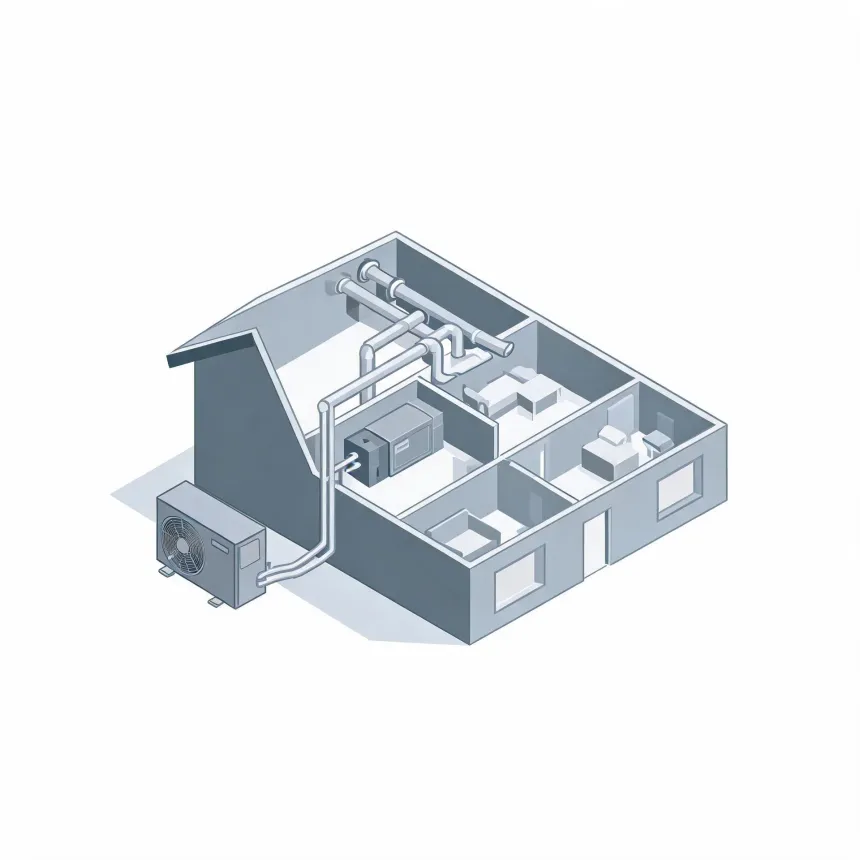
Isometric grayscale illustration of a cutaway house showing interior rooms, ducted air handler and duct runs, connected by pipes to an outdoor condenser unit beside the building.

A heat pump rarely quits without warning signs first.

Short cycling, warm air that should be hot, or ice that won't clear are the signs worth calling in before the compressor takes the hit.

A heat pump here fails the ordinary way, from an ordinary part

Half the homes here were built by 1983
Climate zone 6B
Power costs 12.66 cents a kWh statewide

Electricity here runs 12.66 cents a kilowatthour, in line with other Montana towns. That matters because a heat pump leans on electricity to move heat, not burn fuel for it, so a unit that's lost efficiency shows up on the power bill before anything looks visibly wrong. A failing capacitor or a dirty coil makes the system draw more to do the same job. Fixing the actual part brings that cost back down. There's no local rate spike or odd utility setup pushing homeowners here toward one choice over another, so the repair decision comes down to what's actually broken, same as it would anywhere else in the state.

Get the broken part fixed, not the whole unit replaced

A heat pump that fails here is usually failing from a bad part, not from years of strain. Get that part found and fixed.

Find a contractor
A man in a cap, dark work shirt and brown trousers walks up stone steps toward a dark blue panelled door, carrying a canvas tool bag filled with hand tools, beside a potted shrub.
A gray heat pump condenser unit mounted on a concrete pad against the gray lap-siding exterior wall of a house.

A small problem left running becomes a bigger one

A heat pump that's struggling doesn't fail all at once. It fails a little, keeps running anyway, and that's what turns a small problem into a bigger one. A low refrigerant charge makes the compressor work harder to move the same amount of heat. Run it like that long enough and the compressor itself wears out, which is a far bigger repair than fixing the leak would have been. A dirty coil makes the system run longer to hit the same temperature, and that extra runtime wears on everything downstream of it. A weak capacitor makes the motor draw harder every time it starts, and every start after that gets a little harder on the motor until it doesn't start at all. None of these show up as the system shutting off. They show up as the system working, just working worse, which is why it's easy to let a strange sound or a long runtime go a few more weeks. The part that's struggling rarely fails quietly after that. It takes something else down with it.

A capacitor or a reversing valve, most often

The capacitor gives the compressor and fan motors the jolt they need to start. It weakens slowly, so the system starts harder each time until one day it doesn't start at all. The reversing valve is what switches the unit between heating and cooling. When it sticks, the heat pump runs but blows air that isn't warm, because it's stuck trying to do both jobs at once or neither.

A dirty coil or a low charge, close behind

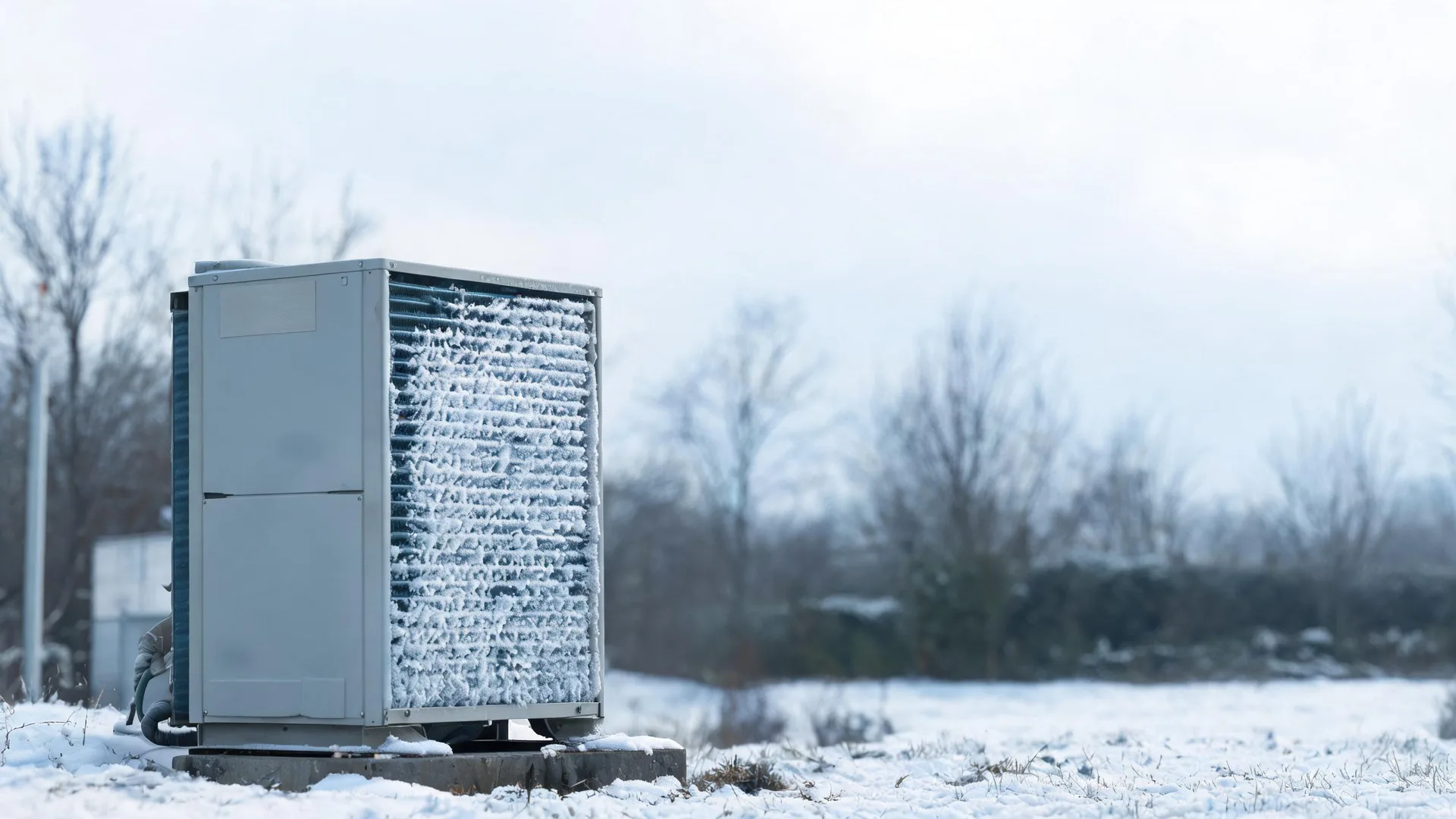
The outdoor coil has to pull heat out of cold air, and it can't do that through a layer of dirt or frost that isn't defrosting on schedule. A low refrigerant charge means less heat moves per cycle, so the system runs longer and still falls short. Both wear on the compressor long before either one shows up as a no-heat call.

Before calling anyone, check the thermostat first. Make sure it's set to heat and the set point is actually above room temperature, since a setting bumped by accident looks exactly like a broken system. Next, look at the outdoor unit. If it's buried under snow or caked in ice beyond the normal thin frost layer, that blocks the coil from doing its job and it's worth clearing off. Check the indoor filter too. A filter clogged with dust chokes airflow, and a heat pump starved for airflow will run constantly without catching up. Walk around the house and check that supply vents are open and nothing is pushed up against a return. Last, check the breaker panel. A heat pump that won't start at all sometimes just needs a tripped breaker reset, though if it trips again after resetting, that's a real electrical fault and not something to keep resetting on your own.

A diagnostic visit starts outside, at the unit itself. A tech checks the readings on the system before touching anything, since those numbers point to whether the problem is refrigerant, airflow or electrical. From there it's a process of ruling things out. Pulling the panel to look at the capacitor, checking the contactor for pitting, testing the reversing valve to see if it's actually switching when it's told to. Refrigerant charge gets checked against what the system calls for, not just topped off and called done, because overcharging causes its own problems. Airflow gets checked too, since a coil that looks fine can still be starved for air if something downstream is blocked. The goal is to find the one part that's actually failing, not to start swapping parts and see what helps.