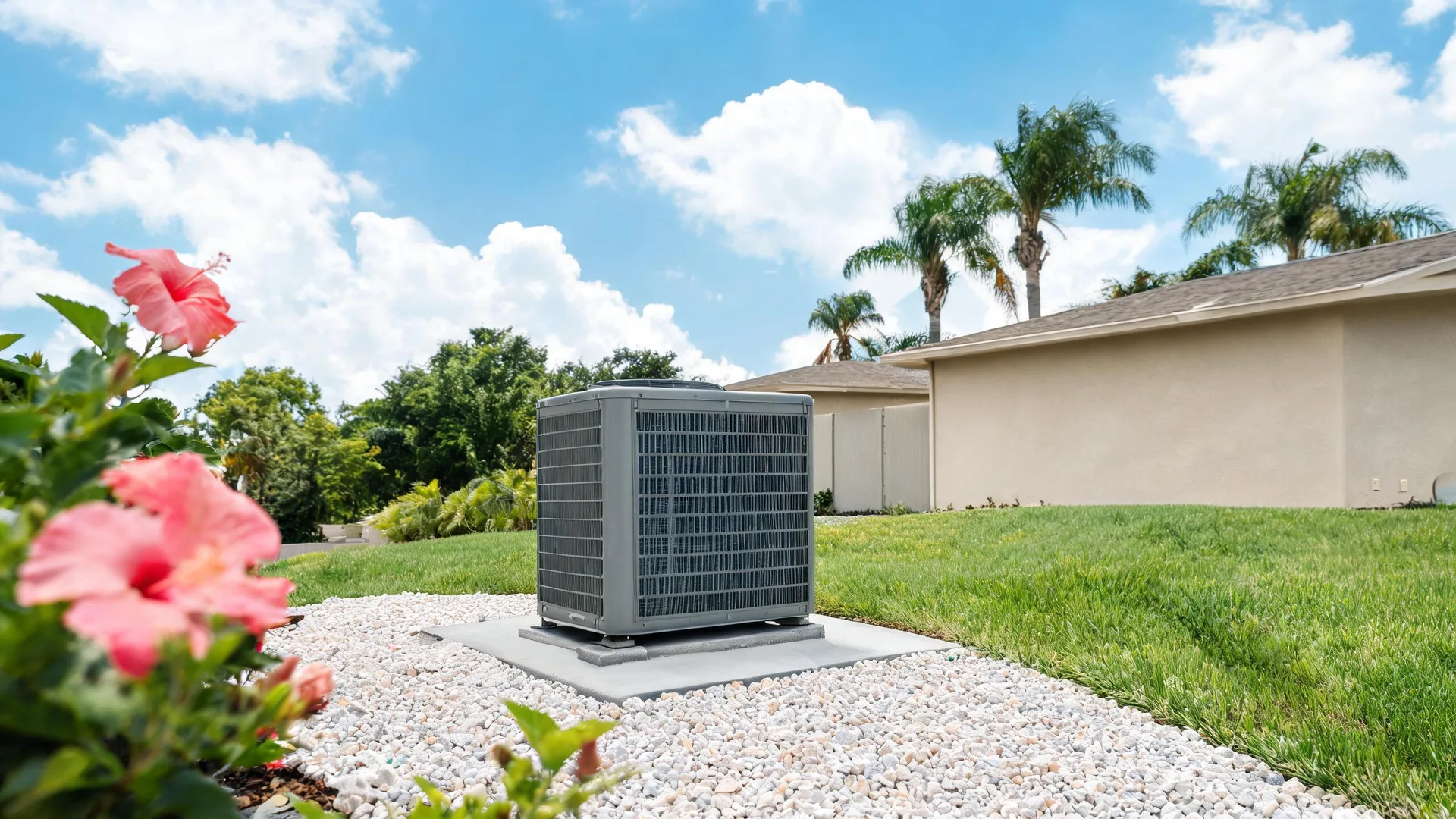
An outdoor air conditioning condenser unit mounted on a concrete pad in front of a single-story suburban house.

Heat Pump Repair in Polson, MT

Tell us about the job

Takes about a minute. No obligation.

RepairHeat PumpLake County, MT
Step 1 of 2

What ZIP code is the job in?

Weather here takes a toll on outdoor units

Lake County recorded 195 severe weather events between 2015 and 2024, including 125 winter storms, 57 damaging wind events and 12 hail events. A heat pump's outdoor unit sits outside through all of it, exposed to wind, hail and whatever gets thrown around in a storm.


Power doesn't always come back fast

18% of Montana households went at least 24 hours without power in 2024. A heat pump needs electricity to run, so an outage that long means no heat until the power is back, not just a lower bill.

10 months
September through June, your system heats
20°F
the average winter night it heats against
76°F
the average summer afternoon it cools against
Isometric line illustration of a cutaway single-story house showing interior ductwork, an indoor air handler unit, and an outdoor condenser connected by refrigerant lines, with a dark shingled roof.

A heat pump that won't switch between heating and cooling is often stuck on the reversing valve.

That valve has to be replaced by a contractor, not reset, and the system shouldn't run hard until it is.

Half the homes here were built in 1986 or later, so most heat pumps have years left to give

Half the homes here were built by 1986
57 damaging wind events from 2015 to 2024
12 hail events from 2015 to 2024
September is when a weak heat pump gets found outHeat here starts in September and runs through June, and trouble tends to show up in those first cold weeks.

If your heat pump came with the house, get the model year off the nameplate before you decide anything. A system from a newer build still has years of service in it, and a broken part is usually worth fixing rather than walking away from. The reversing valve, a failed capacitor, a bad sensor, none of that means the unit is done. Repair first, and let a contractor tell you if something bigger is wrong once they've actually looked at it.

Had a storm come through? Get the outdoor unit checked

If the outdoor unit took a hit from hail or wind and the system still seems to run fine, get it looked at anyway. Dented fins or a cracked panel can hide damage that shows up later as a bigger repair.

Find a contractor
A man in a cap, dark shirt and brown work pants walks up stone steps toward a gray front door, carrying a canvas tool bag in his right hand, with a potted plant beside the porch.
A dark gray heat pump unit mounted on a concrete pad next to a house with gray siding and a stone veneer wall.

What to check before you call anyone

Before anyone comes out, check the thermostat first. Make sure it's set to call for heat or cool, with batteries that aren't dead and a setpoint that actually differs from room temperature. Next, look at the outdoor unit. Clear away leaves, ice or anything blocking the coil, since restricted airflow there can look like a much bigger failure. Check the indoor filter too. A clogged filter starves the system of airflow and can cause it to freeze up or shut down on its own. Look at the outdoor unit while it's running: the fan should be spinning freely, and you shouldn't hear grinding or buzzing. If you see ice building up on the outdoor coil and it isn't going through a normal defrost cycle, that's worth noting for whoever comes out. Check your breaker panel for a tripped breaker before assuming the unit itself has failed. None of this tells you exactly what's wrong, but it rules out the simple stuff and gives the contractor a clearer starting point.

Most failures start outside

The outdoor unit has the compressor and the fan motor, and those two parts take the brunt of the wear. A compressor can fail from running low on refrigerant for too long, or from an electrical fault that burns out its windings. Fan motor bearings wear down over years of spinning in the weather, and a motor that's starting to go will hum or struggle before it quits outright. Both are case for a service call, not a DIY fix.

Small parts cause most of the trouble calls

A capacitor that's weakened can't give the compressor or fan motor the jolt it needs to start, so the unit hums instead of running. A contactor with pitted contacts can stop sending power through at all. Sensors and control boards fail less often, but when they do, the system can run at the wrong time or not shut off when it should. These parts are inexpensive to replace and fixing one is usually a short visit, not a major repair.

A heat pump that's struggling still tries to do its job, and that's the problem. If the compressor is low on charge, running it longer just means it runs hotter and wears faster, since there isn't enough refrigerant to cool its own motor properly. A fan motor with bad bearings will keep spinning until it seizes, and when it seizes while the compressor is still running, the compressor can overheat right along with it. Ice on the outdoor coil blocks airflow, and a system that keeps running against a blocked coil pushes itself harder to make up for air it isn't getting. None of these start as expensive problems. They get expensive because the unit was left running while they got worse. If something sounds wrong or the system is struggling to keep up, shutting it off and calling for service costs you less than letting it fight through the day.

A diagnostic visit starts with questions. What's the system doing, when did it start, does it happen in heating mode or cooling mode or both. Then the contractor checks the thermostat call against what the unit is actually doing, since that tells them whether the problem is a control issue or a mechanical one. They'll check refrigerant pressures with gauges, test the capacitor and contactor with a meter, and watch the reversing valve switch when commanded instead of guessing from the symptoms alone. Electrical readings catch a failing compressor or motor before it dies completely, which matters because those parts give warning signs before they quit outright. By the end, the contractor should be able to point at the actual part that's failing and explain what it's doing to the rest of the system, not just that something's wrong somewhere.