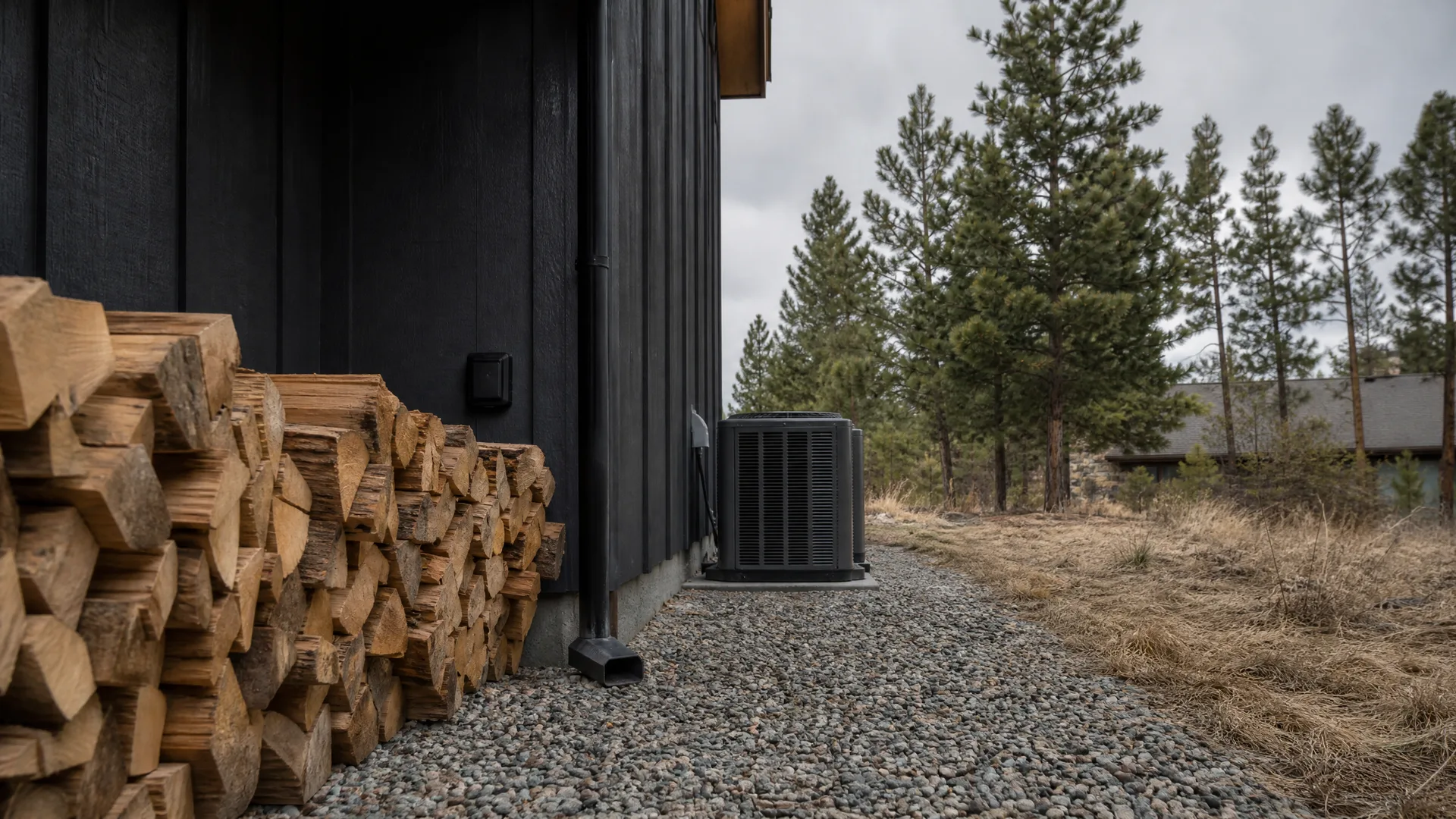






A stack of split firewood beside a dark vertical-board house wall, with an outdoor air conditioning condenser unit on a gravel path and pine trees under an overcast sky.

Heat Pump Repair in Billings, MT

Tell us about the job

Takes about a minute. No obligation.

RepairHeat PumpYellowstone County, MT
Step 1 of 2

What ZIP code is the job in?

Yellowstone County saw 339 severe weather events between 2015 and 2024. Most of that was wind and hail. Damaging wind hit the county 154 times in that stretch, and hail came through 167 times, so a heat pump's outdoor unit spends its life exposed to both. Hail dents the cabinet and can bend the fins on the coil. Wind throws branches and grit into it. None of that always stops the unit from running, which is why it's worth having someone look even when it still seems fine.

9 months
September through May, your system heats
2 months
July through August, it cools
16°F
the average winter night it heats against
83°F
the average summer afternoon it cools against
Isometric line illustration of a cutaway single-story house showing interior rooms with furniture and ceiling ductwork, connected to an outdoor condenser unit on the ground outside the left wall.
Your system heats September through May and cools July through August.

NOAA nClimDiv, 1991–2020 normals

Heat here starts up in September, after a August of sitting idle.

A heat pump that struggled in May often fails in that first September cold snap, when it has to switch over and work.

This much wind and hail finds every weak spot in an outdoor unit

154 damaging wind events from 2015 to 2024
167 hail events from 2015 to 2024
17 winter storms from 2015 to 2024
Half These Homes Were Built in 1982 or LaterIf your system came with a newer house, it probably still has years left in it.

A heat pump that's taken this much wind and hail doesn't fail at random. It fails where it already took a hit. A bent fin from an old hailstorm restricts airflow for years before the coil finally can't keep up. A connection shaken loose by a windstorm might hold fine until the day it doesn't. When something's off with your heat pump, worth having it looked at by someone who checks those spots first instead of guessing at the obvious part. A repair aimed at the real weak point holds. One that isn't just gets paid for again.

Had it checked lately, or just waiting for it to quit

If your outdoor unit has taken hail or wind damage over the years, don't wait for it to quit outright. A bent fin or a loose connection can hold for a while before it doesn't. Have it checked now, while you still get to pick the time.

Find a contractor
A gray heat pump outdoor unit mounted on a concrete pad next to the stone-accented exterior wall of a house.

A Newer System Is Worth Repairing

If your heat pump came with the house, a newer build date is a good sign it still has years on it. That makes repair the right call over replacement, especially when the damage is something specific, a bent fin or a connection worked loose by wind, rather than the unit wearing out on its own. The mobile home share here is under one in ten, so most of these systems sit on a standard install, the kind a technician can get into and work on without first figuring out an unusual setup.

What you'll actually notice first

The outdoor unit runs long and the house still doesn't feel right, warm in winter or cool in summer. Air comes out of the vents but it's lukewarm instead of hot or cold. You hear the outdoor fan cycling on and off fast, or it hums but the fan doesn't spin. Sometimes the whole system just won't switch between heating and cooling, stuck doing one or the other no matter what the thermostat says.
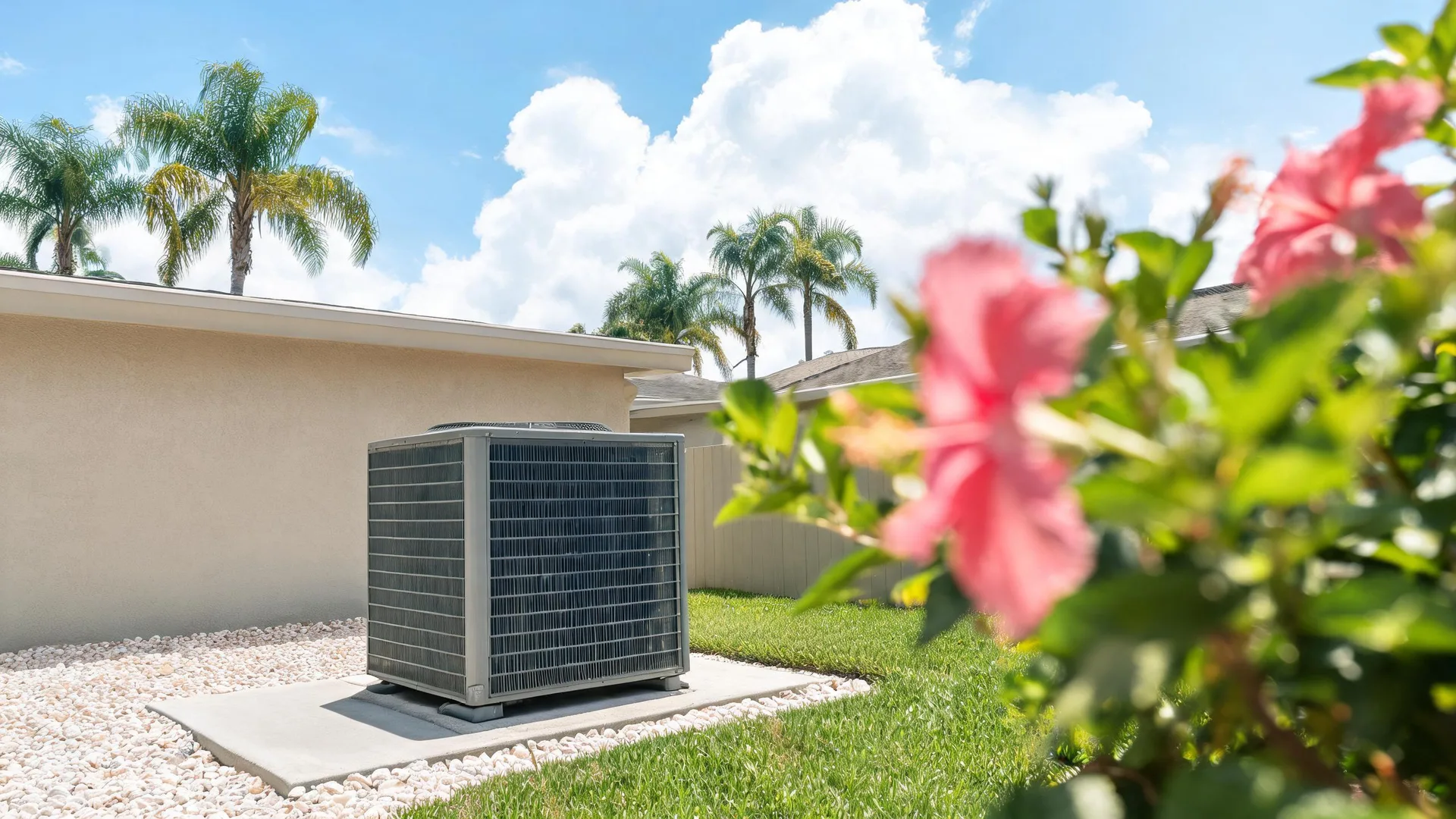
What those signs are telling you

A heat pump that runs constantly without catching up is usually losing refrigerant or has a coil that can't move enough air. A fan that hums but won't turn points to a seized motor or a bad capacitor. Trouble switching between heat and cool almost always comes down to the reversing valve, a part that either moves or the whole system picks a side and stays there. None of these fix themselves, and running the unit hard while they're broken tends to wear out whatever's left.

Before calling anyone, check the thermostat first. Make sure it's set to the mode you want and the batteries aren't dying, since a thermostat stuck or misreading can look exactly like a broken unit. Walk outside and look at the outdoor unit. If it's packed with leaves, grass clippings or ice, clear what you can reach by hand, since blocked airflow alone can make a heat pump run long without catching up. Check that the outdoor fan is actually spinning and not just humming. Inside, pull the air filter and hold it up to the light. If you can't see through it, swap it, because a clogged filter starves the system the same way a blocked outdoor unit does. Check the breaker panel too. A heat pump that won't start at all sometimes just tripped a breaker and needs nothing more than a reset. If the unit still isn't right after that, it's time to have someone look at what you can't check yourself.

A diagnostic visit starts before any panel comes off. A tech asks what the system is doing, when it started, and what mode it was in, because that narrows down the likely parts before a single tool comes out. Then comes the gauges, checking refrigerant pressure on both sides, since too little or too much tells a different story about where the trouble is. Electrical readings come next, testing the capacitor and contactor, the parts most likely to wear out quietly over years of cycling on and off. The reversing valve gets checked if the system has trouble switching between heat and cool, since that part either moves when it's told to or it doesn't. Airflow gets checked last, both at the outdoor coil and at the indoor vents, because a system can test fine electrically and still fail to move enough air to do its job. Whatever's found gets explained in plain terms, what's failing, why, and what fixing it actually involves, before any work starts.