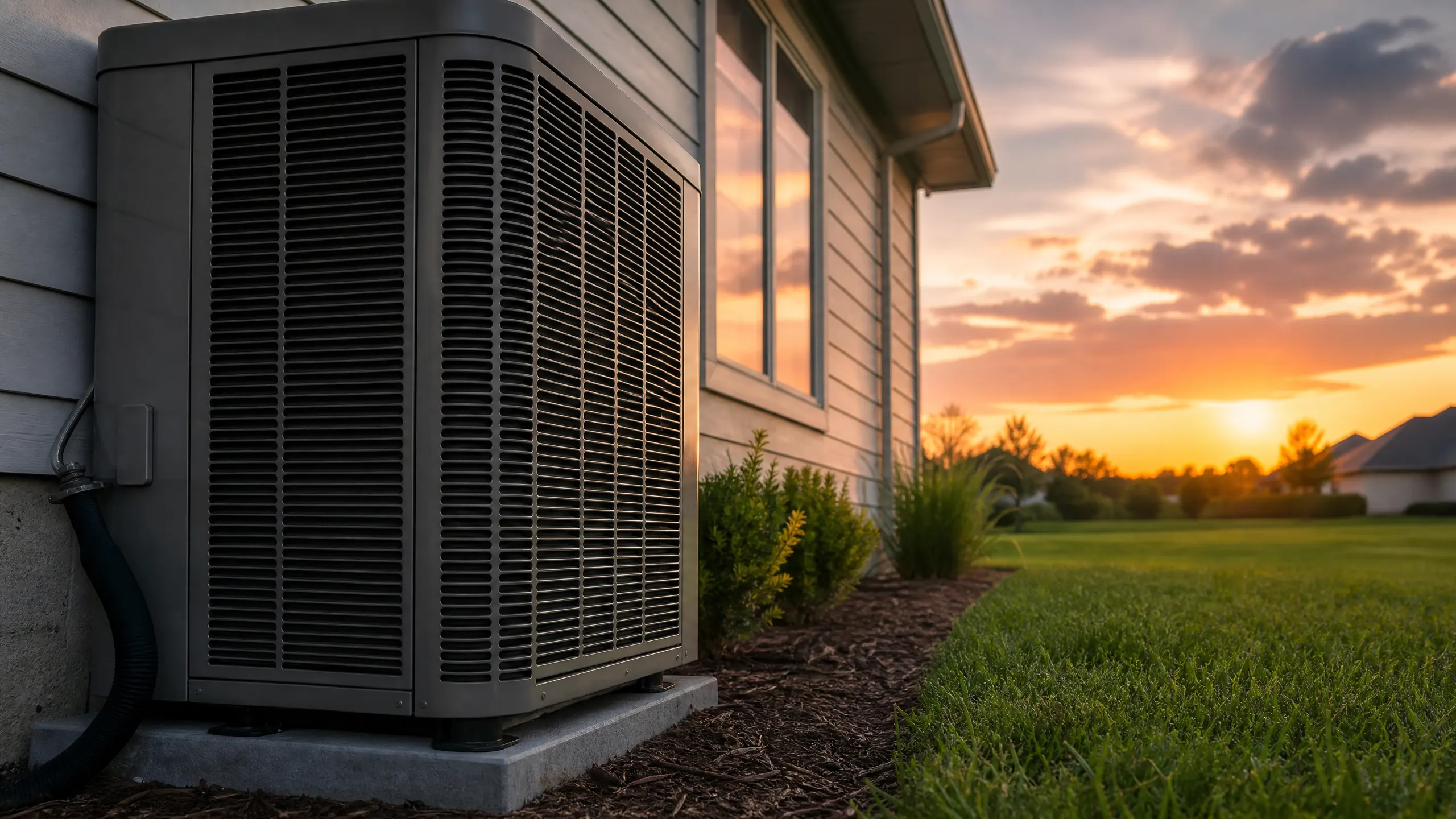






An outdoor air conditioning condenser unit mounted on a concrete pad beside a house at sunset.

Heat Pump Installation in Ennis, MT

Tell us about the job

Takes about a minute. No obligation.

New system or replacementHeat PumpMadison County, MT
Step 1 of 2

What ZIP code is the job in?

Electricity in Madison County runs 13.97 cents per kilowatt-hour on average. A heat pump moves heat instead of burning fuel for it, so every degree it has to work against shows up on the meter. Winters here are hard, which means long stretches where the heat pump is running most of the day to keep up. How efficiently it does that work matters more here than in a place where the system barely has to work. The low cost of power you're used to from propane doesn't apply the same way once the load shifts to electric.

11 months
August through June, your system heats
14°F
the average winter night it heats against
73°F
the average summer afternoon it cools against
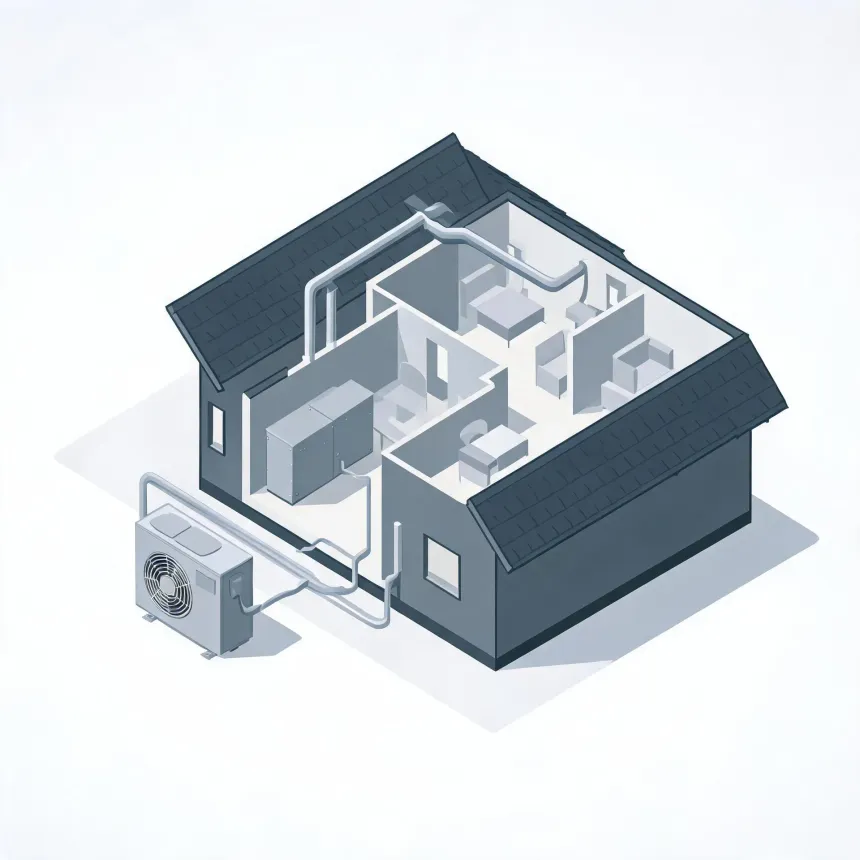
Isometric grayscale illustration of a cutaway house showing interior rooms, ductwork and an indoor air handler connected by lines to an outdoor condenser unit on the ground outside.

The size of the heat pump has to match the heat loss of the house, not the square footage.

An oversized unit short cycles and wears out faster, an undersized one runs flat out and still falls behind on the coldest days.

Heat here runs eleven months of the year, so install timing matters more than most places

Heat runs August through June
Climate zone 6B
Power here costs 13.97 cents per kilowatt-hour
Most homes here run on propanePropane heats 45.3% of homes in Madison County, more than any other fuel.

Madison County falls in climate zone 6B, a cold zone under the 2021 energy code. Any split-system heat pump installed here has to meet the federal minimum for that kind of system: at least 14.3 Btu of heat moved per watt-hour in summer, at least 7.5 in winter. Those numbers set the floor. A contractor sizing a system for this house will be working from models that already clear that bar, so the real comparison is how far above it a given unit sits, not whether it qualifies at all. A federal tax credit is available for systems that meet the efficiency requirements tied to this program.

On a system that runs this much, efficiency is what you're buying

A unit that sits well above the minimum rating costs less to run through a long heating season here than one that barely clears it. That gap shows up on every bill, not just the first one. Ask what efficiency rating a quoted system carries, and how it compares to others sized for this house.

Find a contractor
A man in a dark t-shirt and tan work pants, seen from behind, carries a worn canvas and leather tool bag up concrete steps toward a dark gray front door, with a potted flowering plant to the right.
A gray air-source heat pump mounted on a concrete pad next to a house with gray vinyl siding, surrounded by gravel and flanked by green shrubs and white hydrangea flowers.

A machine that runs this many hours a year lives or dies on how it cycles

A heat pump run time is measured two ways: how many hours it logs in a year, and how many cycles it goes through to get there. Short cycling, where the unit kicks on, satisfies the thermostat fast, then shuts off again, puts more wear on the compressor than one long steady run does. When you compare systems, ask how the contractor sized the unit against the heat loss of the house, not just the square footage, because a unit sized right will run in longer, steadier stretches instead of hammering on and off. Ask about the compressor too. Some compressors run at a single fixed speed, so the unit is either full on or off. Others modulate, ramping up or down to match the load, which means fewer starts and stops over a season of near-constant use. The outdoor coil and the defrost control matter as much as the compressor. A unit that defrosts on a fixed timer will sometimes run a defrost cycle it doesn't need, and sometimes miss one it does. A unit that defrosts based on actual coil temperature and airflow runs the cycle only when frost has actually built up. Over a long season, that difference adds up in both comfort and wear.

The old equipment doesn't get left in place

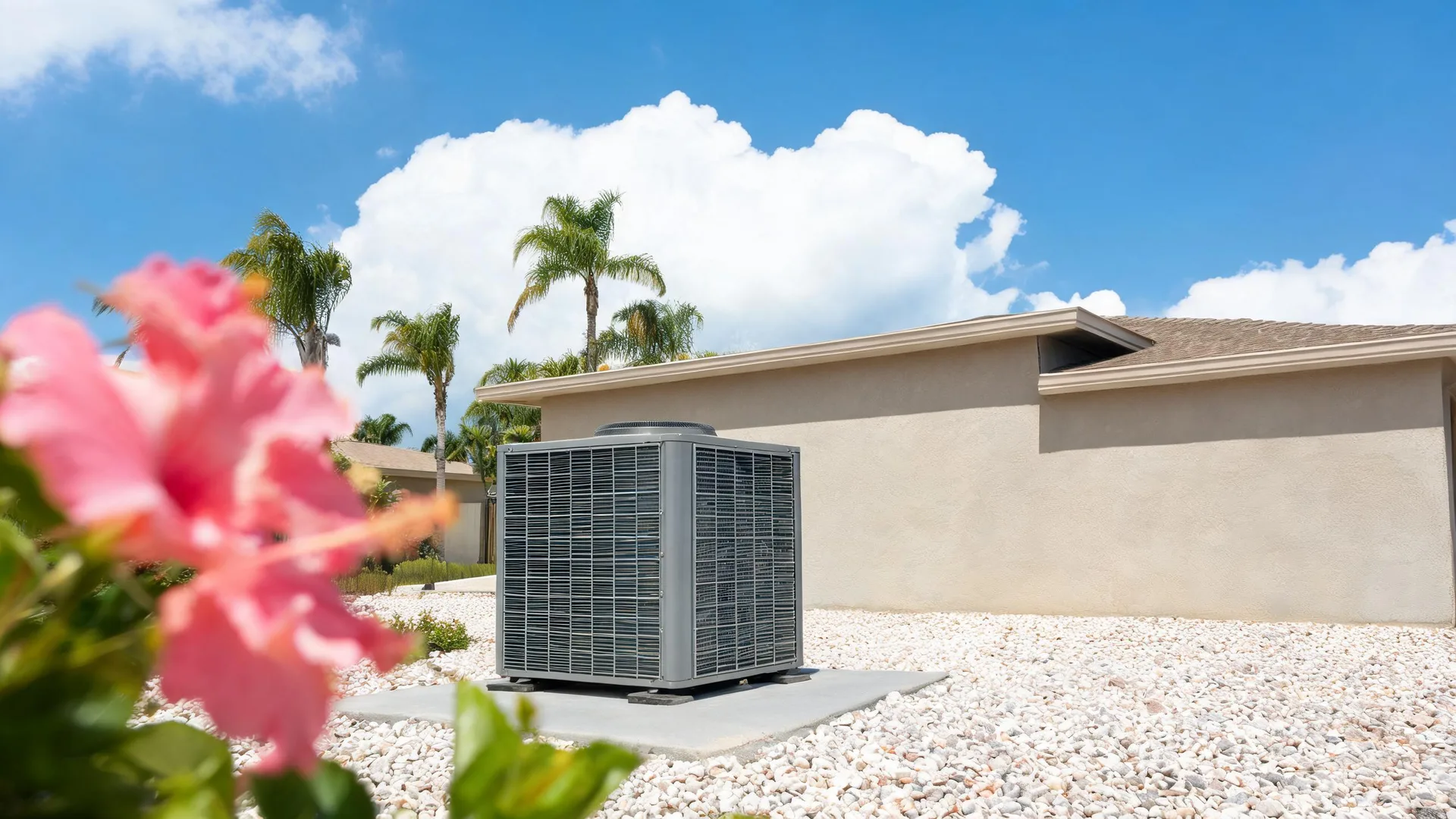
A heat pump installation includes taking out what was there before, whether that was a furnace, a boiler, or another heat pump. The indoor and outdoor units both come out, along with the line set connecting them. A contractor disconnects the power and, on a propane furnace, caps the gas line so it's sealed off correctly rather than just shut at the valve.
Refrigerant has to be recovered, not vented

If the old system is also a heat pump or an air conditioner, the refrigerant in its lines has to be captured into a tank and removed, never released into the air. That's a licensed step, not an optional one. It's part of why swapping in a new heat pump is a job for a contractor and not something handled piecemeal.

Sizing starts with a heat loss calculation on the house itself, room by room, not a chart based on square footage. That calculation accounts for how much heat escapes through the walls, the windows, the roof, and how much cold air works its way in, and it's the only honest way to know how much heating and cooling capacity the house actually needs. Skip that step and guess from floor area instead, and the unit you land on is wrong for the house more often than it's right. An oversized heat pump blasts the space with heat or cold air, satisfies the thermostat fast, and shuts off, so it cycles on and off all day instead of running in long steady stretches. That short cycling wears on the compressor and leaves the air in the house less even, because a long slow run does a better job of pulling out humidity and spreading heat than a short blast does. An undersized one has the opposite problem. It runs flat out and never catches up on the coldest or hottest days, so the house falls behind right when it needs the system most. A contractor doing this right walks the house, measures it, and runs the numbers before ever naming a unit.

Installation day starts before anyone touches the old equipment. A contractor walks the site, confirms where the new line set will run between the indoor and outdoor units, and checks the electrical panel for the circuit the heat pump needs. Once the old system is out and disconnected, the outdoor unit gets set on a pad, leveled, and positioned with clearance on all sides so air can move through the coil. The line set gets run, connected, and then the whole system is pressure tested before any refrigerant goes in, because a leak found after charging means doing the work twice. The indoor unit gets tied into the ductwork or, on a ductless setup, mounted and wired to its own line. Once everything's connected, the system gets charged to the manufacturer's specification, not just until it blows cold air, and the contractor runs it through a cycle to check airflow, pressures, and that the thermostat is actually talking to the unit the way it should.