

Illuminated timber-and-stone mountain cabins along a curved road at twilight, with lit trees and mountain peaks in the background.

Furnace Repair in Thompson Falls, MT

Tell us about the job

Takes about a minute. No obligation.

RepairFurnace or heatingSanders County, MT
Step 1 of 2

What ZIP code is the job in?

Your furnace in Thompson Falls runs about ten months of the year, September through June. Overnight lows average 20°F through December, January and February, so the burner is cycling on for long stretches most nights, not just a few hours here and there. That kind of runtime adds up on the igniter, the blower motor, the pressure switch, parts that are only built to handle so many hours before something gives out. Add in the weather this county sees, winter storms hitting 128 times over the past ten years, and the furnace rarely gets an easy stretch to coast through. When something starts acting up, it's worth finding out what's actually wearing down before it fails outright.

10 months
September through June, your furnace is on duty
20°F
the average winter night it heats against
128 winter storms
in ten years, the nights a failure hurts most
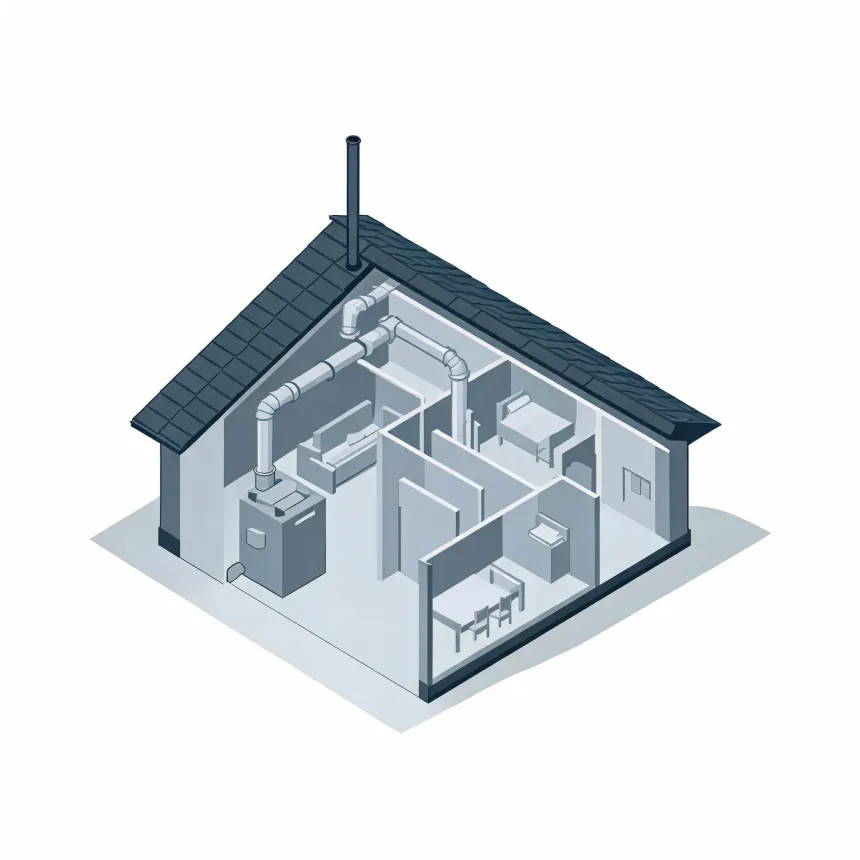
Isometric cutaway illustration of a small single-story house showing interior rooms with furniture, a furnace unit with attached ductwork running to a roof flue, and a dark shingled roof.
Your furnace works hardest from October through April.

NOAA nClimDiv, 1991–2020 normals

The igniter wears out from repeated heating and cooling every time the furnace fires.

A worn igniter usually shows itself as a furnace that won't light at all, and it's a straightforward swap once that's confirmed.

Half these furnaces are younger than the house next door's

Half the homes here were built by 1992
Climate zone 6B
Heat runs September through June

August is worth a look before the furnace starts up in September. Ten months of runtime means there's barely a stretch where this system sits idle, and whatever was already weak tends to announce itself in the first cold snap, not months into the season. A furnace that struggled at the end of last June is likely to struggle again the moment it's asked to carry a full load. Getting it checked in August catches a bad igniter or a failing pressure switch before the first real cold snap forces the issue.

Get the real cause, not a guess

A furnace that runs ten months a year doesn't get much chance to rest, and this one has been carrying that load through plenty of hard winters. If something's off with yours, a proper look will tell you whether it's the igniter, the blower motor or something else, and whether it's worth repairing or letting go.

Find a contractor
A person in a dark long-sleeve shirt and tan work pants, seen from behind, carries a canvas tool bag while stepping up porch stairs toward a dark blue front door.
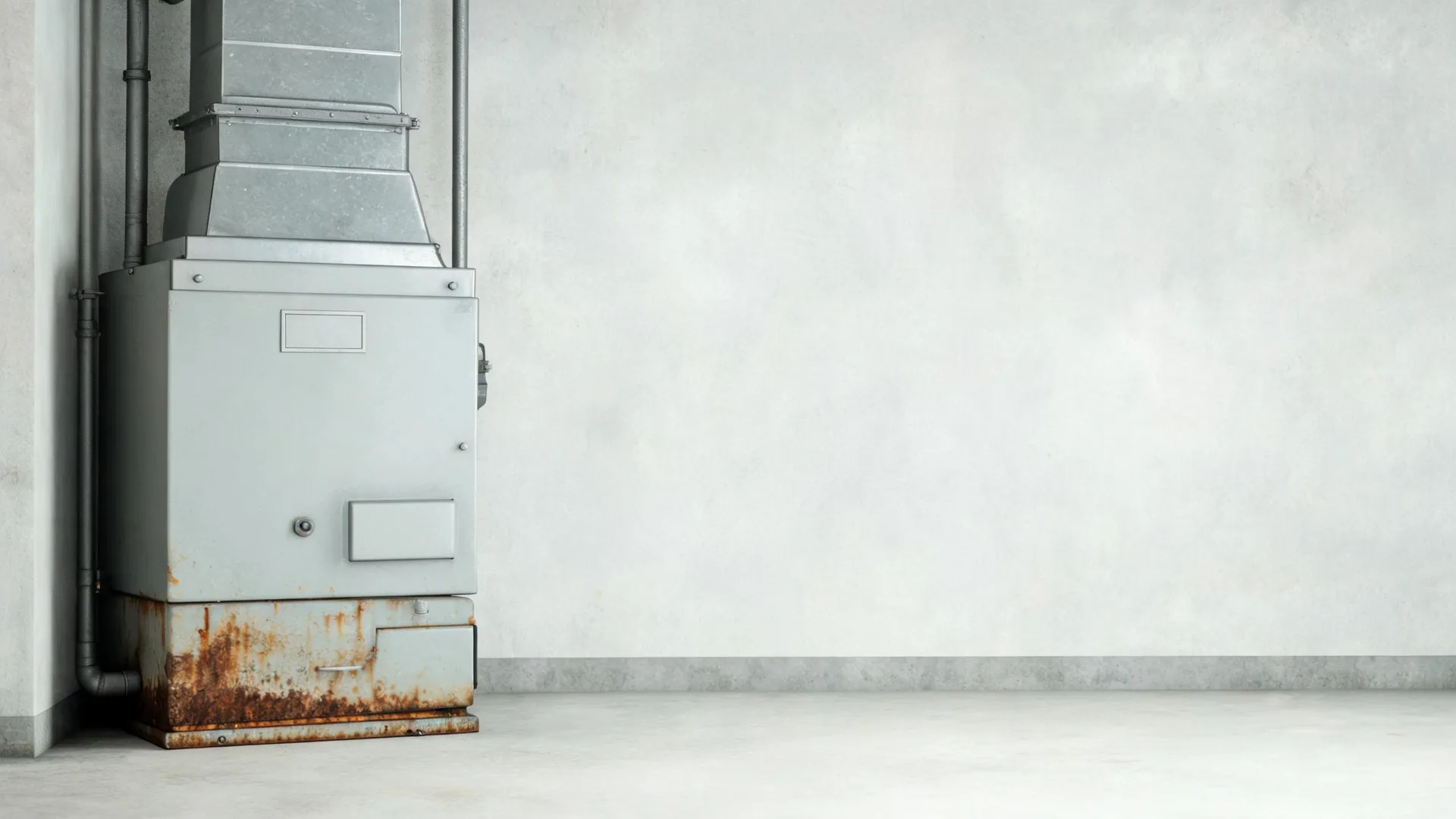
A gas furnace with attached ductwork, gas piping, and condensate lines installed in a concrete-block basement.

One part decides the whole question

A heat exchanger that cracks is the one thing that ends a furnace's run for good. Everything else, the igniter, the pressure switch, the blower motor, can be swapped out on its own without touching the rest of the system. The exchanger can't be patched. A crack in it lets combustion gas mix with the air moving through the house, and that's not something a tech can seal up and send you on your way. So that's the real question when something breaks. Is this a part that wears out and gets replaced on its own, or is it the exchanger itself. A tech checks for that early, usually by looking for soot patterns or watching whether the flame flickers oddly when the blower kicks on. If the exchanger's sound, almost everything else is worth fixing.

Short cycling wears on everything

A furnace that fires up, runs a couple minutes, then shuts off before the house warms is usually tripping a limit switch, often because airflow is restricted or the heat exchanger is overheating. Left alone, that stop-start pattern puts more wear on the igniter and blower motor than a normal heating cycle ever would.
Listen for what changed

A bang at startup usually means gas is pooling before it lights, which points to a dirty burner or ignition delay. A grinding or squealing blower bearing won't fix itself and tends to fail completely without warning. Either one is worth a call before it turns into a no-heat situation on a cold night.

Before you call anyone, check the filter. A clogged filter chokes airflow, and that alone can cause short cycling or a furnace that blows cool air. Walk to the thermostat and make sure it's set to heat, not just on, and that the batteries aren't dead if it's a digital one. Check the breaker box too. A furnace that won't start at all sometimes just needs a reset switch flipped back on. If you've got a standing pilot, look and see if it's lit. None of this is guesswork, it just rules out the simple stuff before you pay someone to find the same thing.

A diagnostic visit starts with questions, not tools. When did it start acting up, what does it sound like, has anyone smelled gas or seen the flame color change. Then it's a check of the simple things first, the filter, the thermostat settings, the breaker, before anything gets taken apart. From there the tech checks the flame sensor, the igniter, the pressure switch and the blower, usually with a meter, watching how the furnace behaves through a full cycle rather than just looking at it sitting still. A furnace can look fine shut off and still fail the moment it's asked to run a full cycle. The goal is to find the one part actually causing the problem, not to replace things until something works.