
Heat pump vs furnace in Sanders County, Montana

Request a Quote

Serving Sanders County homes

A person's hand adjusts a round thermostat on a dark blue-gray wall, with a living room and an open tool bag visible in the background.

Tell us about the job

Takes about a minute. No obligation.

New system or replacementSanders County, MT
Step 1 of 3

What kind of equipment?

Which costs less to run in Sanders County?

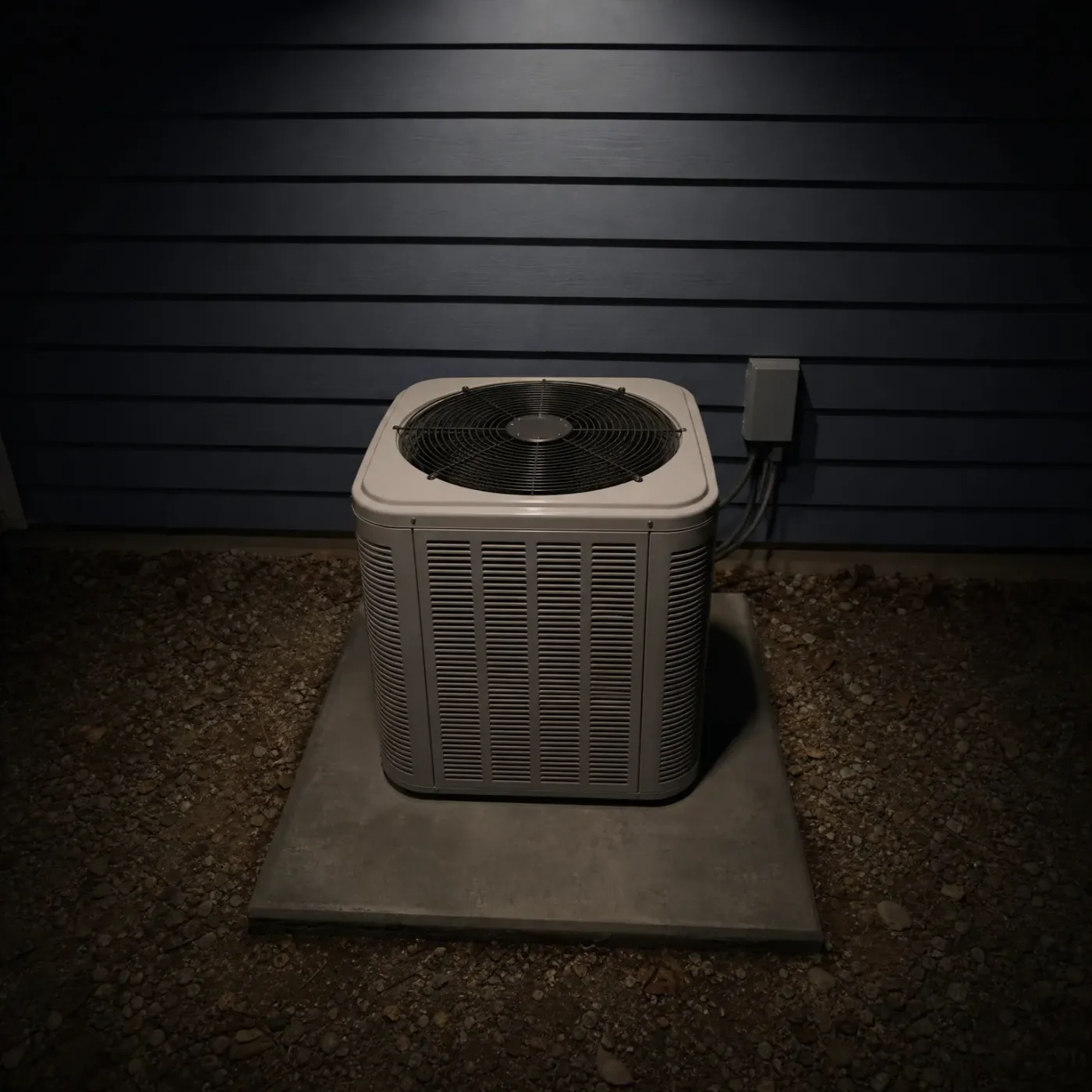
An outdoor air conditioning condenser unit on a concrete pad surrounded by gravel, against dark horizontal lap siding with a wall-mounted disconnect box and conduit, lit from above at night.

Heat pump

To heat your home here$1.69per 100,000 Btu

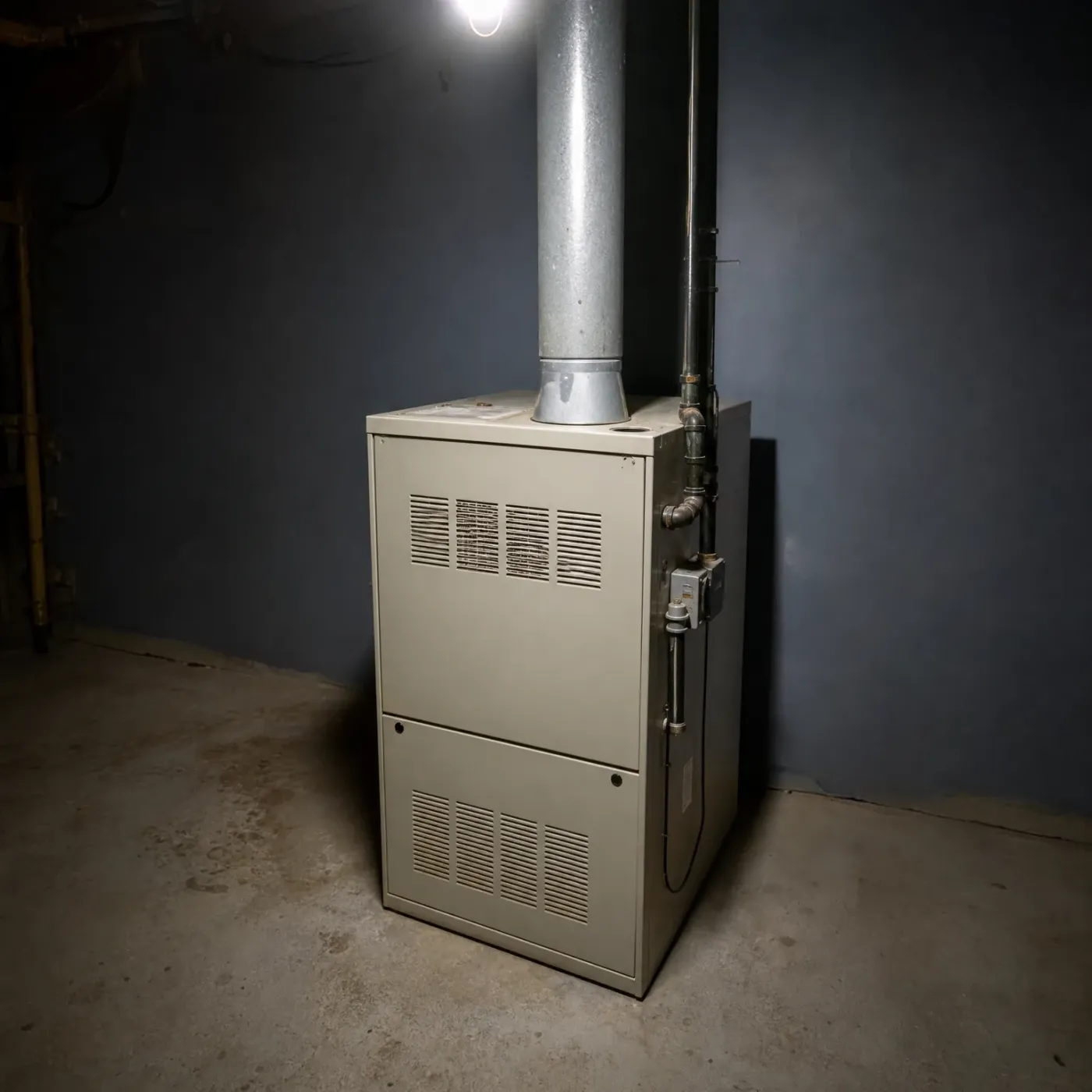
A beige residential furnace with louvered front panels stands on a concrete basement floor against a dark gray wall, with a metal flue pipe rising from its top and gas piping along its right side.

Furnace

To heat your home here$0.97per 100,000 Btu

At Montana's gas and electricity prices, a gas furnace makes the same heat as a heat pump for at least 42% less.

Btu stands for British thermal unit, the standard measure of heat energy.

Where does a heat pump shine?

  • Steady, even comfort

    Instead of short bursts of heat, it keeps a gentle, steady output going. The house stays at one comfortable temperature.

    A living room with a lit wood-burning stove, a grey armchair with a plaid throw and open book, a lamp on a small side table, glass doors showing a frosty dusk view, and a tan dog sleeping on a woven rug.
  • No gas line, nothing burning in the house

    There's no gas line to the unit and no flame anywhere in it. Carbon monoxide isn't part of the picture.

    A kitchen island with a light stone countertop and black cooktop holding a stainless steel kettle, with navy cabinets, a white tile backsplash, a wooden cutting board, a vase of white hydrangeas, and a bowl of green apples.
  • Heats and cools in one system

    A heat pump runs the same way all year. It pulls heat into the house in winter and pushes it out in summer.

    A living room with a gray upholstered sofa with cushions and a gray throw beneath a large window overlooking a garden, flanked by dark built-in bookshelves, with a wooden coffee table holding a woven tray, mugs, and a potted plant in the foreground.

Where does a furnace shine?

  • Pairs with any central AC

    A furnace's blower and ducts carry cooled air too. Adding central AC uses the same system.

    Sunlit wood plank floor with a metal floor air vent, a woven rug at lower left, a gray-painted open door at left, and a sheer white curtain at upper right.
  • Fast, strong heat on demand

    The air coming from the vents feels genuinely hot. That's welcome on a freezing morning.

    Entryway with a dark blue paneled door with glass panes showing snow and conifers outside, a sheer white curtain by a window, a wooden bench with pillows and a steaming mug, a floor vent, a jute rug on slate tile, and boots lined up along the wall.
  • Proven, simple, easy to get serviced

    Gas furnaces have heated homes for generations. Almost every HVAC tech knows them inside and out.

    A gloved hand holds a white pleated air filter in front of a utility room with metal shelving, baskets, a blue door, and a furnace unit.

Can a heat pump keep up here

Winters here settle part of this before cost even comes into it. The overnight low averages 20°F across December, January and February, and it drops to freezing or below on about 190 nights a year, out of roughly 305 nights in the ten months the heat runs. A standard heat pump starts putting out less than its rated heat below 40°F, and it often needs backup heat below about 35°F. Every one of those 190 freezing nights here is below both marks. That is not a few bad nights. That is most of the heating season.

That does not rule out a heat pump. It means the heat pump has to be a cold climate model, built to keep at least 1.75 units of heat for every unit of electricity at 5°F and at least 70 percent of its 47°F capacity at that same temperature, checked by independent testing. A standard heat pump sized for a milder place would lean on backup heat for a good part of those 190 nights. Field tests of cold climate units in occupied homes found backup heat covering only a small share of the load between 0°F and 35°F, and running on backup alone was rare even above 0°F. The nights that reach 0°F or below are few here, about 7 a year. The real test for a heat pump in this county is the long run of nights in the 20s and 30s, not the handful near zero, and a cold climate model is built for that long run.
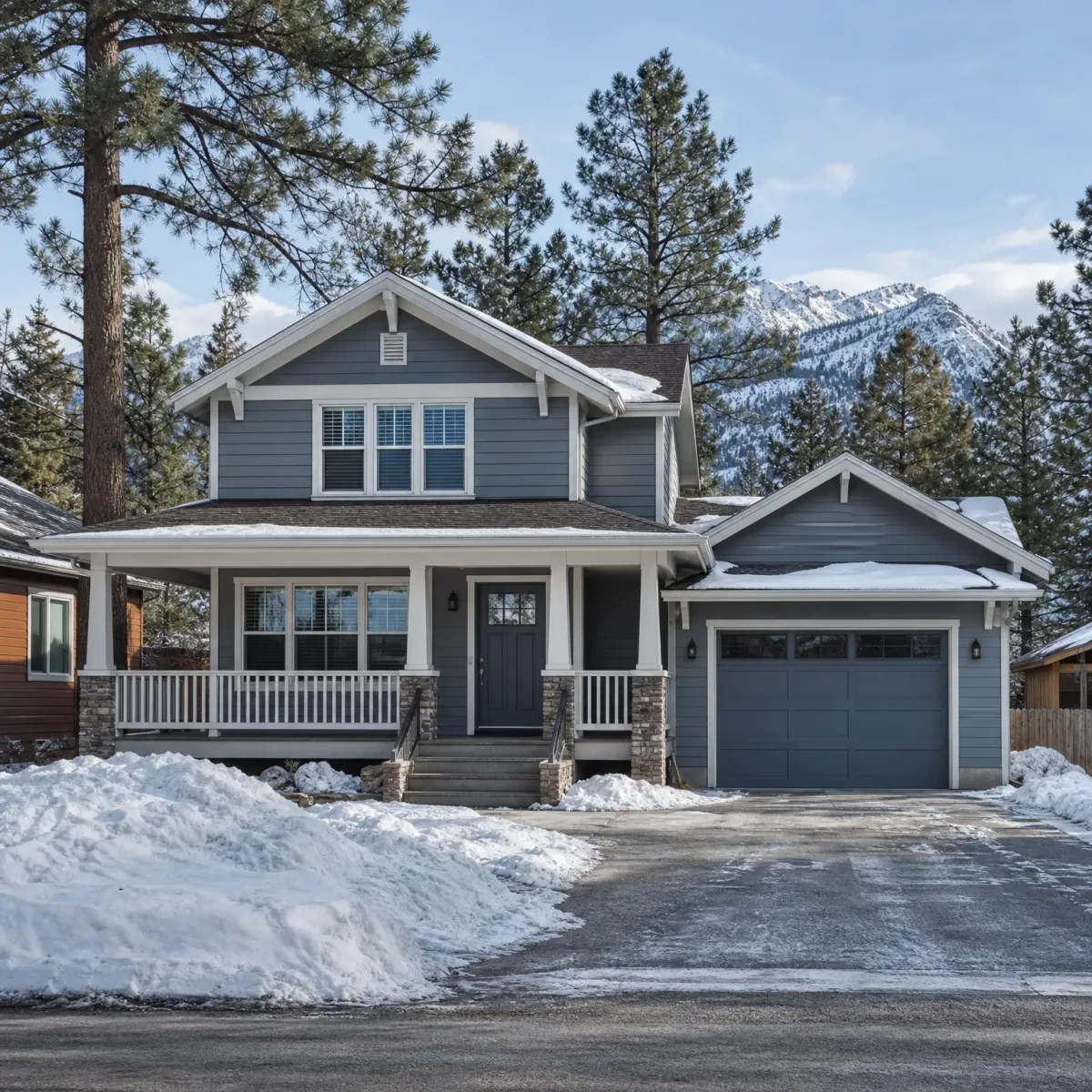
A two-story gray craftsman-style house with a covered porch, stone column bases, and an attached two-car garage, surrounded by plowed snow banks, tall pine trees, and a snow-covered mountain in the background.

What it costs to run

Set the cold aside and the running cost still favors gas. A gas furnace makes the same heat here for $0.97 per 100,000 Btu against $1.69 for a heat pump, both figures built on the federal minimum efficiency for each machine and Montana's average fuel prices: natural gas at $7.77 per million Btu, electricity at $37.11. The heat pump's number assumes no backup heat is needed at all, so on the nights here that call for it, the real gap runs wider than $1.69.

The heat runs about ten months a year here, September through June, so this cost is not a short-season expense. A furnace only heats, so it sits idle the other two months, while a heat pump would also handle cooling if those months called for it. Here they mostly do not. Sanders County has essentially no cooling season, so that side of what a heat pump offers goes unused in most homes.

A gas furnace is the cheaper machine to run and the more proven fit for a cold climate like this one. A heat pump still makes sense for a house without a gas line. About 23 percent of homes here already heat with electricity and another 21 percent with propane, which runs $22.28 per million Btu, well above gas. For a house with a gas line choosing between the two, the furnace costs less to run. Where a heat pump is chosen anyway, a cold climate model is the one built for what winter here actually does.

Sources: NOAA nClimDiv · NOAA 1991–2020 seasonal normals · EIA SEDS 2024 · 10 CFR 430.32 · PNNL Building America guide · PNNL-37127 field study · ENERGY STAR product criteria · Census ACS 2020–2024

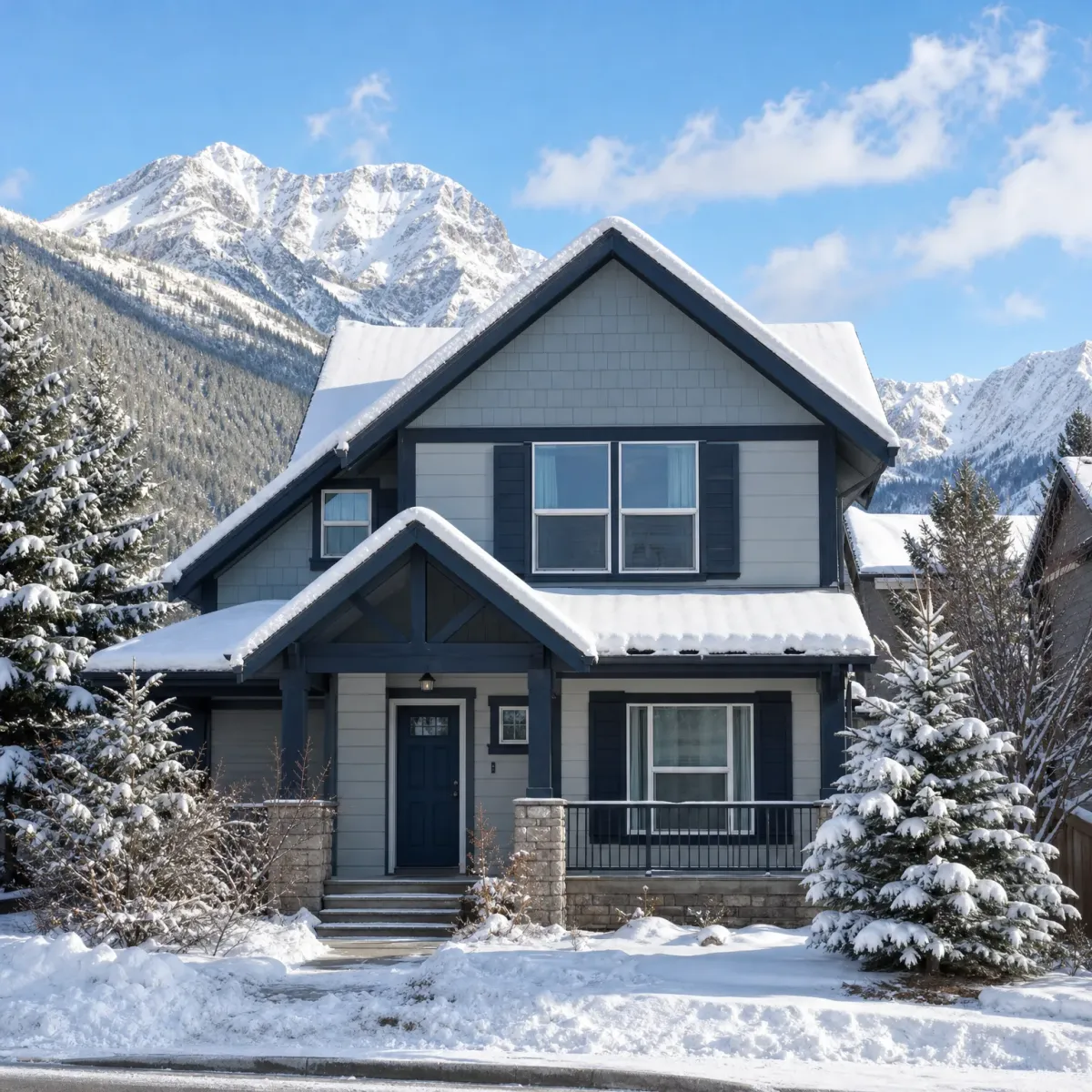
A two-story light gray house with dark blue trim, shutters and front door, its roof and yard covered in snow, flanked by snow-laden conifers with snow-capped mountains behind under a blue sky.

Common questions about heat pumps and furnaces

  • Can a heat pump heat a house through a Montana winter?

    It can, but not at full strength on the coldest nights. A conventional heat pump puts out less than its rated capacity below 40°F, and only a fraction of it in the teens, which matters here since the overnight low falls to 0°F or below about 7 nights a year. An ENERGY STAR Cold Climate heat pump is built for this: it has to deliver real heat and hold most of its capacity even at 5°F outside, verified by third-party testing.

  • Do I need backup heat with a heat pump here?

    Most likely, yes. Once it drops below about 35°F outside, a standard heat pump often needs backup heat, and the overnight low here averages 20°F across December, January and February. A cold climate model holds up better, but a standard heat pump paired with this climate will lean on backup heat most winter nights.

  • What if my house heats with oil or propane?

    Propane heats about one in five homes in Sanders County, and oil heats fewer than one in ten. Propane runs $22.28 per million Btu, well above natural gas at $7.77, so a switch to gas or a heat pump is worth running the numbers on. Oil is pricier still to source and maintain, and neither fuel shows up in the furnace-versus-heat-pump cost comparison above, which is built on natural gas and electricity prices.

  • Is a heat pump cheaper to run than a furnace in Sanders County?

    No, a furnace costs less to run here. Heating with a heat pump runs $1.69 per 100,000 Btu against $0.97 for a gas furnace, at Montana's average electricity and gas prices. The gap comes down to the fuel itself: electricity costs $37.11 per million Btu in Montana, natural gas $7.77.