

A lit mountain lodge-style home at night with evergreen trees, stone accents, and snow-capped mountains in the background.

Furnace Repair in Hardin, MT

Tell us about the job

Takes about a minute. No obligation.

RepairFurnace or heatingBig Horn County, MT
Step 1 of 2

What ZIP code is the job in?

A furnace in Big Horn County earns its keep. Homes here run heat about ten months a year, September through June, which leaves only a short stretch where the system gets to sit idle. Add in the winter storms, 84 of them between 2015 and 2024, and you've got a blower and igniter cycling on and off through some of the hardest weather around. That kind of use adds up faster than it would somewhere milder. A part that might last years in another state can wear thin here well before its time. When something acts up, it's usually not bad luck. It's a machine that's been working since September.

10 months
September through June, your furnace is on duty
14°F
the average winter night it heats against
84 winter storms
in ten years, the nights a failure hurts most
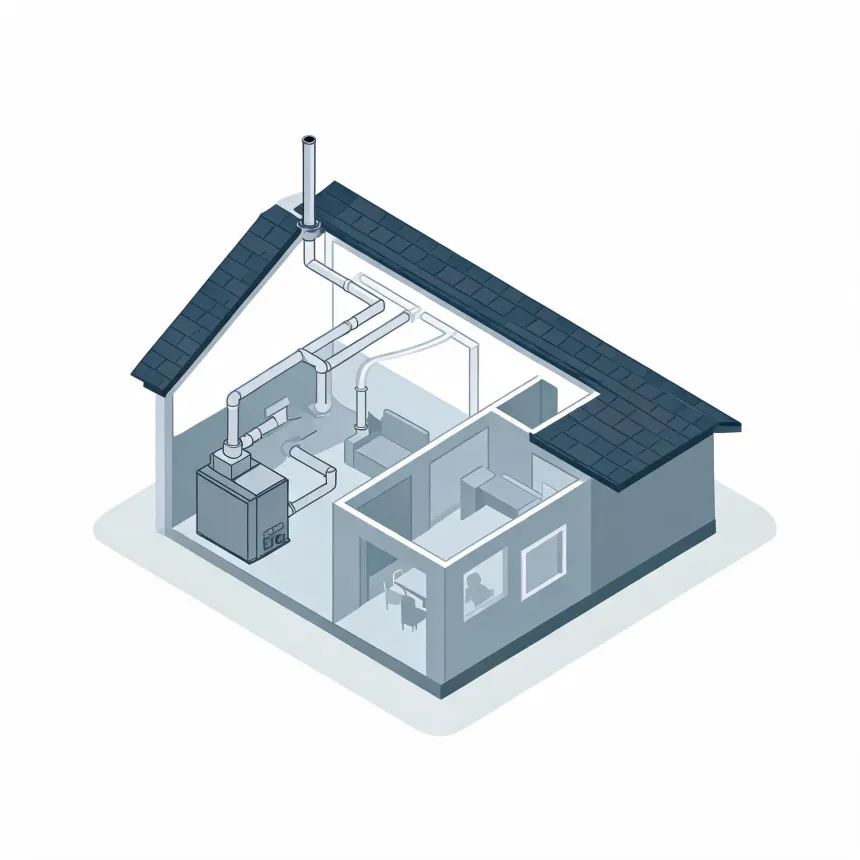
Isometric cutaway illustration of a single-story house showing interior rooms, a furnace unit with connected ductwork, and a flue pipe extending through the dark shingled roof.
Your furnace works hardest from November through April.

NOAA nClimDiv, 1991–2020 normals

Check the thermostat and the breaker before you check anything else.

A reset switch or a dead batteries is a quicker fix than waiting on a technician.

Had Hail or Debris in the Outdoor Vent Area This Year? Get It Checked Even If the Furnace Still Runs

231 severe weather events from 2015 to 2024
18% of homes statewide lost power a day or more in 2024
91 damaging wind events from 2015 to 2024
September Is When Weak Parts Get FoundHeat runs here about ten months a year, September through June.

Winter storms are hard on a furnace that's already running flat out. Blizzards bring wind that drives snow and ice into outdoor vents and intake pipes, and a blocked vent can shut the whole system down or worse, let exhaust back up where it shouldn't go. If your place had drifting snow or ice buildup around any outside vent pipe this winter, that's worth a look before you assume the furnace itself is at fault. Hail and downed branches matter less for a furnace than for an air conditioner, since most of the furnace sits inside, but the vent pipe and any exterior intake are still exposed. If the furnace started acting up right after a storm, mention that when you call. It tells a technician where to look first.

Get the Furnace Checked Before It Has to Work Any Harder

A furnace that's been running since September doesn't fail for no reason. Something specific wore out or worked loose, and a technician who knows what's been asked of it this year can find that part fast instead of guessing. Get it looked at before the next storm puts more strain on whatever's already weak.

Find a contractor
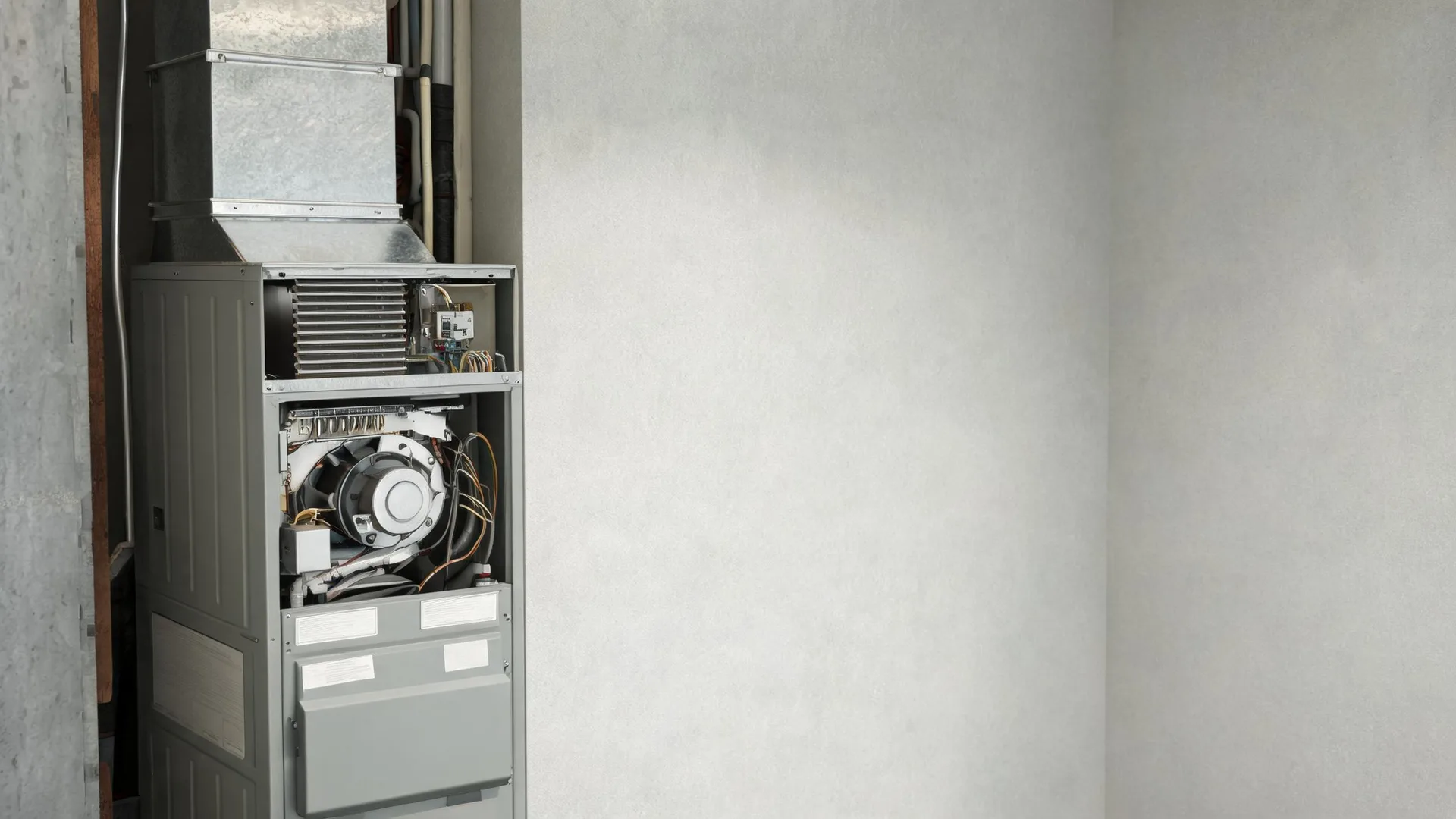
A gray gas furnace with attached ductwork and piping installed in an unfinished concrete basement.

The Parts That Wear Out First

Most furnace failures trace back to a handful of parts, and they tend to go in order. The igniter is usually first. It heats up and cools down every single cycle, and that repeated stress eventually cracks it or wears it out, same as a light bulb that burns out after enough on-off cycles. After that it's the flame sensor, which gets a thin layer of residue on it over time until it can't tell the burner is lit anymore, so the system shuts itself off as a safety measure. Blower motors wear from simple use. Bearings dry out, the motor runs hotter than it should, and eventually it seizes or trips its own limit switch. The draft inducer motor fails the same way, from the same kind of wear, and when it goes the furnace often won't start at all since it needs that motor running before it will let gas flow. Capacitors lose their charge slowly over years until the motor they're supposed to kick-start can't get moving. None of this is bad luck. These are wear parts, and they wear out because they're built to move or heat or sense something every time the system runs.

What You'll Actually Notice

A furnace in trouble rarely just quits without warning. It cycles on and off more than it used to, short runs that don't last long enough to warm the house. The air coming out of the vents feels cooler than it should. You might hear a boom at startup, which means gas is building up before it lights instead of catching right away. Odd sounds matter too: a screech points to a motor bearing, a rattle points to something loose, a repeated clicking means it's trying to ignite and failing.

What's Worth a Call Right Away

Some signs mean stop and get someone out, not wait and see. A burner flame that's yellow or flickering instead of steady blue means it's not burning clean. Soot around the furnace or a burning smell that doesn't fade after the first run of the season both point to a real problem. So does the system shutting itself off mid-cycle, since that's usually a safety switch catching something wrong before it gets worse. Waiting on these doesn't save the part. It just gives the problem more time to spread to whatever's next in line.

A bare concrete basement containing a gray gas furnace with metal ductwork and a vertical flue pipe, lit by a single hanging bulb.

A new furnace would cut about $80 a year off heating for a typical Big Horn County home.

  • A new high-efficiency furnace$340 a year
  • An older furnace$420 a year

Estimates for a typical Big Horn County home, compared with an older unit built to the previous federal minimum, from EIA household energy data, Montana fuel prices and NOAA climate normals. Your home will differ.

Repair makes sense when one part has failed and the heat exchanger is sound.

Replacement makes sense when the heat exchanger is cracked or the furnace keeps needing parts.

Once a furnace is old enough, every repair call raises the same question. A technician can fix almost anything on one of these systems, but that doesn't always mean they should. The heat exchanger is the one part that changes the math. It's not built to be serviced, so if it's cracked, that's a sign the whole unit is near the end, not a part swap away from fine. Short of that, it comes down to what else has already failed. One worn part on a furnace that's otherwise been solid is worth fixing. A second or third failure in the same year or two means the rest of the unit is catching up to whatever already broke, and the next call is rarely far behind.