A paved road curves past dark-green cabins with metal gabled roofs among tall pine trees, with a rustic log fence and gravel shoulder in the foreground.

Furnace Repair in Fort Benton, MT

Tell us about the job

Takes about a minute. No obligation.

RepairFurnace or heatingChouteau County, MT
Step 1 of 2

What ZIP code is the job in?

Ten months of runtime

A furnace in Chouteau County runs from September through June. That's most of the year, not just the cold stretch most people picture. The burner, the igniter, the blower motor all log hours other parts of the country don't ask of them.
What that means for a repair

A furnace that runs this many months wears parts down faster, and small issues turn into no-heat calls sooner than you'd expect. Whatever's going wrong right now is worth having looked at properly rather than patched, since the same strain that caused it is still there after the fix.

10 months
September through June, your furnace is on duty
12°F
the average winter night it heats against
28 winter storms
in ten years, the nights a failure hurts most
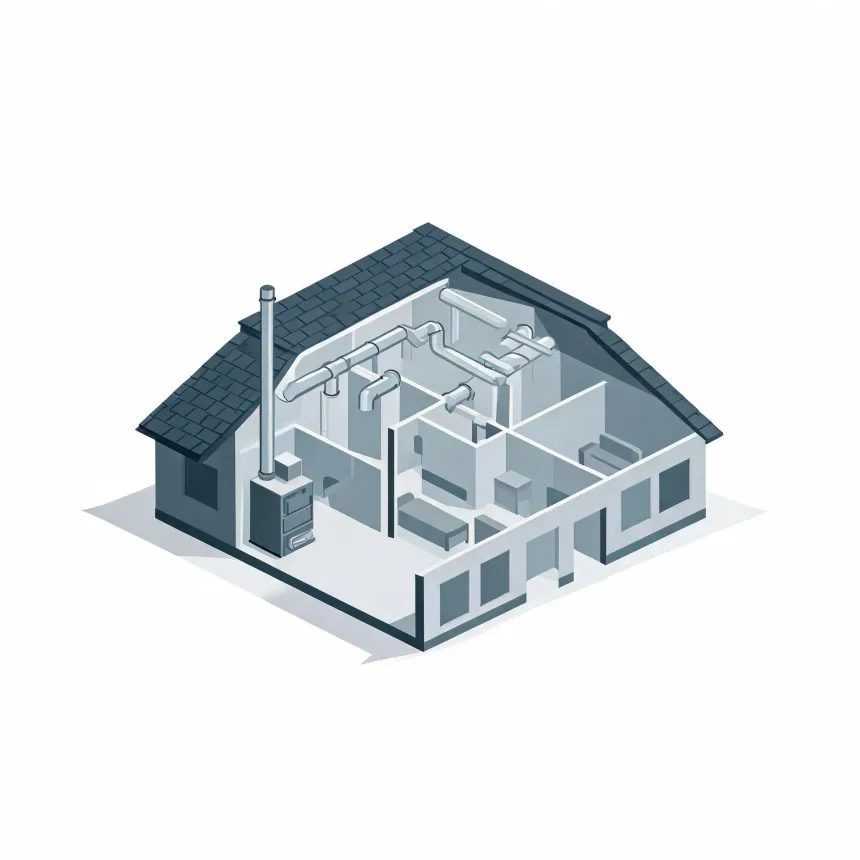
Isometric grayscale illustration of a cutaway house showing interior rooms, ceiling ductwork, a flue pipe, and a furnace unit on the left side.
Your furnace works hardest from November through March.

NOAA nClimDiv, 1991–2020 normals

Half the homes in Chouteau County were built in 1968 or earlier.

A furnace in a house that old has usually been replaced at least once, and the one in there now may be closer to the end than you think.

Propane here runs $22.28 per million Btu, and this furnace burns it most of the year

Heat runs September through June
Winter nights average 12°F
Climate zone 6B
September Is When Weak Parts FailHeat starts running in Chouteau County in September, and that first cold snap is what finds the part that was already on its way out.

A furnace that isn't running right doesn't just lose efficiency, it burns propane to make heat that leaks out somewhere it shouldn't. A cracked heat exchanger, a dirty burner, a blower running when it shouldn't be, all of that shows up on the propane bill before it shows up as a no-heat call. With this furnace running most of the year, that adds up fast. Getting it looked at now, instead of waiting to see if it gets worse, is the difference between one repair and months of paying extra for heat that isn't working the way it should.

Have the real problem found, not just the symptom

That kind of runtime is hard on a furnace, and it doesn't let up once the weather turns. Get the actual cause checked now, so the repair holds instead of coming back on the first cold snap.

Find a contractor
A man in a dark cap, gray T-shirt and brown work pants walks up porch steps toward a dark front door, carrying a canvas tool bag filled with tools, with a potted shrub beside the entry.
A gas furnace with attached ductwork, gas piping, and condensate lines installed in a concrete-block basement.

Ask What You're Actually Repairing

If a repair tech is already out, it costs nothing extra to ask how much life is left in the unit. Half the homes around Fort Benton were built in 1968 or earlier, so plenty of furnaces out there have already been swapped out once or twice. Find out which one is sitting in the basement now before deciding what this repair is worth paying for.

What the furnace is telling you

A furnace short cycles, runs too long, blows cool air, or won't fire at all. Each one points somewhere different. Short cycling often traces back to a flame sensor that isn't reading clean, or a filter choking airflow until the system overheats and shuts itself down. Weak heat can mean a failing igniter that lights the burner late or not every time. A furnace that won't start at all might have a bad control board or a safety switch doing its job and stopping things before they get worse.

What's worth a same-day call

A burning smell, soot around the burner compartment, or a yellow flickering flame instead of a steady blue one means stop using the furnace and get it checked. Those are signs of incomplete combustion, and that can mean carbon monoxide going somewhere it shouldn't. Banging or scraping from the blower is also not a wait-and-see problem, since a blower wheel that's loose or hitting its housing tends to fail the rest of the way without warning.

An unfinished concrete basement containing a metal HVAC air handler, exposed wooden ceiling joists with sheet-metal ducts, a hanging bare bulb, copper pipes, and stacked cardboard boxes.

A new furnace would cut about $170 a year off heating for a typical Chouteau County home.

  • A new high-efficiency furnace$730 a year
  • An older furnace$900 a year

Estimates for a typical Chouteau County home, compared with an older unit built to the previous federal minimum, from EIA household energy data, Montana fuel prices and NOAA climate normals. Your home will differ.

Repair makes sense when one part has failed and the heat exchanger is sound.

Replacement makes sense when the heat exchanger is cracked or the furnace keeps needing parts.

A diagnostic visit starts before any panel comes off. A tech asks what the furnace was doing right before it stopped, since a sound or smell or short cycle happening once a week tells a different story than one that just quit cold. Then they pull the panel and check the obvious things first, the filter, the flame, the exhaust venting, because the obvious things cause a lot of calls. Testing the components comes next. A multimeter checks the igniter and the flame sensor for the readings they're supposed to give, not just whether they look fine sitting there. Gas pressure gets checked at the valve, since too much or too little changes how the burner fires. The blower gets watched running, listened to, because a bearing going bad sounds different from a wheel that's come loose. None of this is guesswork. Each test rules something out until what's left is the actual problem, not just where the symptom showed up.