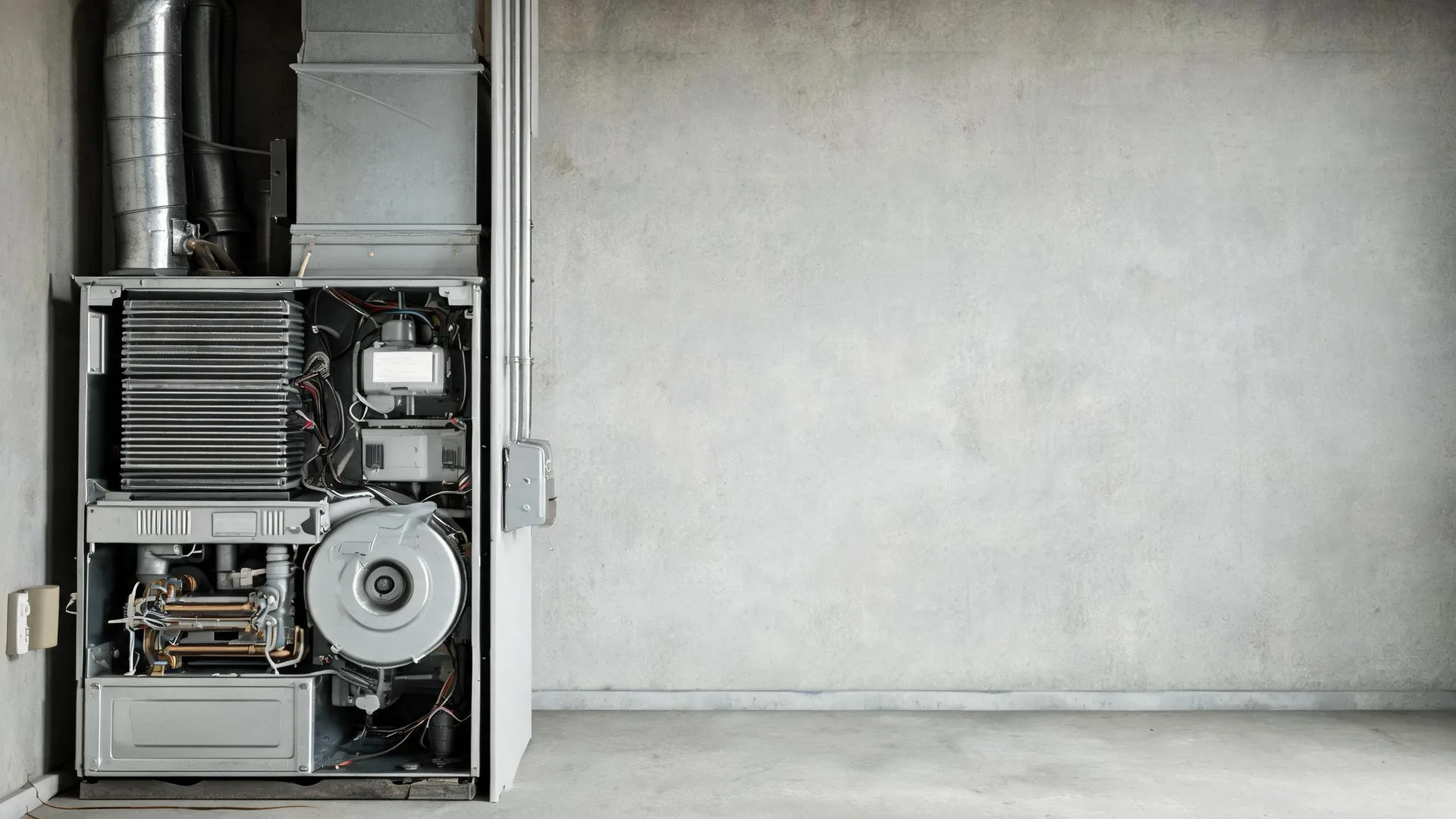
Ten months of runtime
Furnaces in Stillwater County run from September through June. That leaves a short window where the burner and blower aren't working at all, and parts that run most of the year wear down faster than the specs assume.
Takes about a minute. No obligation.
Furnaces in Stillwater County run from September through June. That leaves a short window where the burner and blower aren't working at all, and parts that run most of the year wear down faster than the specs assume.
Whatever's going wrong with your furnace probably comes down to that workload. A part that was rated for occasional use here gets used almost constantly, so trouble shows up well before it would in a milder place. Finding the actual cause matters more than patching the symptom.

NOAA nClimDiv, 1991–2020 normals
Stillwater County logged 324 severe weather events between 2015 and 2024, including 112 damaging wind events and 52 hail events.
If your outdoor unit took wind or hail in that time, get the furnace checked too even if the heat still comes on.



Furnaces here start up in September and most problems show up in the first cold weeks, not in the dead of winter. That's when a part that's been sitting since the spring, a weak igniter or a tired blower motor, finally gets asked to run hard and quits. By the time overnight lows are averaging 15 degrees in December and January, the system has already been working every day for months, so anything marginal has usually failed or made itself known. If your furnace just started acting up at the beginning of the season, that timing isn't a coincidence. Waiting it out through the first cold snap rarely fixes anything, since the part that struggled once will struggle again the next night it has to work that hard.
Ten months of runtime does not leave much room for a weak part to rest and recover. Get the actual cause found now, so the fix holds instead of calling someone back out again.
Find a contractorIf your furnace came with the house and the house is from the newer half of the county, you're likely not dealing with a system that's just worn out from age. That points toward repair over replacement. A furnace with plenty of working life left is usually worth fixing when something goes wrong, rather than written off. Worth checking when your house was built, or when the furnace itself was put in if it's been swapped since.
The igniter or the flame sensor usually fails before anything else in the system. The igniter cycles on every single heat call, and that repeated heating and cooling is what eventually cracks it or burns it out. The flame sensor sits in the burner flame the whole time it runs, and over time it builds up a coating that keeps it from sensing the flame at all. Neither part is made to last the life of the furnace.
Airflow is the other place trouble tends to start. The blower motor runs longer than almost anything else in the system, and its bearings wear from that runtime. A dirty filter or blocked vent makes the motor push harder than it should, which shortens its life further. When a blower motor is struggling, it often shows up as a furnace that runs but barely heats, not one that shuts off.
Estimates for a typical Stillwater County home, compared with an older unit built to the previous federal minimum, from EIA household energy data, Montana fuel prices and NOAA climate normals. Your home will differ.
Repair makes sense when one part has failed and the heat exchanger is sound.
Replacement makes sense when the heat exchanger is cracked or the furnace keeps needing parts.
Replacing a furnace outright makes sense in a few clear cases. If the heat exchanger has cracked, that's not a part swap, since it's the one component that isn't meant to be opened up once it's in place. Repeated failures of different parts within the same year or two is another sign, since it means the system as a whole is wearing out rather than one component having bad luck. Short of those, most failures are worth fixing. A furnace is built around a handful of parts that are each designed to be replaced on their own, and swapping one doesn't put stress on the rest of the system. The question worth asking isn't how old the furnace is, it's whether what failed is a wear part doing what wear parts eventually do, or the furnace itself breaking down around it.