




An unfinished basement featuring a grey forced-air furnace with metal ductwork, concrete block walls, exposed wooden joists, and a single hanging bare bulb.

Furnace Repair in Choteau, MT

Tell us about the job

Takes about a minute. No obligation.

RepairFurnace or heatingTeton County, MT
Step 1 of 2

What ZIP code is the job in?

Furnaces in Teton County run from September clear through June. That's ten months of the year the burner and blower are working, not a few weeks here and there. A furnace built for occasional use somewhere milder doesn't get that kind of break here. The igniter cycles more. The blower motor logs more hours. When a part finally gives out, it's usually not bad luck. It's a furnace that's been asked to do more than most, for longer than most, finally showing it.

10 months
September through June, your furnace is on duty
14°F
the average winter night it heats against
46 winter storms
in ten years, the nights a failure hurts most
Isometric grayscale illustration of a cutaway single-story house showing interior rooms with furniture, a furnace unit connected to ductwork and a tall vertical flue pipe extending above the roof.
Your furnace works hardest from October through April.

NOAA nClimDiv, 1991–2020 normals

September is when Choteau furnaces go back to work after sitting idle since June.

A weak igniter or a tired blower motor usually fails in those first few weeks, not in the dead of January.

It runs most of the year, and gas isn't cheap here

Climate zone 6B
Heat runs September through June
Winter nights average 14°F

Half the homes in Teton County were built in 1962 or earlier. That means a lot of furnaces here aren't original equipment anymore, they're replacements, maybe even a second or third replacement since the house was built. An older home can also mean older ductwork and venting that the current furnace has to work with, not equipment it was designed around. None of that tells you how old your specific furnace is. But if yours came with the house, or you don't know when it was last replaced, that's worth finding out before you spend money on a repair. A furnace near the end of its life can fail in ways that look like small problems but aren't worth chasing one at a time.

A hard-working furnace deserves a real diagnosis

Ten months of the year, this furnace doesn't get a break. That kind of run time is exactly why parts wear down and start acting up sooner than you'd expect. The fix is to find out which part is actually failing, not just patch the symptom.

Find a contractor
A man in a dark gray t-shirt and tan work pants, seen from behind, carries a canvas tool bag up porch steps toward a dark front door, with a potted plant beside the porch.
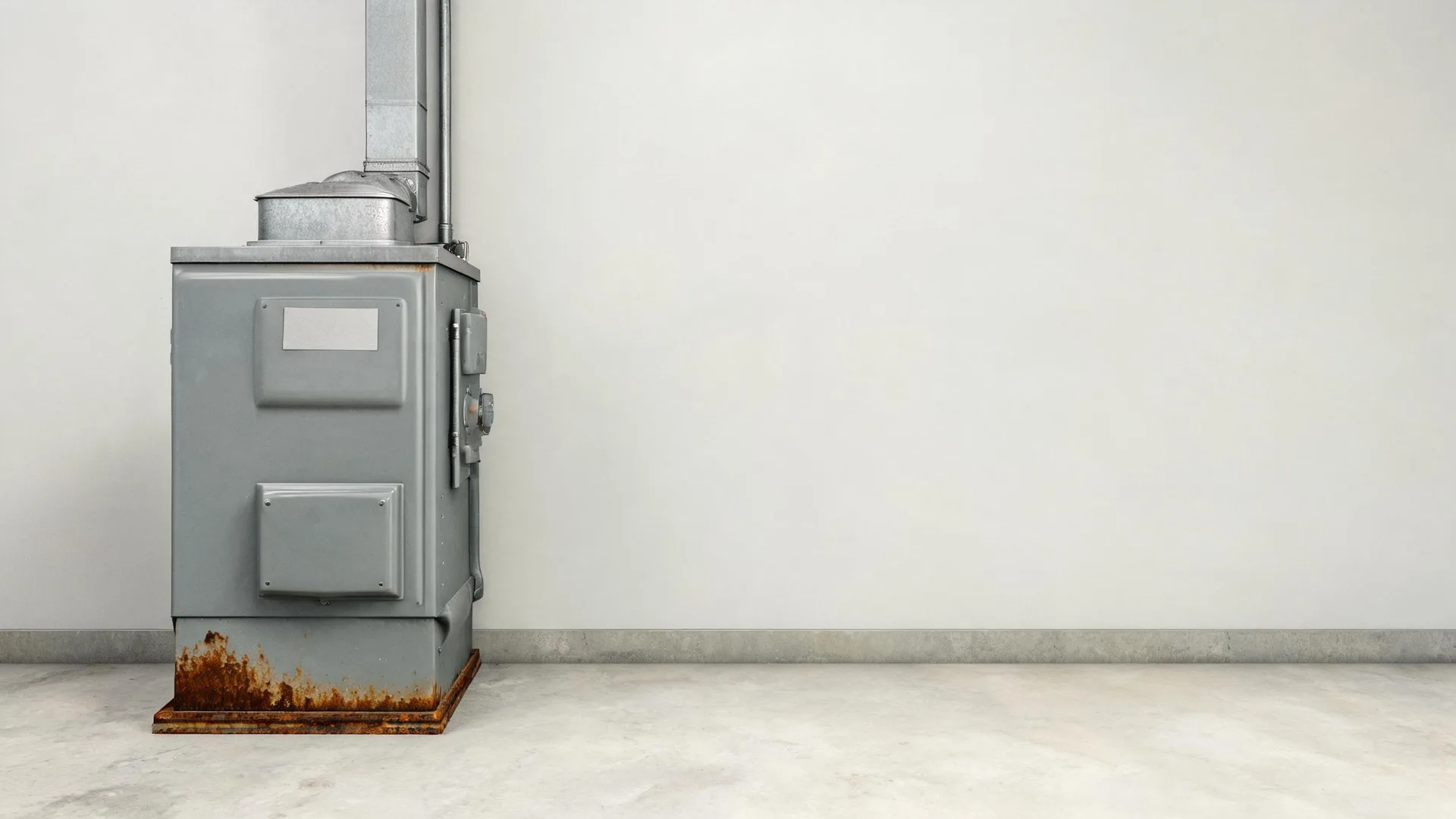
A gray residential gas furnace installed in an unfinished basement, surrounded by ductwork, a metal flue pipe, and a gas supply line.

Find out what you're repairing

Find out when the furnace was put in before you pay to fix it. If it came with the house, or nobody told you when it was last replaced, ask the contractor to check the age and condition while they're there. A repair on a furnace with a few years left is money well spent. The same repair on one near the end isn't, and you want to know which one you're looking at before the bill, not after.

What you can check safely

Check the thermostat is set to heat and the temperature is actually above room temperature. Look at the air filter and swap it if it's gray or clogged, a blocked filter can starve the system and trip a safety switch. Check the return and supply vents around the house are open and not blocked by furniture or rugs. If the furnace has a reset switch near the blower door, it's safe to press once. Check the breaker for the furnace hasn't tripped and any switch that looks like a light switch near the unit is in the on position.

What to leave alone

Don't take the burner compartment apart or touch the gas valve. Don't hold down a reset button that trips a second time, that's the system telling you something is wrong and needs a diagnosis. If you smell gas, don't flip switches or light anything, leave the house and call the gas company from outside. A pilot light or igniter that won't hold flame, a burner that smells off, or a reset switch that trips more than once all call for a trained eye, not a second try.

An unfinished concrete basement containing a metal HVAC air handler, exposed wooden ceiling joists with sheet-metal ducts, a hanging bare bulb, copper pipes, and stacked cardboard boxes.

A new furnace would cut about $90 a year off heating for a typical Teton County home.

  • A new high-efficiency furnace$380 a year
  • An older furnace$470 a year

Estimates for a typical Teton County home, compared with an older unit built to the previous federal minimum, from EIA household energy data, Montana fuel prices and NOAA climate normals. Your home will differ.

Repair makes sense when one part has failed and the heat exchanger is sound.

Replacement makes sense when the heat exchanger is cracked or the furnace keeps needing parts.

A diagnostic visit starts before any panel comes off. A tech will ask what the furnace is doing, when it started, and whether it's one of those reset trips or a no-heat call. Then the cover comes off and they'll watch it run through a full cycle: ignition, burner flame, blower kicking in. A lot gets ruled out just by watching that sequence, since a furnace usually fails in the same order every time it's about to quit. They'll test the flame sensor, check the igniter's resistance, look at the inducer motor and the pressure switch it controls. If the blower motor sounds off or isn't moving enough air, that gets checked too. The goal isn't to replace parts until something works. It's to find the one part that's actually failing and show you what it was doing wrong.