
Illuminated timber-and-stone luxury homes photographed at twilight with snow-capped mountains visible in the background.

Furnace Repair in Big Timber, MT

Tell us about the job

Takes about a minute. No obligation.

RepairFurnace or heatingSweet Grass County, MT
Step 1 of 2

What ZIP code is the job in?

Furnaces in Sweet Grass County run from September through June. That's ten months of the year asking the igniter, the blower motor and the heat exchanger to cycle on and off, day after day. Most of the country gets a break each spring and fall. Homes here don't get much of one. Add in the storms, 191 of them hitting the county in the last ten years alone, and the furnace is often working its hardest exactly when it can least afford a problem. A furnace carrying that kind of load wears parts faster than one that idles half the year, and small issues, a weak flame sensor or a sticking valve, turn into no-heat calls sooner than you'd expect.

10 months
September through June, your furnace is on duty
17°F
the average winter night it heats against
191 winter storms
in ten years, the nights a failure hurts most
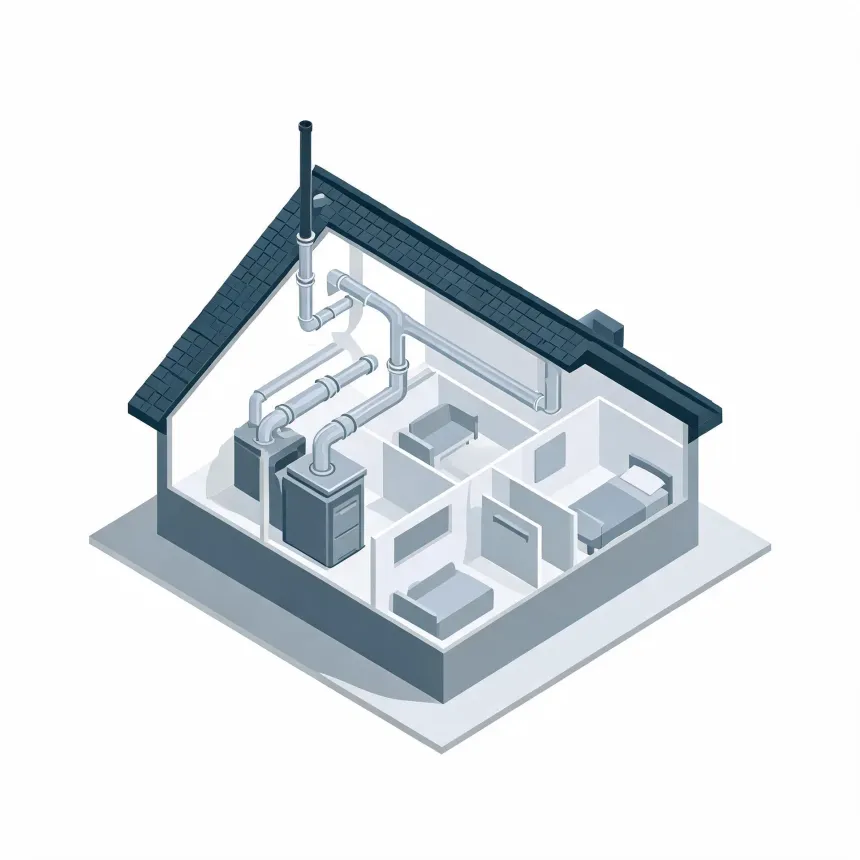
Isometric illustration of a cutaway house showing a furnace unit with ductwork and a flue pipe running through the interior rooms, which contain simple furniture.
Your furnace works hardest from October through April.

NOAA nClimDiv, 1991–2020 normals

Sweet Grass County logged 398 severe weather events between 2015 and 2024, 191 of them winter storms.

A blizzard that knocks out power leaves a gas furnace with no heat until that power comes back.

Ten months of heat means September is when a weak part fails first

Heat runs September through June
Climate zone 6B
Winter nights average 17°F

Natural gas ran Montana homes $7.77 per million Btu in 2024. That's what you're paying for every therm this furnace burns, and a furnace running this much of the year burns a lot of them. A unit that's short cycling or struggling to hold a flame wastes gas without putting out the heat you paid for. A cracked heat exchanger or a dirty burner can mean every cycle costs more than it should. The longer a problem like that runs, the more it adds to the bill.

Get It Diagnosed While There's Time to Do It Right

A furnace running this much of the year doesn't give small problems time to stay small. A weak flame sensor or a sticking valve found in September is a quick fix. The same part ignored becomes a no-heat call once the cold settles in for good. Getting it looked at now means whoever finds the problem has the time to do it right.

Find a contractor
A gray residential gas furnace installed in an unfinished basement, connected to sheet-metal ductwork and PVC pipes.

A newer furnace means the breakdown is probably one part, not the whole system

Half the homes in Sweet Grass County were built in 1979 or later. If yours is one of them, there's a good chance the furnace in the house now isn't the original. That matters when something goes wrong. A furnace within its working life is usually worth repairing rather than replacing. The part that failed, a flame sensor or an igniter or a pressure switch, is a known fix, not a sign the unit is done. This furnace runs hard for most of the year, and that load wears parts faster than in most places. But wear shows up as one bad part at a time. It doesn't mean the whole system is giving out.

A small flame problem can crack a heat exchanger

A furnace that's struggling to light, delaying ignition, or burning a dirty flame is putting stress where it shouldn't. Run it long enough in that state and the heat exchanger can crack under the strain. That turns a flame sensor or igniter fix into a much bigger repair, and a cracked exchanger isn't safe to keep running at all.

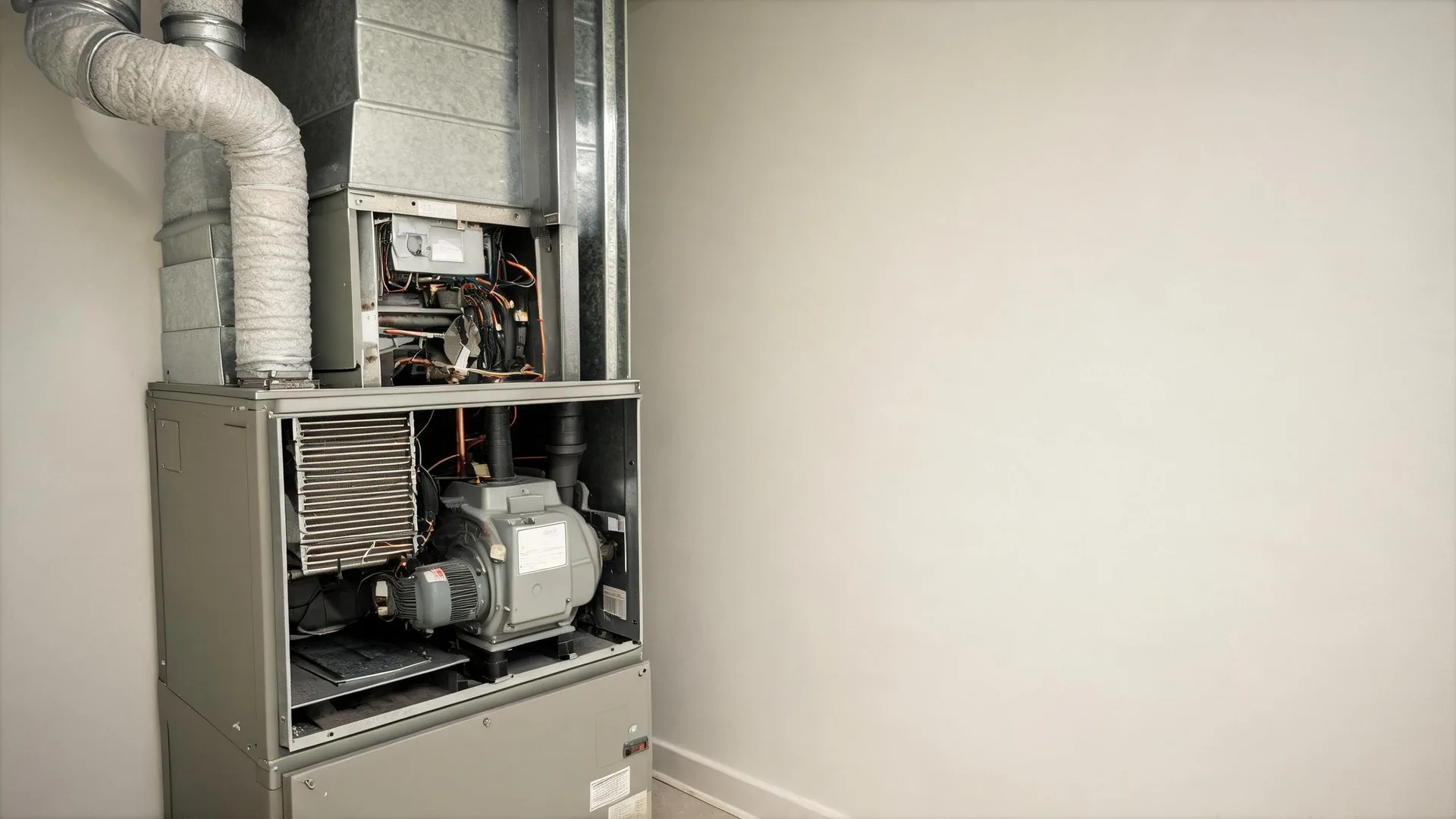
A failing part makes the ones around it work harder

A blower motor that's struggling to keep up, or a pressure switch that's reading wrong, doesn't fail on its own. The furnace compensates by leaning on other parts to get the same result, and those parts wear down faster than they should. Shutting it down for a look keeps one bad part from taking others with it.

An empty unfinished basement containing a forced-air furnace with overhead ductwork, exposed ceiling joists, and a single hanging light bulb.

A new furnace would cut about $80 a year off heating for a typical Sweet Grass County home.

  • A new high-efficiency furnace$370 a year
  • An older furnace$450 a year

Estimates for a typical Sweet Grass County home, compared with an older unit built to the previous federal minimum, from EIA household energy data, Montana fuel prices and NOAA climate normals. Your home will differ.

Repair makes sense when one part has failed and the heat exchanger is sound.

Replacement makes sense when the heat exchanger is cracked or the furnace keeps needing parts.

Age is the first thing to look at, but it's not the only one. A furnace that's needed two or three repairs in as many years is telling you something even if each fix was small on its own. Parts on these units don't fail at random. The blower motor, the control board, the heat exchanger, they all sit near their working life, and once one goes, the others aren't far behind. A tech looking at a repair is really asking two questions: is this part easy to get, and is the rest of the furnace in good enough shape to be worth putting it in. A cracked heat exchanger usually settles the question on its own, since that's not something to patch and keep running. Short of that, most single-part failures are worth fixing. It's the pattern of failures, not any one of them, that eventually points to replacing the whole unit.