An unfinished concrete basement containing a metal HVAC air handler, exposed wooden ceiling joists with sheet-metal ducts, a hanging bare bulb, copper pipes, and stacked cardboard boxes.

Furnace Maintenance in Billings, MT

Tell us about the job

Takes about a minute. No obligation.

Tune-up, service, or cleaningFurnace or heatingYellowstone County, MT
Step 1 of 2

What ZIP code is the job in?

Nine months of work

A furnace in Yellowstone County runs from September through May. That is most of the year, not just a few cold snaps, and overnight lows average 16°F through December, January and February. The burner and blower are cycling on through all of that.

Wear shows up early

Nine months of cycling puts hours on the igniter and the blower motor that a furnace in a milder place never racks up. Those hours add up before winter is even over, and a weak part has less room to fail quietly once the cold settles in for good.

A furnace that short cycles is already telling you something.

Short cycling means a part is struggling well before it quits for good.

Hail and wind find the outdoor parts of a heating system too

339 severe weather events from 2015 to 2024
18% of homes statewide lost power a day or more in 2024
154 damaging wind events from 2015 to 2024

Almost 7 in 10 homes in Yellowstone County heat with gas. Add in the homes running on propane and most furnaces here are burning fuel, not just moving warm air off an electric coil. That changes what maintenance has to cover. A gas furnace needs the burner checked for a clean, even flame, and the flue checked for proper venting so exhaust actually leaves the house. The flame sensor and the safety controls that shut the burner down when something is wrong are worth a look too. A filter swap does not touch any of that.

Have it checked in August, before the furnace starts up in September

September through May, this furnace runs most days for nine months straight. A check in August catches a weak igniter or a cracked flame sensor before it has to carry that load, not partway through the season.

Find a contractor
A gray high-efficiency gas furnace installed in an unfinished basement, surrounded by gas lines, a condensate drain, and sheet-metal ductwork.

Catch it idle, not running

Get a furnace checked before September, not after the first cold snap of the year. Once it is running daily, a technician is working around a system that cannot be shut down for long. Checked in late summer, the same inspection happens on an idle machine, with time to order a part if one is failing.

A gauge gets read, not just glanced at

A quick tune-up looks at the flame and calls it good. A thorough one pulls the burner assembly, checks the gas pressure against the manufacturer's spec, and measures the temperature rise across the heat exchanger. Those numbers catch a furnace that is running rich or starving for air before it ever trips a limit switch.

The blower motor gets tested under load

Anyone can spin a blower wheel by hand and hear that it turns. A real inspection checks the amp draw while the motor is running and compares it to the rating plate. A motor pulling more amps than it should is wearing out even though it still moves air today.

A visual check tells you the burner lights. It doesn't tell you the heat exchanger is still sound. A technician looks for hairline cracks in the metal that a glance through the access panel will miss, because a cracked exchanger can let exhaust mix into the air moving through the house. The same inspection checks the draft, making sure exhaust is actually pulling up and out through the flue instead of spilling back. A soot stain around the burner door or a rust trail near the vent pipe tells a trained eye something a homeowner would walk right past. None of that shows up when the furnace is simply running and keeping the house warm.

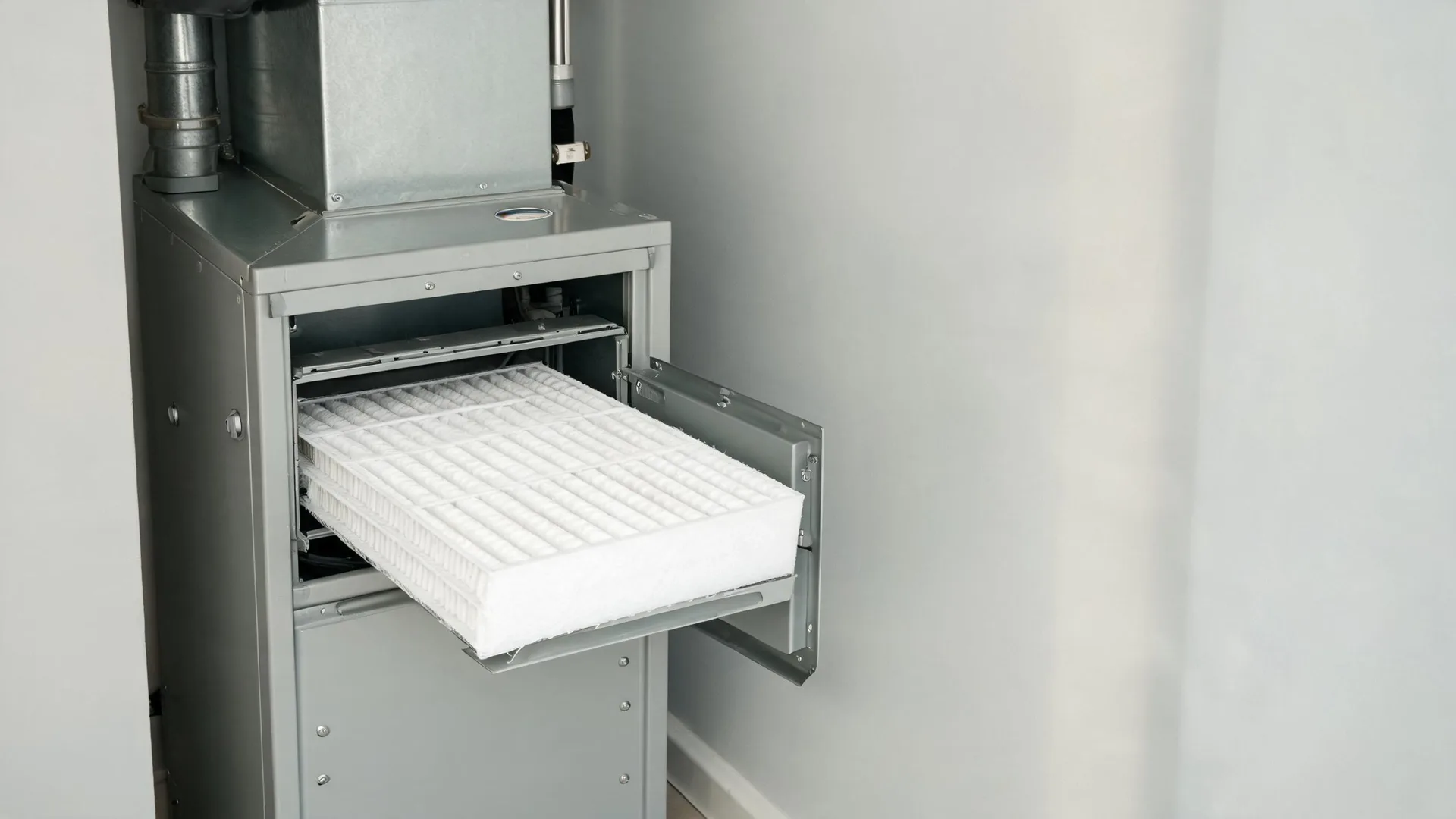
A proper tune-up starts with the furnace off and apart, not running. The burner comes out so the ports can be cleaned of rust flakes and dust, because a partly blocked port burns uneven and leaves soot behind. The igniter gets checked for hairline cracks, since that is the part most likely to fail without warning. Electrical connections at the control board get tightened, because a loose one causes the kind of intermittent fault that is hard to track down later. The condensate line, if the furnace has one, gets cleared so it cannot back up and shut the system down on its own. Last, the whole furnace runs through a full cycle so the technician can watch it start, climb to temperature, and shut off the way it should.