Heat pump vs gas heat in Billings, MT

New system or replacementFurnace or heatingYellowstone County, MT
Step 1 of 2

What ZIP code is the job in?

Is a heat pump better than gas heat in Billings?

You're weighing a heat pump against the gas furnace you've got, or the one you'd put in, and you want to know which one actually makes sense once the temperature drops hard in Yellowstone County. A sales pitch about efficiency doesn't help if the thing can't keep the house warm in January.

Gas heat holds up better through a Billings winter

A heat pump moves heat from the outside air into your house, and the colder that air gets, the less heat there is to move. Below freezing, most heat pumps lose capacity and lean on backup electric resistance heat to make up the difference, which costs more to run than the gas furnace most homes here already have. Winters in Yellowstone County get cold enough, often enough, that gas keeps up with the house better than a heat pump can on its own. That's part of why gas is the standard furnace fuel across the area. A heat pump still earns its keep on the cooling side, and some homeowners pair one with a gas furnace so the furnace carries the hardest cold. On its own, for Billings winters, gas is the steadier choice.

A gray high-efficiency furnace in a basement with PVC venting pipes, a yellow gas line, metal ductwork, concrete walls and floor, and a wood-framed stairway at left.

Sticking with gas

A two-stage gas furnace holds its output even at 10 below zero outside. It doesn't slow down or lose capacity when Yellowstone County gets its hardest cold. The flame modulates, the blower moves the air, and the house stays warm the same way it would in October.

A beige furnace with a louvered front panel and metal ductwork stands on a concrete basement floor beside pipes and a white cylindrical water heater.

Switching to a heat pump

An older furnace like this one still heats, but a heat pump facing the same job has to work harder as the air outside drops. Most installs here keep a furnace like this one as backup for the coldest nights, since a heat pump alone can lose ground when it's well below freezing.

A beige furnace with two louvered front panels stands on a concrete basement floor beside galvanized ductwork, metal pipes, and a wooden post.
Before you get your furnace installation
A gray high-efficiency furnace stands on a concrete basement floor beside galvanized sheet-metal ductwork, with white PVC vent pipes, gas and water lines, and unfinished wood framing behind it.
After you get your furnace installation

Heat Pump or Gas Furnace in Billings

Heat pump

  • Below about 25 to 30 degrees, a standard heat pump loses capacity and most units need backup heat to keep the house warm.
  • A cold-climate heat pump holds output further down, but Yellowstone County still sees stretches below zero where backup heat has to carry the load.
  • It runs on electricity, and power here is typical in price, so the cost of running it depends on how much backup heat kicks in during January and February.
  • In summer, the same unit cools the house, so you're not running a separate air conditioner alongside it.
  • It needs a gas furnace or electric resistance coils behind it for the coldest nights, which adds to what gets installed.

Gas furnace

  • A furnace burns gas to make heat directly, so outdoor temperature doesn't cut into how much heat it can put out.
  • It holds the same output whether it's 20 degrees or 20 below, which matters for a Yellowstone County winter.
  • It doesn't cool the house, so you still need a separate air conditioner for the hot, dry summer here.
  • Most homes in the area already heat with gas, so the gas line and venting are often already in place.
  • Running it depends on gas prices rather than electric rates, which can move differently than your power bill.
A gray high-efficiency furnace in a basement with white PVC vent pipes, sheet-metal ductwork, copper and black piping, a condensate pump, and insulated walls above a concrete floor.
A gas furnace like this keeps its ducts and gas lines in working order, with the condensate draining clean and the flue doing its job.
A beige residential furnace stands on a concrete basement floor beside galvanized sheet-metal ductwork, a round flue pipe, copper gas piping, and a PVC condensate line, with a wood-paneled wall at right.
An older furnace like this is still running, but worn pipes, an aging flue and years of grime are warning signs worth having checked.

Why is your furnace working so hard this winter?

You notice it in the gas bill first, then in the house itself. The furnace runs longer stretches to hold the same temperature, the air coming out of the vents feels less hot than it used to, and some rooms stay cooler than others no matter where you set the thermostat. You might hear the blower cycling more often, or notice the flame through the viewing window looking uneven. None of that means you need to replace anything today, but a furnace straining to keep up in weather this cold, especially one that's aging or was undersized to begin with, puts more wear on the heat exchanger and blower motor every season it goes unaddressed, and that shortens the time you have before it fails on a night you need it most.

A gray-haired bearded man in a dark coat and scarf dusted with snow stands smiling in a dimly lit entryway with a white front door, a side table with a lit lamp, an oval mirror, and a patterned rug.
An older bearded man in a dark snow-dusted coat and gray scarf stands just inside a dimly lit home entry, with a framed picture, lit table lamp, and an adjoining room with a fireplace behind him, and snow visible through the open door.
A gray-haired, bearded man in a dark snow-dusted coat stands smiling in a dimly lit entry hall with a staircase, a lit table lamp, a framed picture, and a living room visible through a doorway.
An older man with gray hair and a beard, wearing a dark jacket dusted with snow, stands smiling in a dimly lit hallway with lamps and a living room visible behind him.
An unfinished basement with a concrete floor, pink insulation on one wall, exposed joists, galvanized sheet-metal ductwork, PVC vent pipes, and a tall gray furnace with attached gas and electrical lines.

Get matched with a furnace pro in Yellowstone County

Answer a few questions instead of calling shop after shop.

Get matched with a pro who works on furnaces in Yellowstone County.

Find a furnace pro

Sending the form costs nothing.

A woman wrapped in a thick beige fleece blanket sits on a sofa with an open book on her lap, beside a lit table lamp, with a frost-covered window behind her.
A gray-haired woman in a cream knit sweater stands in a dimly lit kitchen at night, looking to her right, with a round loaf of bread in the foreground and a dark window and potted plant behind her.

Winter nights average 16°F

At 16 below zero most nights in a Yellowstone County winter, a standard heat pump is already short on heat and leaning hard on backup. A gas furnace doesn't notice that number. It's one more reason most houses out here still run on gas.

NOAA nClimDiv 1991-2020

A dimly lit interior with wood plank flooring where a small portable heater with a glowing orange element sits near an open doorway, with a stove at left, kitchen cabinets and a potted plant at right, and a wooden table and chair in the foreground.

The space heater has been running since five, when the furnace couldn't keep the kitchen past 60 and you gave up waiting on it. It's still dark out. The basement door behind you is propped open because that's where the furnace is, and you've been down twice already, listening to it cycle, checking the flame through the little window like that tells you anything. Outside it's somewhere near zero, the kind of morning Yellowstone County gets a dozen times a winter. The space heater's coil glows orange next to the table leg. You've got coffee going and a hand on the mug for the warmth more than the coffee. The furnace kicks on again upstairs, and you wait to see if the room catches up this time.
A man seen from behind raises his hand to wave at a woman standing in the open front doorway of a single-story house with gray shingle siding, white columns and a gabled porch entry.

How a gas furnace actually heats your house

Cold air comes back through the return duct, and the furnace draws it across the heat exchanger before the blower pushes it back out through the supply vents. The burners fire first, the exchanger heats up, then the blower kicks on a few seconds later so you're not blowing cold air into the room. A heat pump works the opposite way. It pulls heat out of the outside air and moves it inside, and the colder that air gets, the less heat there is to move. That's why a furnace holds the same output at 10 below that it does at 40, while a heat pump's capacity drops as the temperature does.

If you're trying to figure out which setup fits your house, that's a harder question than it looks, because it depends on your ductwork, your gas line, and what's already in the basement or the attic. A contractor who looks at what you've actually got can tell you whether a furnace replacement or some other setup makes sense for your house, and what it would take to put it in.

A gray upholstered sofa with a textured cushion sits beside a dark round side table holding a vase of green foliage, with a table lamp and sheer-curtained window behind.

Why does Yellowstone County still run on gas heat?

  • Winter nights average 16°F

    Overnight lows averaging 16°F all winter are exactly where a standard heat pump starts leaning hardest on backup heat.

  • Heat runs September through May

    Nine months of heat a year means whatever you install has to hold up through most of the calendar, not just the cold snaps.

  • 67.9% of homes heat with gas

    67.9% of homes here already run gas, which is why parts, service and furnace contractors are easy to find locally.

NOAA nClimDiv 1991-2020 · ACS 2020-2024

Where this leaves you

  • Gas heat holds its output no matter how far the temperature drops in Yellowstone County, and a furnace installed now will do the same.
  • A standard heat pump starts losing capacity around 25 to 30 degrees, and nights here average 16 degrees all winter.
  • Even a cold-climate heat pump needs backup heat once Yellowstone County drops below zero, which it does most winters.
  • Nine months of heat a year means the system you choose has to hold up through most of the calendar, not just the mild stretches.
  • Finding a contractor to size and install a furnace means calling around, explaining your house and your old system more than once, and sorting through quotes that don't match up.
  • Getting matched with a contractor who installs furnaces in Yellowstone County skips that work and puts someone in touch with you directly.

Gas heat makes sense for most houses in Yellowstone County, and the reasons come down to the weather itself. A furnace doesn't care what the thermometer says. It fires the same at 10 below as it does at 30 above, which matters here because nights average 16 degrees for most of the winter and real cold snaps push well past that. A standard heat pump starts struggling long before it gets that bad, somewhere around 25 to 30 degrees, and even the cold-climate versions built to handle harder winters still need backup heat once the temperature drops below zero. That happens most years out here, more than once. With nine months of heat needed most winters, whatever you install has to carry the house through the worst of it, not just the easy stretches in October and April. That's the case for sticking with gas, or putting a new furnace in if the old one is on its way out.

Getting there is the part that takes the work. Finding a contractor who installs furnaces, explaining your house and your old system to each one, waiting on quotes that don't quite line up against each other. That's the work. Getting matched with someone who already does this in Yellowstone County means skipping straight to the part where someone reaches out and looks at your situation directly.

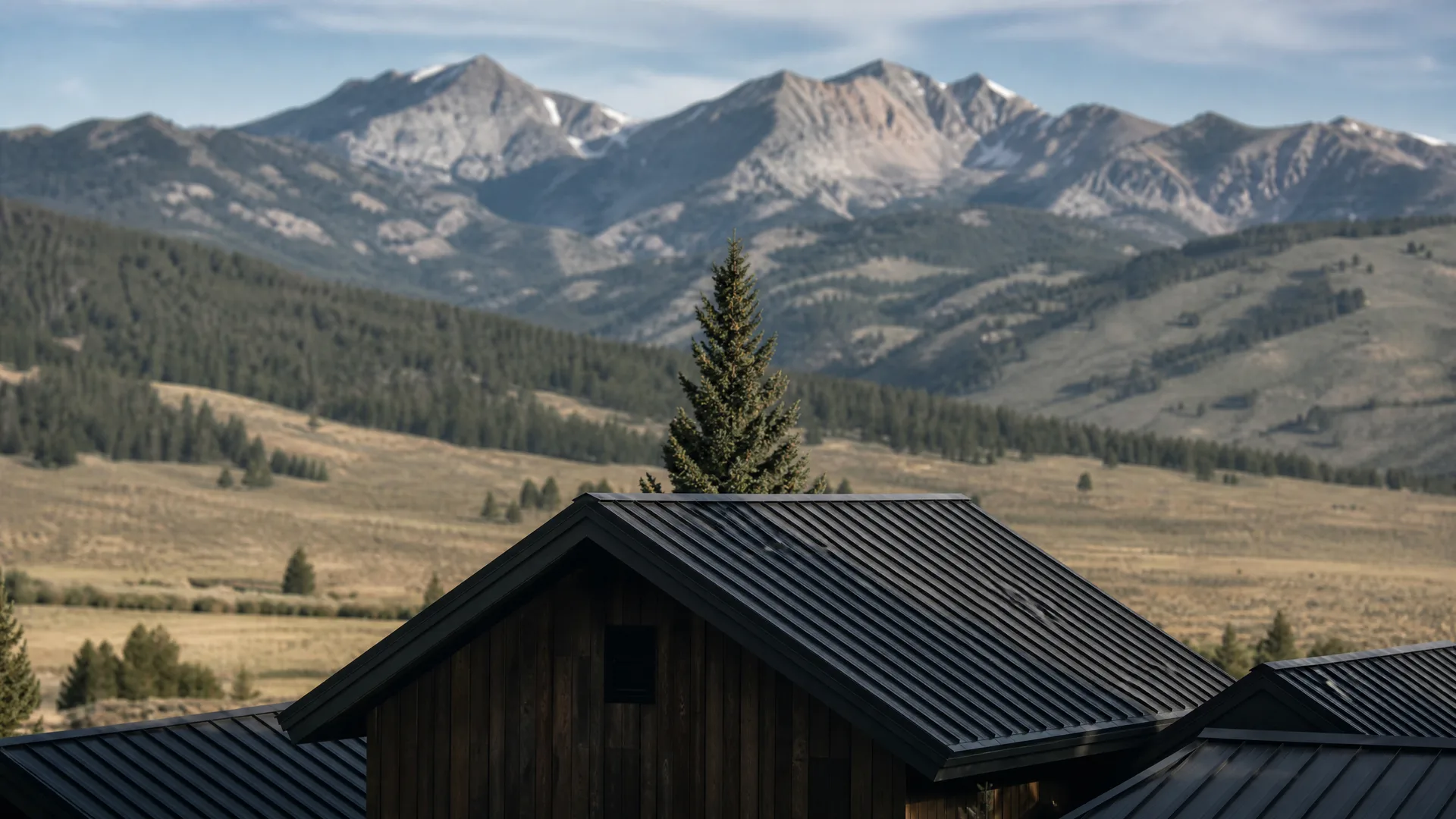
Dark standing-seam metal roofs of wood-sided buildings in the foreground, with a single spruce tree, grassy hills, conifer forest, and snow-streaked mountain peaks behind.

A local pro for your furnace installation

Get a local pro

You're not committing to anything by asking.

You'd otherwise be calling furnace companies one by one, explaining the same cold rooms and high gas bill each time, then trying to line up quotes to see who's worth hiring. Send the request once and a contractor who installs furnaces in Yellowstone County reaches out to you directly.