
Illuminated timber-and-stone houses line a residential street at dusk, with evergreen trees in the foreground and a silhouetted mountain range behind them.

Furnace Installation in Kalispell, MT

Tell us about the job

Takes about a minute. No obligation.

New system or replacementFurnace or heatingFlathead County, MT
Step 1 of 2

What ZIP code is the job in?

Gas in Montana ran $7.77 per million Btu in 2024. A furnace burns that gas to make heat, so every therm it wastes is a therm you paid for and didn't get back. Two furnaces can carry the same price tag and still burn a different amount of gas to heat the same house, because that difference comes down to how efficiently each one converts fuel to heat. Over a Kalispell winter, that gap runs up a real bill. The furnace going into your house is going to run for months at a stretch, so what it costs to run matters as much as what it costs to install.

11 months
August through June, your furnace is on duty
17°F
the average winter night it heats against
80% AFUE
the federal minimum any new unit must meet
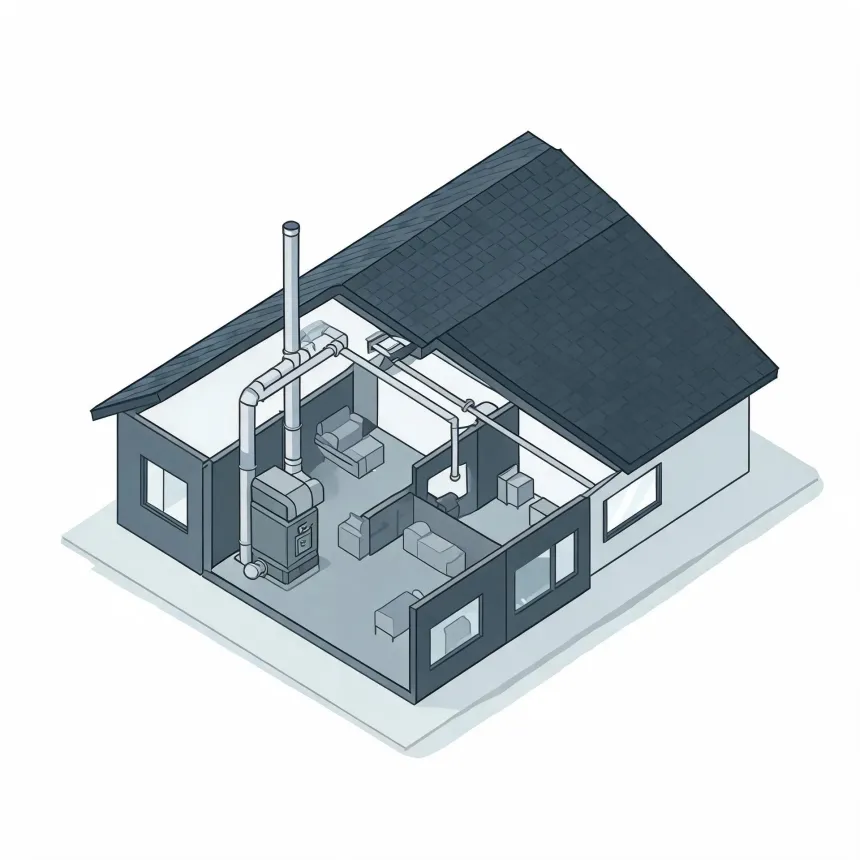
Isometric cutaway illustration of a single-story house showing interior rooms with furniture, a furnace unit connected to ducting and vertical flue pipes running through the roof.
Your furnace works hardest from October through April.

NOAA nClimDiv, 1991–2020 normals

Flathead County homes run their furnace about eleven months a year, August through June.

A furnace sized wrong for your house doesn't get one bad season to prove it, it gets eleven months of them.

Get it done in July, before August asks anything of it

Heat runs August through June
Winter nights average 17°F
124 winter storms from 2015 to 2024

Gas heats more homes in Flathead County than anything else, 43.4%, with electricity close behind at 38.6%. That's why most of the furnaces going into houses here are gas furnaces, built to run off the same line the water heater and the stove probably already use. If your house came with a gas furnace, replacing it with another one is usually the straightforward path, since the gas line, the vent and the ductwork are already sized for that kind of system. Switching to something else means changing more than the furnace itself.

The furnace you pick now is the gas bill you get for years

The efficiency rating on the furnace you choose decides what this winter's gas bill looks like, and the one after that. Ask about AFUE when you compare units, not just the price tag.

Find a contractor
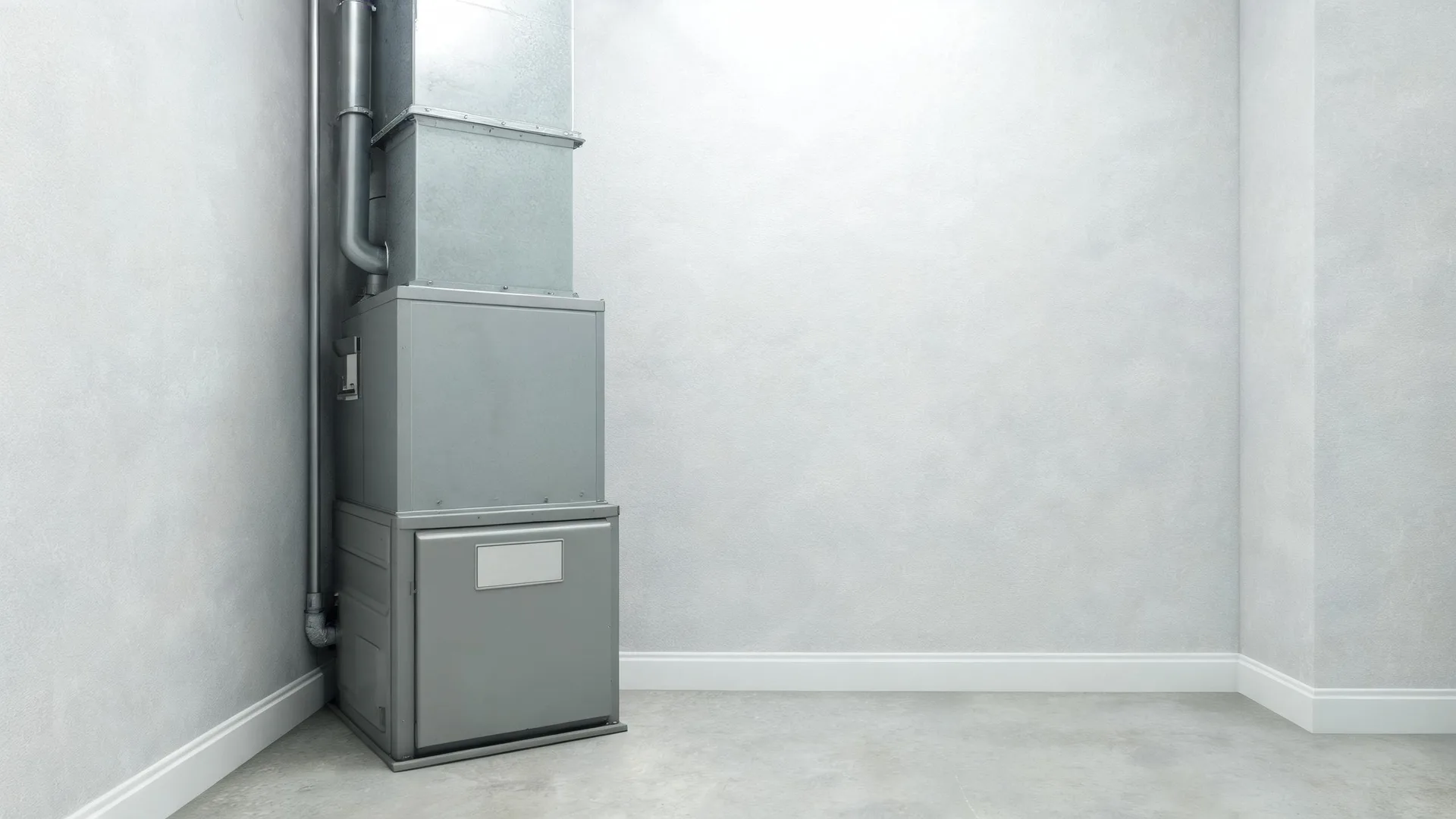
A gray high-efficiency gas furnace installed in an unfinished basement, surrounded by gas lines, a condensate drain, and sheet-metal ductwork.

Eleven months a year, with 124 storms thrown in

Eleven months a year this furnace runs, and most of those months in Kalispell mean real cold, not just a chill in the morning. Then winter adds storms on top of that: 124 of them hit this county between 2015 and 2024, heavy snow and ice and wind that make the furnace earn its keep on the coldest nights it has. A furnace sized right handles that without strain. One sized wrong, too big or too small for the house, runs rough for all eleven months, cycling too often or struggling to keep up, and the parts carrying that load show it sooner than they would somewhere milder. Get the sizing right before install, not after.

Sizing is a calculation, not a guess from the old unit

The right size comes from a load calculation, a room by room look at square footage, insulation, window area and ceiling height, not from matching whatever furnace is already in the basement. A contractor measures the house and figures out how much heat it actually loses, then picks a furnace built to replace that heat. Going by the old unit just repeats whatever mistake was made the first time it was installed.

Oversized and undersized both wear a furnace out

A furnace too big for the house heats the air fast, shuts off, and starts again a few minutes later, a pattern called short cycling that wears out the igniter and the blower motor well before their time. A furnace too small never gets ahead of the cold, so it runs long stretches without rest and still leaves rooms short of the thermostat setting. Either way the furnace carries a load it wasn't built to handle, and the parts doing that work show it first.

A gray forced-air furnace with metal ductwork stands in an unfinished basement with exposed wooden joists, concrete walls, and a single hanging light bulb.

A high-efficiency gas furnace would save about $90 a year to run in Flathead County compared with a gas furnace.

  • A high-efficiency gas furnace$400 a year
  • A gas furnace$490 a year

Estimates for a typical Flathead County home, from EIA household energy data, Montana fuel prices and NOAA climate normals. Your home will differ.

Installation starts with the old furnace coming out, along with whatever duct and vent connections won't carry over to the new one. The contractor sets the new unit, usually in the same spot unless the layout calls for a change, and connects it to the ductwork, the gas line and the vent. Gas and electrical connections get tied in next, then the venting, sized and routed to carry exhaust out safely. Once it's hooked up, the contractor fires it and runs it through a full cycle, checking gas pressure, airflow and temperature rise against what that model is built to deliver. Every connection gets checked for leaks before anyone calls it done. A furnace that passes all of that on day one is a furnace that's been put in right, not just put in.