Running right
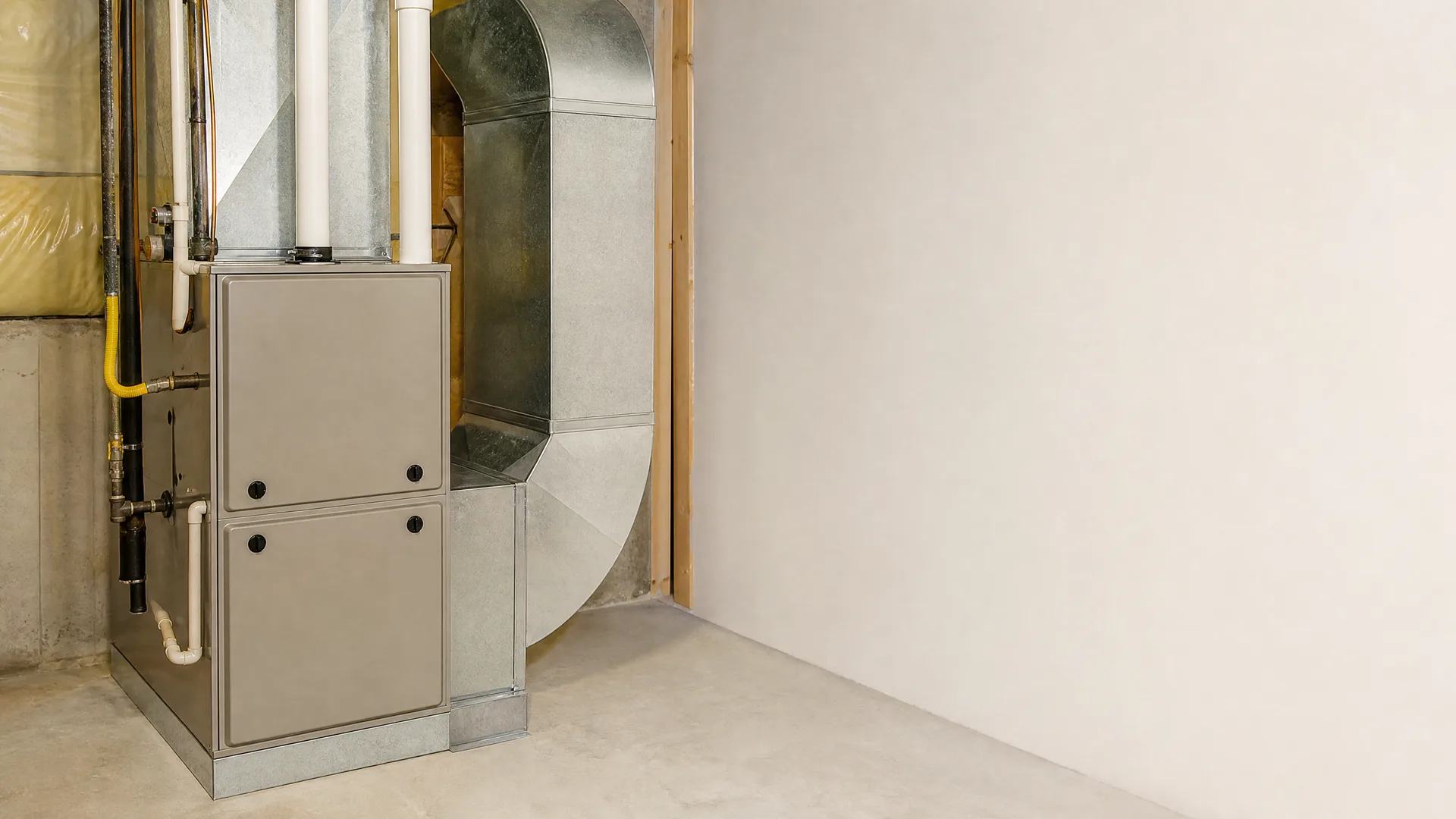
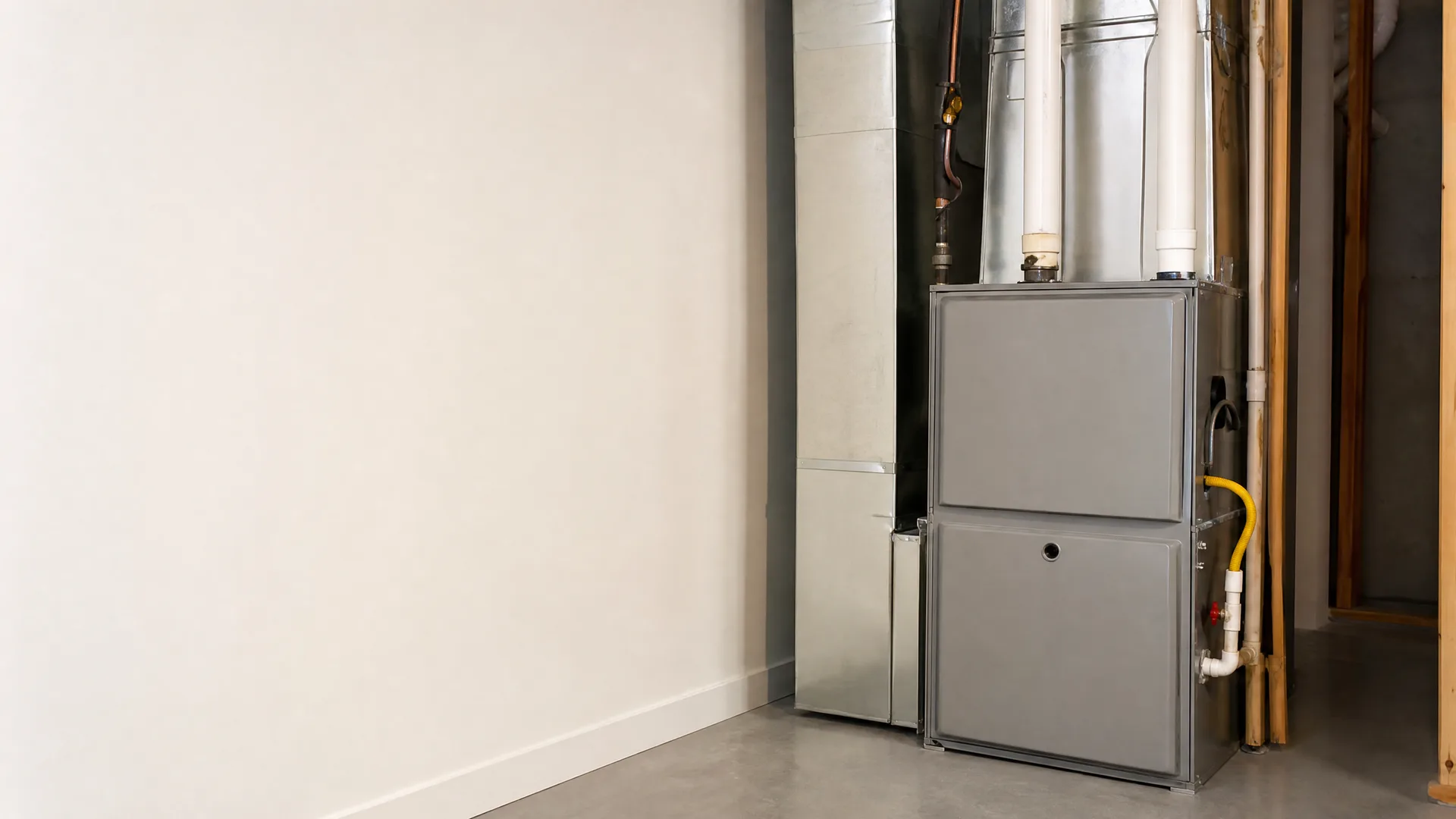
A two-stage furnace like this fires quietly in short bursts most of the day, the PVC flue pipes venting exhaust straight out rather than up a chimney. The gas line and plenum stay put. Nothing to notice, because nothing's wrong.
A gas furnace that won't light usually comes down to the igniter or the flame sensor. A hot surface igniter weakens with age and eventually can't get hot enough to catch the gas. A flame sensor coated in a thin layer of soot can't detect the flame once it's lit, so the furnace shuts the gas back off as a safety check. Either one shows up the same way: the furnace runs through its startup, you hear the clicks or the hum, and then it stops short with no flame. Winters in Kalispell push a furnace through months of hard, steady use, and that kind of run time is exactly what wears down an igniter or dirties a sensor. A clogged filter or a closed vent can also starve the burner of airflow and trip the same shutdown. None of these are something to wait out, since a furnace that won't light has no heat behind it at all, and nights here get cold fast once the sun is down.

You wake up at two in the morning because the house feels wrong before you know why. The hallway floor is cold under your feet. You stand there a second, listening for the vents, and there's nothing, no rush of air, no hum from downstairs. Out the hallway window frost has crept up the corners of the glass. Flathead County in January doesn't forgive a furnace for sitting quiet long. You flip the hallway light, head for the stairs, already running through what you'll say when you call someone in the morning, if it even waits that long.







The thermostat calls for heat, and the inducer motor kicks on first to clear the heat exchanger of any gas left over from the last cycle. A pressure switch has to click shut to prove that air is actually moving before the control board will do anything else. Only after that does the igniter get power, and only after the igniter is hot enough does the gas valve open. Each step waits on the one before it. If any part in that chain fails to report back, the board stops the sequence rather than risk lighting gas with nowhere for the exhaust to go.
That's why a furnace can hum, click, and still never catch. Something earlier in the order didn't check out. A contractor working on a furnace in Flathead County sees this sequence fail in the same few spots and knows which one to check first, which saves you from describing every sound and smell twice to two different people before someone actually looks at the board.

A hot surface igniter is a thin strip that heats up to about 2,000 degrees to catch the gas. It cycles on and off every time your furnace runs, and that heating and cooling over and over is what wears it out. By the time winter sets in hard around Kalispell, a furnace might be lighting several times a day. An igniter near the end of its life often still glows, just not hot enough, so it looks fine and still fails.
The flame sensor is a thin metal rod that sits in the flame path and reads the current passing through it to confirm the burner caught. Soot builds up on it over a season of use, and even a layer too thin to see can block that reading. The furnace shuts the gas valve to be safe when it can't confirm a flame, which is why a dirty sensor and a bad igniter can look exactly the same from the thermostat.
At 17°F outside, a furnace that won't light stops being a repair you can put off. A house drops fast once the air stops moving, and pipes along outside walls are the first to feel it.
NOAA nClimDiv 1991-2020


One form replaces the calls you'd make to find a furnace pro.
There's no charge for the request.

A two-stage furnace like this fires quietly in short bursts most of the day, the PVC flue pipes venting exhaust straight out rather than up a chimney. The gas line and plenum stay put. Nothing to notice, because nothing's wrong.

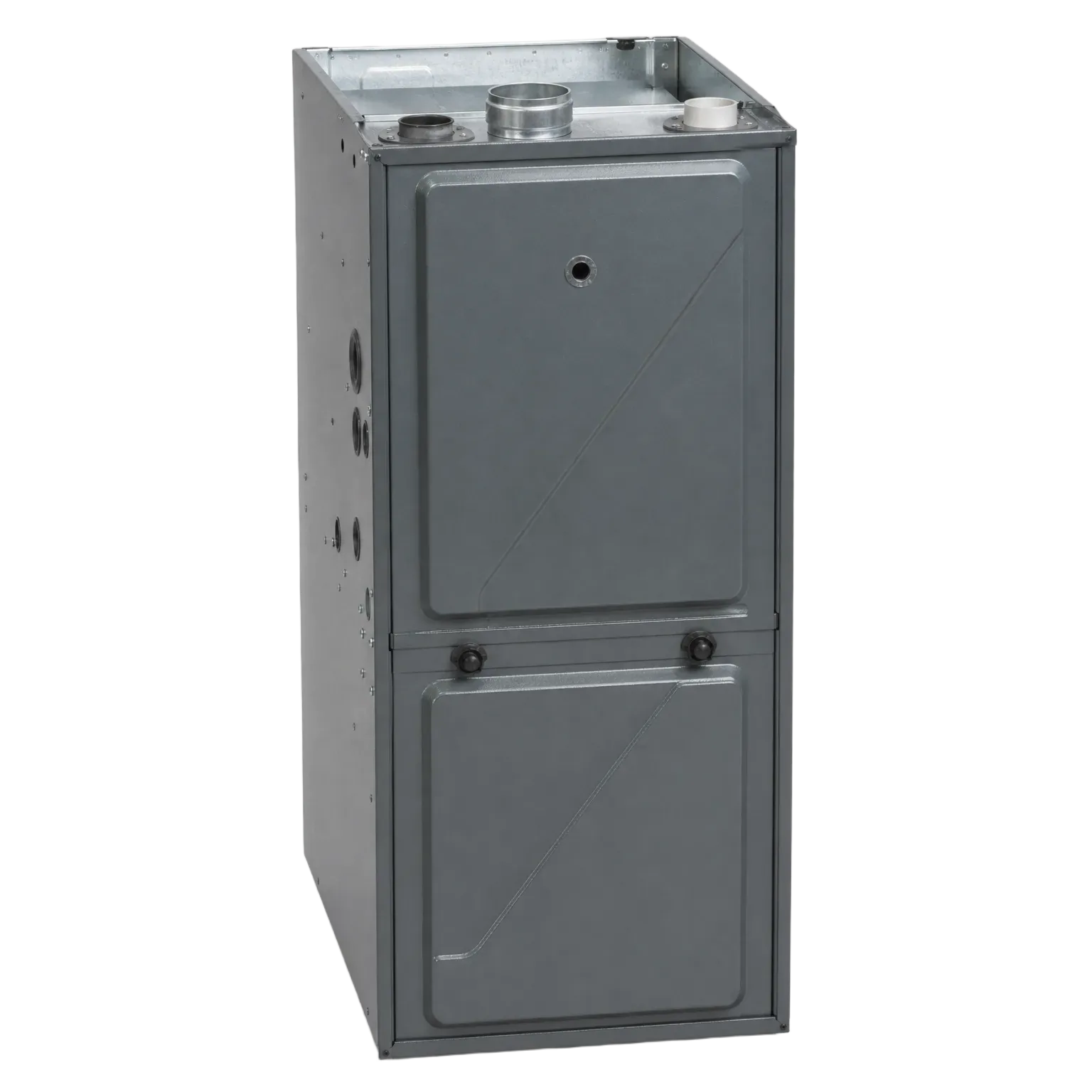
An older furnace like this one sits cold, its louvered vents open but no air moving behind them. The water heater nearby still runs fine. It's the furnace alone that won't catch, and that's a call for a contractor who works on gas furnaces in Flathead County.
Winter nights average 17°F
Nights averaging 17°F mean the igniter and flame sensor cycle under real strain, not mild strain, every time the furnace fires.
Heat runs August through June
Eleven months of heat use, August through June, means those parts rarely get a break long enough to matter.
43.4% of homes heat with gas
With 43.4% of homes here running on gas, a furnace that won't light is the most common cold call in the county.
NOAA nClimDiv 1991-2020 · ACS 2020-2024
Most of the time, a furnace that won't light comes down to one of two small parts doing a hard job. The igniter gets old and can't reach the heat it needs. The flame sensor gets a coat of soot and stops seeing the flame it's supposed to confirm. Either one stops the whole sequence, and the furnace shuts itself down rather than risk running without proving it's burning clean. That's by design. It's also why guessing from the hallway doesn't help you. Someone has to watch the ignition sequence happen, see where it stops, and go from there.
None of that changes with the temperature outside, but the stakes do. At 17°F, a house with no furnace running cools off within hours, not days. That's not a part of your evening you want to spend on hold, describing the same no-heat problem to three different contractors and waiting on quotes to come back so you can compare them.
What you're left with is this: a furnace that won't light needs a licensed hand on the igniter or the sensor, probably one or the other, sometimes both. Getting matched with a contractor who already knows the usual failure points in Flathead County skips the part where you're the one doing the legwork. The furnace still has to get fixed. You just don't have to be the one tracking down who fixes it.





Describe what your furnace is doing once, in one form.
You only hire the pro if you want to.