Propane runs $22.28 per million Btu here
Montana propane averaged that price in 2024. A furnace that wastes less of that fuel keeps more of it as heat in your house instead of out the flue.
Takes about a minute. No obligation.
Montana propane averaged that price in 2024. A furnace that wastes less of that fuel keeps more of it as heat in your house instead of out the flue.
When you're sizing up furnaces for Fort Benton, the efficiency rating isn't a side note. It decides what this furnace costs you to run every winter after it's installed.
NOAA nClimDiv, 1991–2020 normals
Propane heats more homes in Chouteau County than any other fuel, at 42.7%.
If your house was built to run on propane, a new propane furnace is usually the straightforward swap.

At that price, the AFUE rating on the furnace you pick is worth asking about directly. A contractor sizing a system for your house should be able to tell you the rating of each unit they quote and what it means for a Fort Benton winter. Ask them to put it next to a lower-rated model so you can see the difference in plain terms. That conversation, before anything gets installed, is where the efficiency decision actually gets made.
Furnace here runs ten months a year, September through June, and overnights average 12°F through December, January and February. That's a long season asking a lot of one machine. Get the size right for your house, and put real weight on the AFUE rating when you compare quotes.
Find a contractor
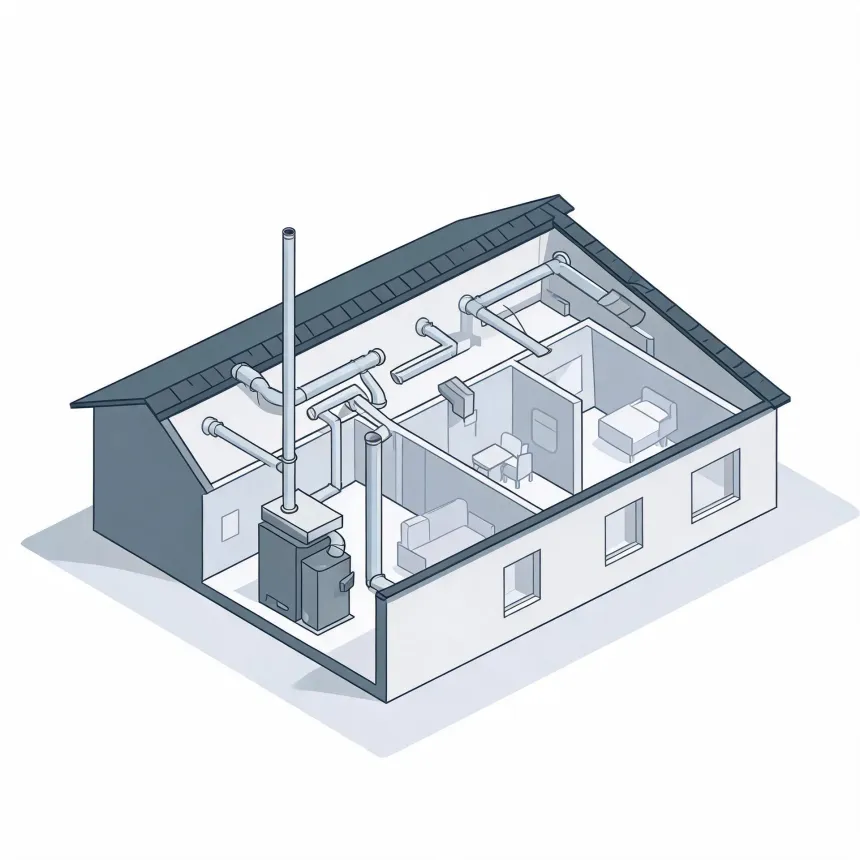
Half the homes in Chouteau County were built in 1968 or earlier. A furnace going into a house that age isn't going into a blank slate. The ducts, the venting, the gas line, whatever's already there was likely sized for a different furnace than the ones on the market now. A contractor sizing your replacement should be looking at what the house already has, not just the square footage. Ask how they're accounting for what's already in place, not just what they're putting in.
A furnace too big for the house turns on, blasts heat fast, and shuts off before it's done pulling air evenly through the ducts. That's short cycling. It leaves rooms uneven and wears out the ignition system faster, and it still doesn't make the house comfortable. The right size runs longer, steadier cycles and actually heats the place through.
Sizing a furnace off square footage alone misses too much. A proper load calculation accounts for window area, insulation, ceiling height, and how much outside air leaks in or out. Houses that look alike on paper can need different furnaces once those are weighed. A contractor who skips this and quotes straight from square footage is guessing, not sizing.
Estimates for a typical Chouteau County home, from EIA household energy data, Montana fuel prices and NOAA climate normals. Your home will differ.
Installation day starts with the old furnace coming out, and that takes longer than people expect once the gas line, the vent, and the return duct all have to be disconnected and checked. The new unit gets set, leveled, and connected to the duct trunk, the gas line, and venting, then the electrical and thermostat wiring gets run to it. Before anything gets buttoned up, a tech checks the gas pressure and tests for leaks at every joint. Once it's firing, they'll check the temperature rise across the heat exchanger against what the manufacturer specifies, because that number tells them the furnace is burning fuel correctly and not overheating itself. Airflow gets checked at the registers too, since a furnace can be installed perfectly and still underperform if the duct system isn't moving enough air past it. None of that gets skipped just because the unit is new.