After this form, you can stop searching for a furnace pro.
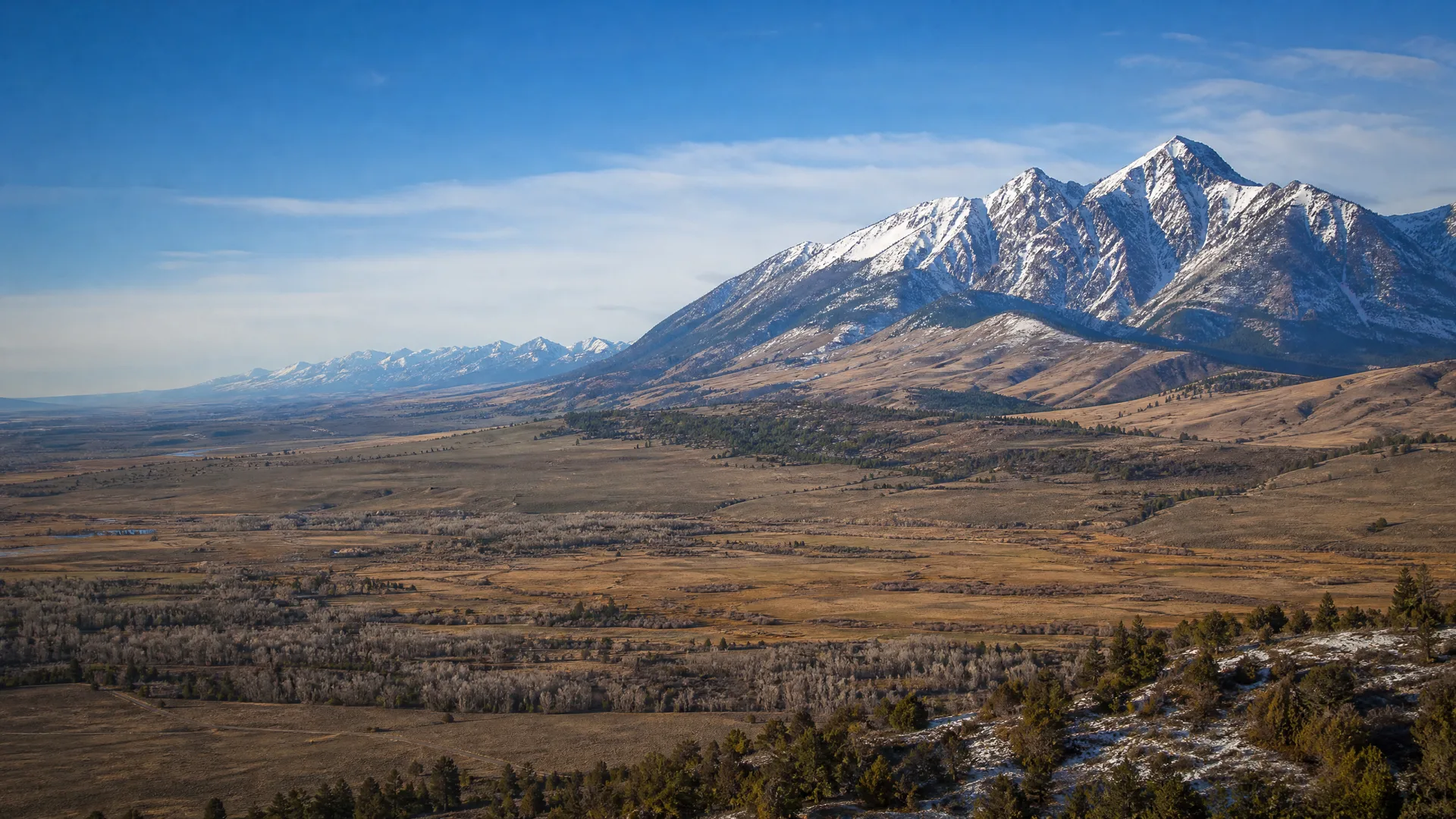
Winter in Broadwater County asks a lot of a heating system, and most houses around Townsend answer with propane. If yours still runs on a propane furnace, you have probably wondered whether a heat pump would leave you better off, especially with summers here running hot and dry enough that cooling matters too.
The honest answer depends on things specific to your house and your propane setup, which is what the rest of this page works through. But deciding which way to go is only half the job. The other half is finding a contractor who installs heat pumps, knows propane systems, and can tell you straight what fits your house.
That part usually means calling around, explaining your situation to each one, waiting on quotes, and trying to compare bids that are not written the same way. It takes time you would rather spend doing almost anything else, especially with cold weather on the way.
Send the form on this page and that search is off your plate. You are not left to sort through contractors on your own or repeat your story to the next one who picks up. Once it is sent, someone else is doing the legwork of matching you with a contractor suited to the job, and you can go back to the parts of your day that have nothing to do with furnaces or propane tanks.
What you are left with is a straightforward choice to make, once you have someone in front of you who can look at your house and tell you what a heat pump would actually mean for it here, against what you are paying for propane now.
Is a heat pump better than propane heat in Townsend, MT?
You have a propane furnace and you keep hearing about heat pumps, so you want to know straight whether switching makes sense for a place like Townsend. The honest answer depends on winter here, and winter here is hard. You are not looking for a sales pitch, just what actually happens to a heat pump when it gets cold enough to see your breath for months at a time.
Propane still carries the coldest months here, but a heat pump can do most of the work
A heat pump moves heat from outside air into your house, and that works fine down to somewhere around freezing. Below that, the air has less heat to pull from, and the unit has to work harder for the same warmth. Broadwater County winters push well past that point for weeks at a time. That doesn't rule a heat pump out. Paired with your existing propane furnace as a dual fuel setup, it can carry the mild stretches of fall and spring on electricity, which costs less to run than propane, and let the furnace take over once temperatures drop hard. On its own, with no backup, a heat pump here would struggle through the coldest nights.
Why cold air strains a heat pump
A heat pump moves heat from outside air into your house. That works fine down into the 30s and still does real work into the 20s. Below that, the outside air holds less heat to pull from, and the unit has to run longer to deliver the same warmth. Broadwater County winters spend plenty of nights well under that mark, and that's when a heat pump alone starts to fall behind what the house needs.
What propane does that cold air can't
A propane furnace burns fuel to make heat directly, so the outside temperature doesn't change how hard it has to work. A furnace rated for your house will put out the same heat on a night at 10 degrees as it does at 30. That's why most homes around Townsend already heat with it, and why many homeowners who add a heat pump keep the propane furnace as backup for the coldest stretches rather than replacing it outright.
Propane Furnace vs Heat Pump
Propane Furnace
A propane furnace produces heat by burning fuel, so it keeps the same output no matter how far below zero it gets outside.
You depend on propane deliveries or a filled tank, so running out during a cold snap means calling for an emergency fill.
Propane prices move with the market, so your heating cost can swing from one winter to the next.
A furnace needs gas piping and venting already in place, which most homes around Townsend have since propane is the common fuel here.
The furnace only heats. Cooling the house in summer still falls to a separate air conditioner or evaporative cooler.
Heat Pump
A heat pump pulls heat from outside air, and that gets harder as the air gets colder, so its output drops on the coldest nights of the year.
The same unit cools your house in summer, so it replaces both your furnace and your air conditioner.
It runs on electricity, and power here is typical in price, so your heating cost ties to the electric rate instead of the propane market.
In Broadwater County's hardest winter stretches, a heat pump alone may not keep up, which is why many installations pair it with backup heat.
Installing one means putting in equipment your house doesn't already have, along with whatever electrical work that calls for.
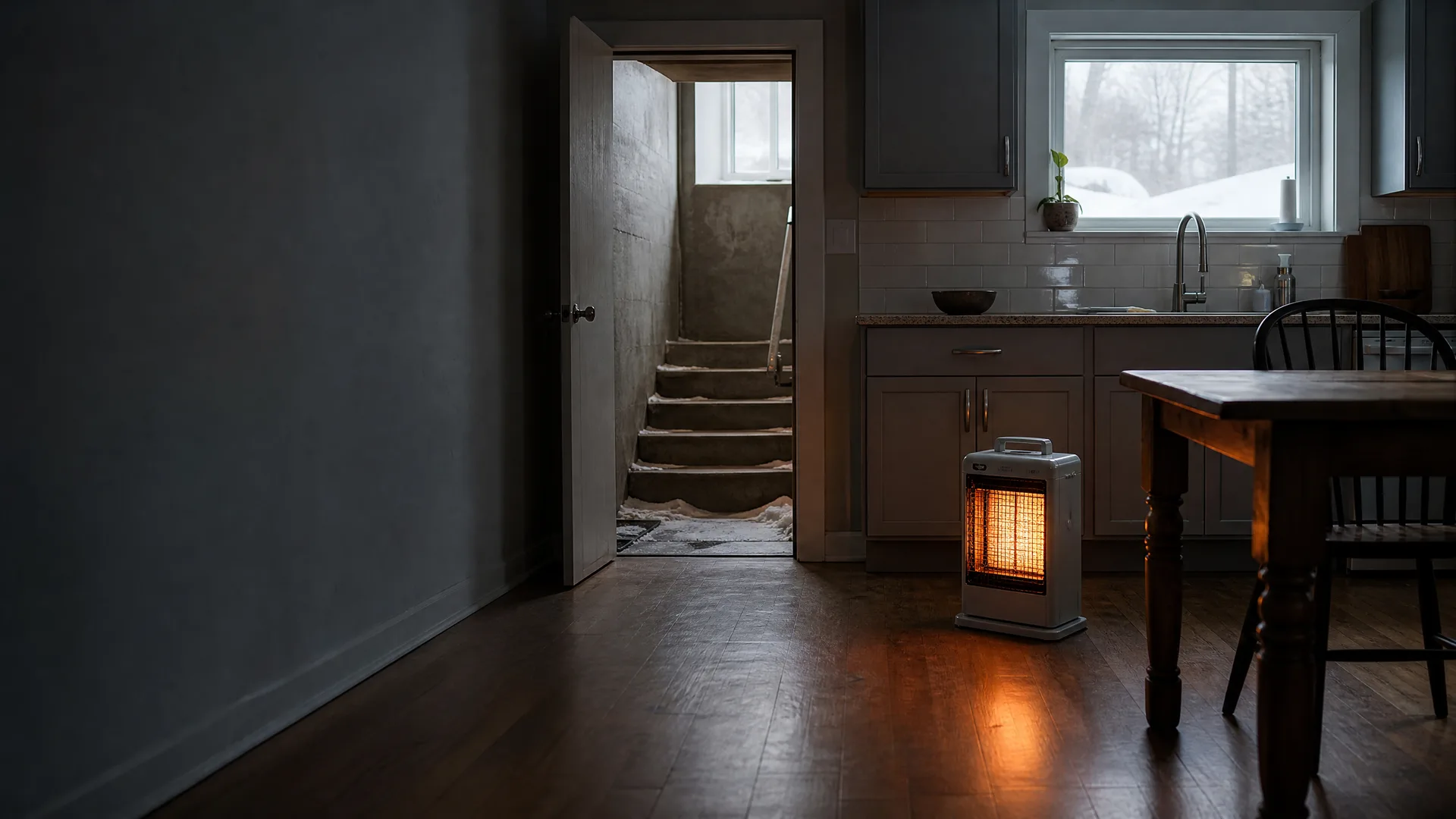
It's just past six, still dark outside, and the kitchen windows have frosted over on the inside. You've got the little space heater pulled up close to the table, its coil glowing orange, because the furnace register in here has been blowing lukewarm since Tuesday. The basement door stands open behind it, and every few minutes you catch yourself listening for the burner to kick on down there. It doesn't, not really, just a weak click and a long pause. Your coffee's gone cold faster than it should. Outside, the thermometer on the porch post reads nineteen. You already know who you're calling once the sun comes up, and you already know you don't want to be the one making four more calls after that.
Explain the job once and skip repeating it on every call.
You only hire the pro if you want to.
What a dual fuel setup gets you
A dual fuel system pairs a heat pump with your existing propane furnace instead of replacing it. The heat pump handles the mild stretches, roughly down into the 30s and 20s, and the furnace takes over once it gets colder than that. You get the lower running cost of the heat pump for most of the fall and spring, and you keep the furnace's full output for the worst weeks of January and February. The propane furnace stops being your only line of defense and becomes the backup for when you actually need it. For a lot of houses around Townsend, this ends up being the setup that makes the most sense, since it doesn't ask you to give up the one piece of equipment that's proven it can handle a hard winter here.
What it asks of your house
Switching to dual fuel means adding equipment, not swapping one unit for another, so it costs more upfront than either a heat pump or a furnace alone. It also means your propane furnace has to be in decent shape already, since it's staying in service as the cold weather backup. If your furnace is old enough that it's due for replacement anyway, pairing it with a new heat pump might mean paying to install one system now and another sooner than you'd like. A contractor who looks at your furnace, your ductwork, and how your house is laid out can tell you whether dual fuel is worth it here or whether you're better off sticking with propane alone or going a different direction entirely.
Staying with propane
A propane furnace already heats your house through a Broadwater County winter, and swapping it out doesn't change that it can. You keep one system to maintain instead of two, and you already know its habits, how fast it runs through a tank in January, what a repair costs. What you don't get is any relief on the propane bill itself, and you're still tied to deliveries. If the furnace is getting old, you're also betting it keeps working rather than fixing something that's already proven out.
Adding a heat pump instead
Installing a heat pump alongside or in place of your furnace cuts how much propane you burn, since it covers the milder months on electricity instead. Power in Broadwater County runs at a typical price, so those months cost less than running the furnace would. It's a second system to install and maintain, and on its own it can't carry a Townsend winter once temperatures drop hard. Paired with the furnace, you get a setup built for the swing between a mild fall day and a January cold snap.
Before you get your furnace installationAfter you get your furnace installation
A furnace running clean
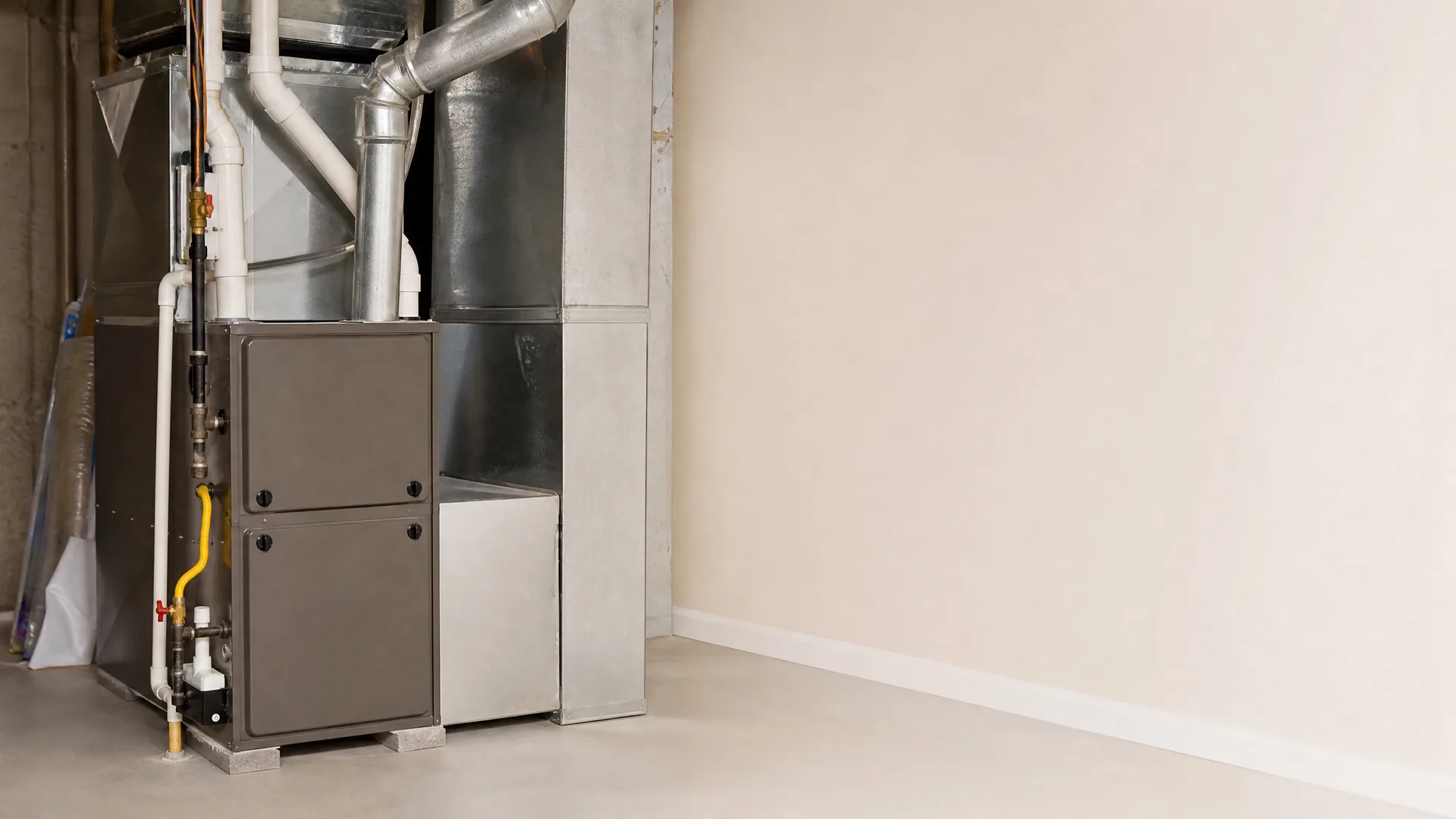
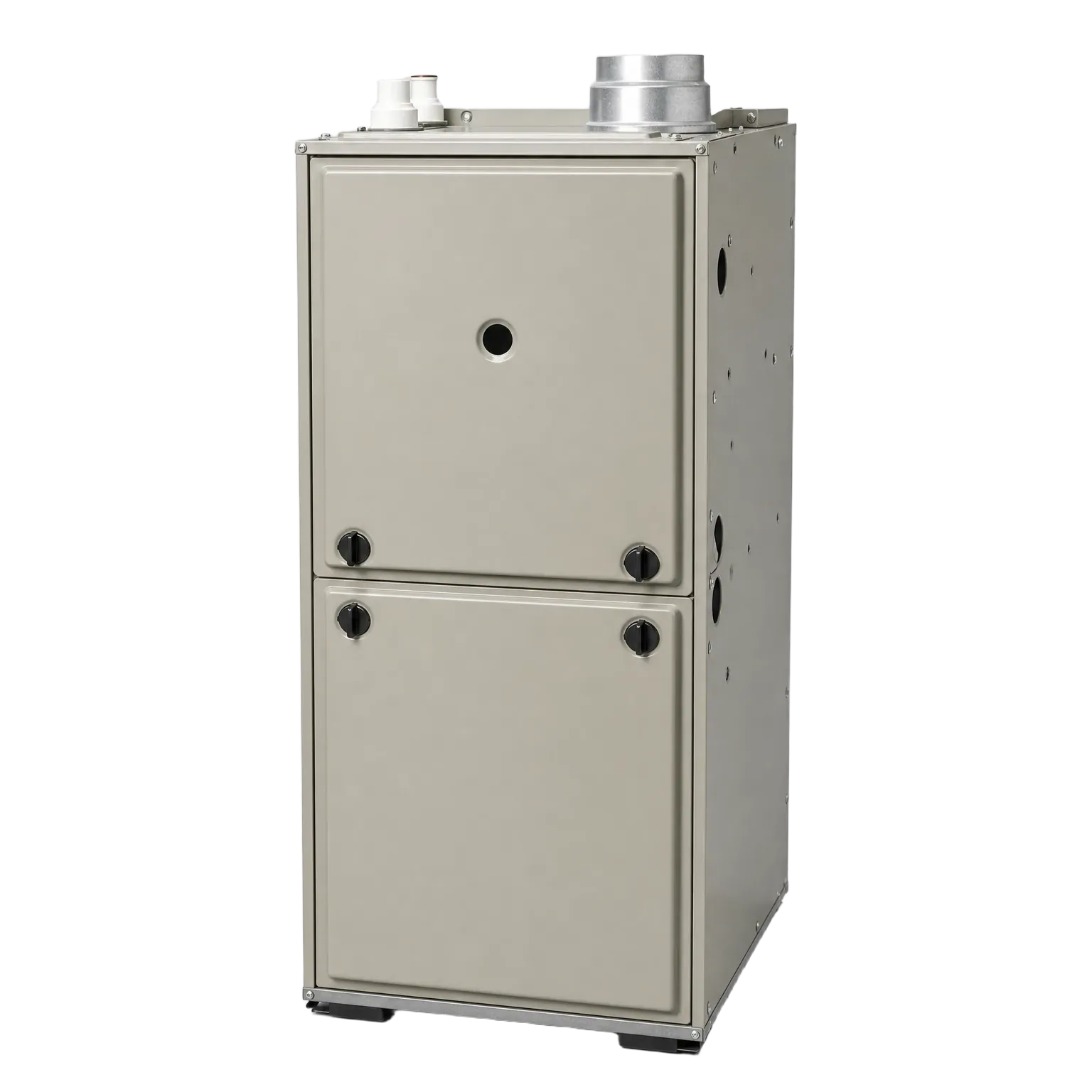
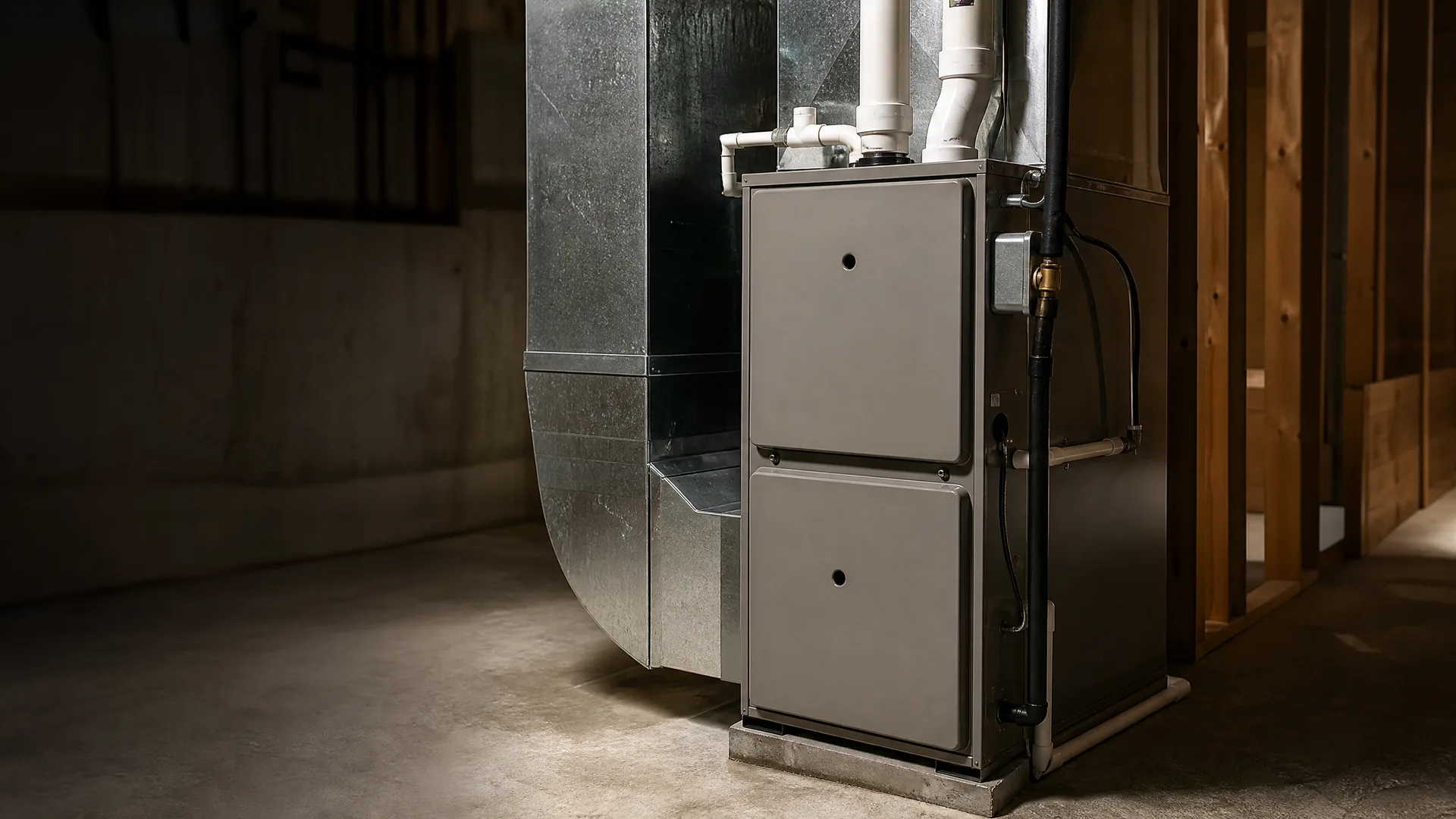
This is what a propane furnace looks like doing its job. The burner fires, the heat exchanger does its work, and the ductwork above carries warm air through the house. Flue and condensate lines run out clean, nothing scorched or leaking. A furnace in this shape will carry you through a Broadwater County winter without drama.
A furnace on borrowed time
Dust built up like this on the cabinet and the lines around it tells you nobody's serviced this unit in a while. An old furnace still running doesn't mean it's running well. It may be short-cycling, pulling more propane than it should, or close to a part failing outright. Once it quits, it tends to quit on the coldest night, not the mildest one.
Winter nights average 16°F
That 16°F average covers whole nights, not just the coldest snap. A heat pump alone spends a good part of the winter straining to keep up at that temperature, pulling on backup heat to make up the difference. A propane furnace holds its output the same at 16°F as it does at 30.
NOAA nClimDiv 1991-2020
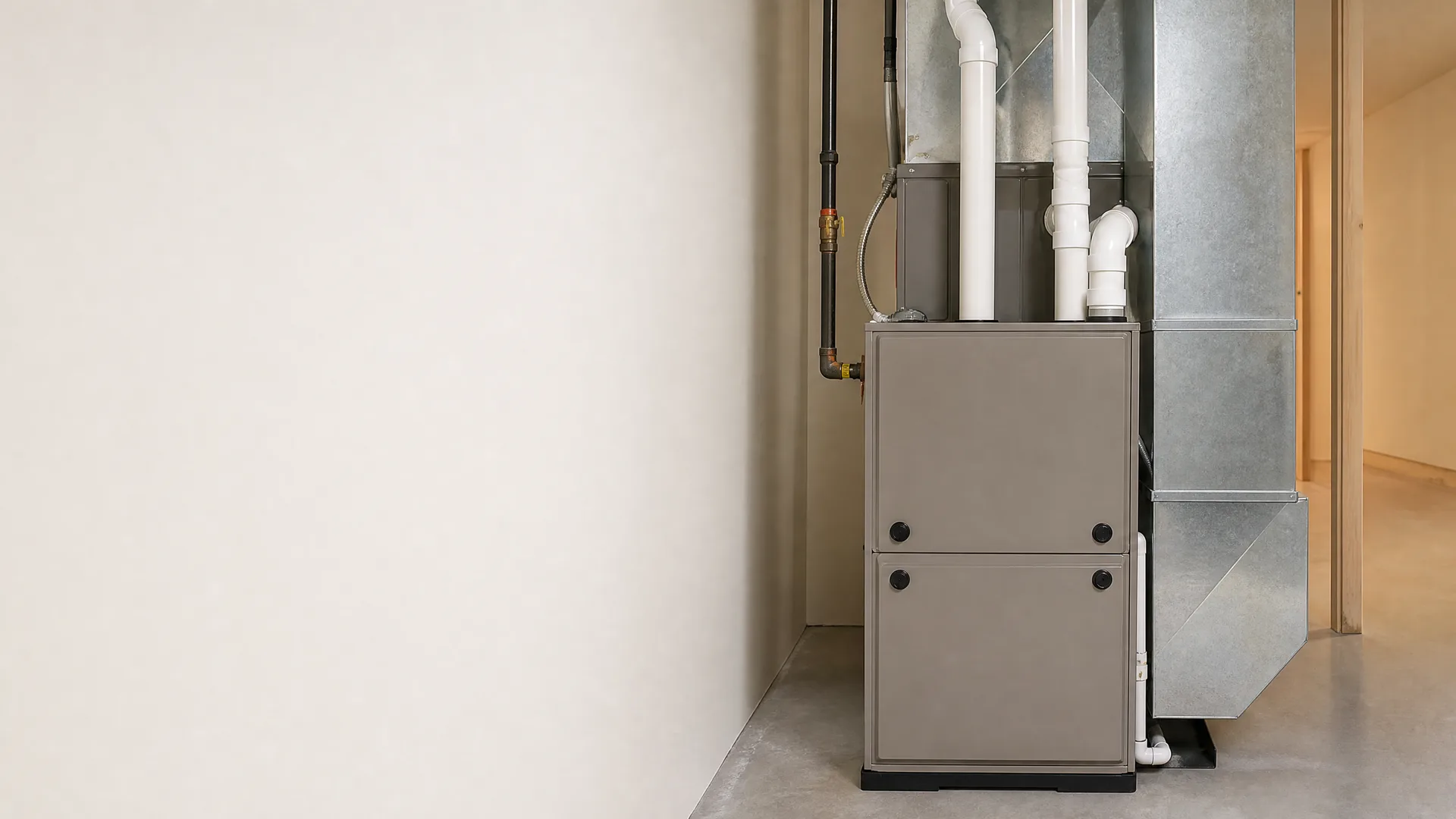
A furnace like this keeps its output flat whether it's 30 outside or well below zero, which is what a Townsend winter asks of it.
Rust on the cabinet doesn't mean it's failing, but a furnace running this hard for this many winters is closer to a decision than a plan.
How cold, how long, and how does the area around you heat?
Winter nights average 16°F
Winter nights here average 16°F, which is well into the range where a heat pump leans hard on backup heat to keep the house warm.
Heat runs September through June
Heat runs September through June in Broadwater County, so whatever system you choose is working most of the year, not just a few winter months.
43.3% of homes heat with propane
43.3% of homes in Broadwater County heat with propane, more than any other fuel, because it holds its output at any temperature this area sees.
NOAA nClimDiv 1991-2020 · ACS 2020-2024
A propane furnace matches what Broadwater County winters need, and a heat pump on its own doesn't, not at 16°F average. A dual fuel setup gets you both, the heat pump handling the mild stretches and the furnace taking over once it turns hard, but that's a bigger decision than swapping a thermostat. Whichever way you lean, the next step is the same: getting a furnace installed right for a house that heats nine months out of the year. You could spend the next few weeks calling around Townsend, asking who's licensed, waiting on callbacks, and explaining your setup over and over to people who may or may not show up. Or you could send one form and let that search land on someone else's desk instead of yours. You still have a decision to make about propane, dual fuel, or sticking with what you have. You don't have to make the finding-someone part of it.