An unfinished basement interior showing a gray furnace unit beneath a bare incandescent bulb, surrounded by exposed joists, concrete walls, cardboard boxes, and utility pipes.

Furnace Repair in Superior, MT

Tell us about the job

Takes about a minute. No obligation.

RepairFurnace or heatingMineral County, MT
Step 1 of 2

What ZIP code is the job in?

Ten months of run time

A furnace in Mineral County runs from September through June. That's most of the year asking the igniter, the blower motor and the heat exchanger to cycle on and off, day after day. Parts that might coast in a milder climate don't get that break here.


Why this matters for a repair

With this much runtime behind it, a furnace here often has more wear on it than its age alone suggests. A problem that looks small, a strange noise, a short cycle, a pilot that won't hold, usually traces back to a part that's simply done more work than most. Getting it looked at properly matters more than guessing.

10 months
September through June, your furnace is on duty
20°F
the average winter night it heats against
57 winter storms
in ten years, the nights a failure hurts most
Isometric line illustration of a cutaway single-story house with a shingled roof, showing an interior furnace connected to ductwork and a tall vertical flue pipe, plus simple furniture in the adjacent room.
Your furnace works hardest from October through April.

NOAA nClimDiv, 1991–2020 normals

Propane here runs $22.28 per million Btu.

A furnace that's cycling too much or heating poorly burns through that fuel for nothing until someone fixes it.

Ten months of heat means the first cold snap finds the weak part

Heat runs September through June
Winter nights average 20°F
57 winter storms from 2015 to 2024

A furnace that short cycles or runs long is burning propane it doesn't need to. At $22.28 per million Btu, that waste shows up fast in a Mineral County winter. Waiting through another cold snap on a furnace that's already struggling only adds to what it's costing you. Getting the problem diagnosed now, rather than nursing it along, is what stops the bleeding.

Get the real cause found, not just the symptom treated

A furnace with ten months of runtime behind it has earned its problems honestly. Whatever's causing the noise or the short cycle is worth finding, not guessing at. A proper diagnosis catches the part that's actually worn, so the fix holds through the next cold snap instead of just the next week.

Find a contractor
A man in a gray t-shirt, tan work pants and brown boots, seen from behind, climbs steps toward a dark front door while carrying a canvas tool bag holding a tape measure and screwdrivers, with a potted flowering shrub beside the entry.
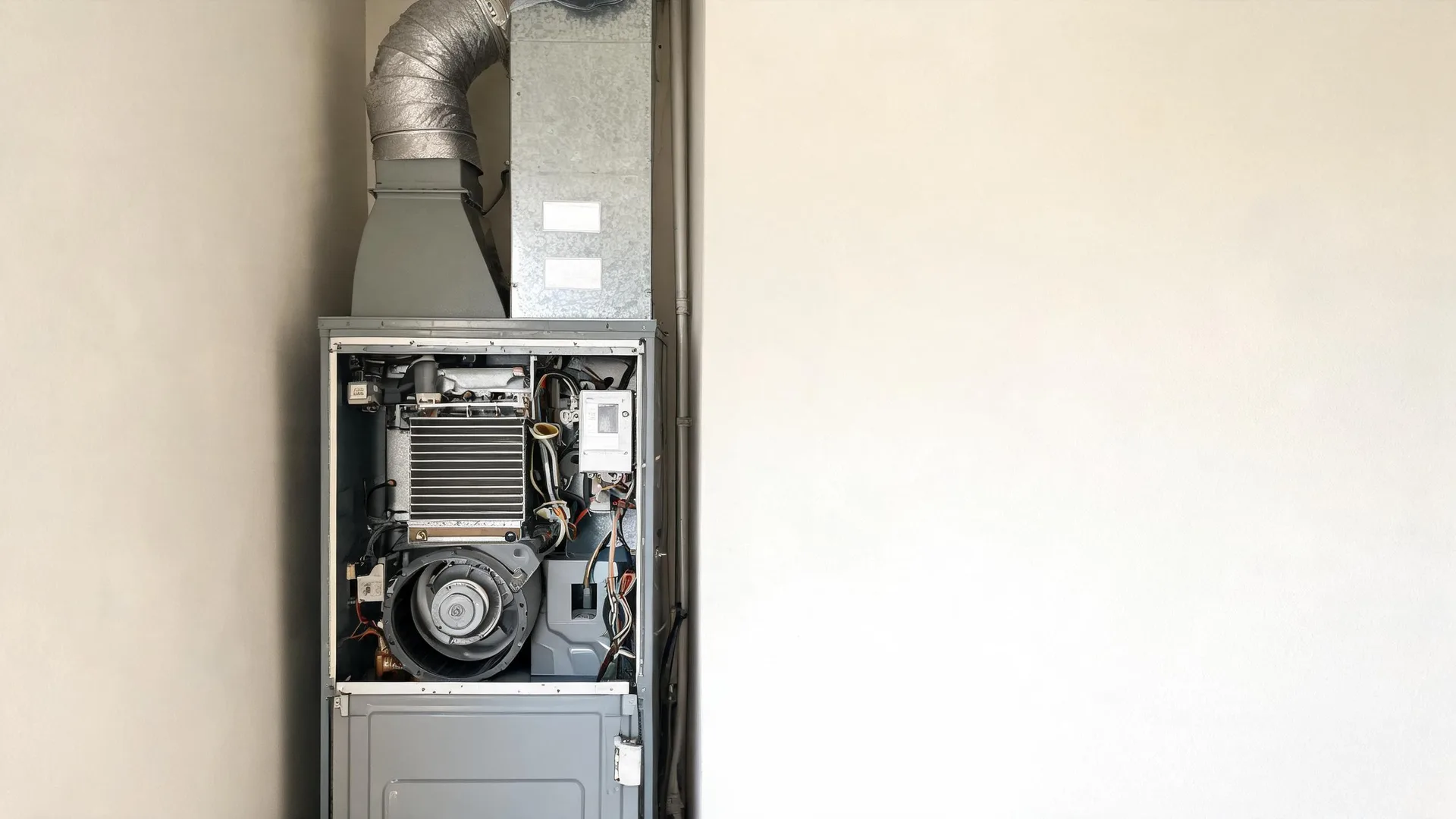
A gray residential gas furnace installed in an unfinished basement, connected to sheet-metal ductwork and PVC pipes.

What actually wears out, and why

Most furnace failures start small and get ignored. A flame sensor collects a film every time it fires, and once that film gets thick enough, it can't tell the burner the flame is lit, so the system shuts itself down for safety. An igniter is a thin strip that heats up and cools down every single cycle, and that constant stress is exactly what eventually cracks it. The blower motor runs the longest of any part, so its bearings wear and its capacitor weakens before anything else shows trouble. A cracked heat exchanger is the one that matters most, because it means combustion gases can get into the air the blower pushes through the house. None of these fail from one bad night. They fail from doing the same job over and over until something gives.

What you'll actually notice first

The furnace takes a few tries to light, or it lights and then shuts off before the room warms up. The air coming out feels cooler than it used to. You hear a rattle from the blower compartment, or a screech when it starts up, or a clicking that repeats instead of settling into normal operation. Some of these show up slow enough that you stop noticing them until someone points them out.

What those signs are telling you

A furnace doesn't jump from fine to broken. The symptoms you can hear or feel are the tail end of a part that's been wearing for a while, a sensor losing its coating, a motor bearing drying out, a sensor that's gone intermittent before it fails for good. Catching it at the rattle or the short cycle is what keeps it from turning into a furnace that won't start at all on the night you need it most.

A gray forced-air furnace with ductwork stands in an unfinished concrete basement surrounded by storage items and clutter.

A new furnace would cut about $180 a year off heating for a typical Mineral County home.

  • A new high-efficiency furnace$770 a year
  • An older furnace$950 a year

Estimates for a typical Mineral County home, compared with an older unit built to the previous federal minimum, from EIA household energy data, Montana fuel prices and NOAA climate normals. Your home will differ.

Repair makes sense when one part has failed and the heat exchanger is sound.

Replacement makes sense when the heat exchanger is cracked or the furnace keeps needing parts.

A diagnostic visit starts before any panel comes off. A tech asks what the furnace is doing, when it started, and whether it happens on startup, mid-cycle, or when it shuts down. That narrows things fast. Then the panels come off and the tech watches it run through a full cycle, checking the flame through the sight glass, listening to the inducer, and testing the components that don't show wear from the outside, like the flame sensor's signal or the capacitor's actual output against what it's rated for. Some parts get tested with a meter because a part can look fine and still be failing. The point of the visit is to find the one thing that's actually wrong, not to replace parts until something works.