Nine months of runtime
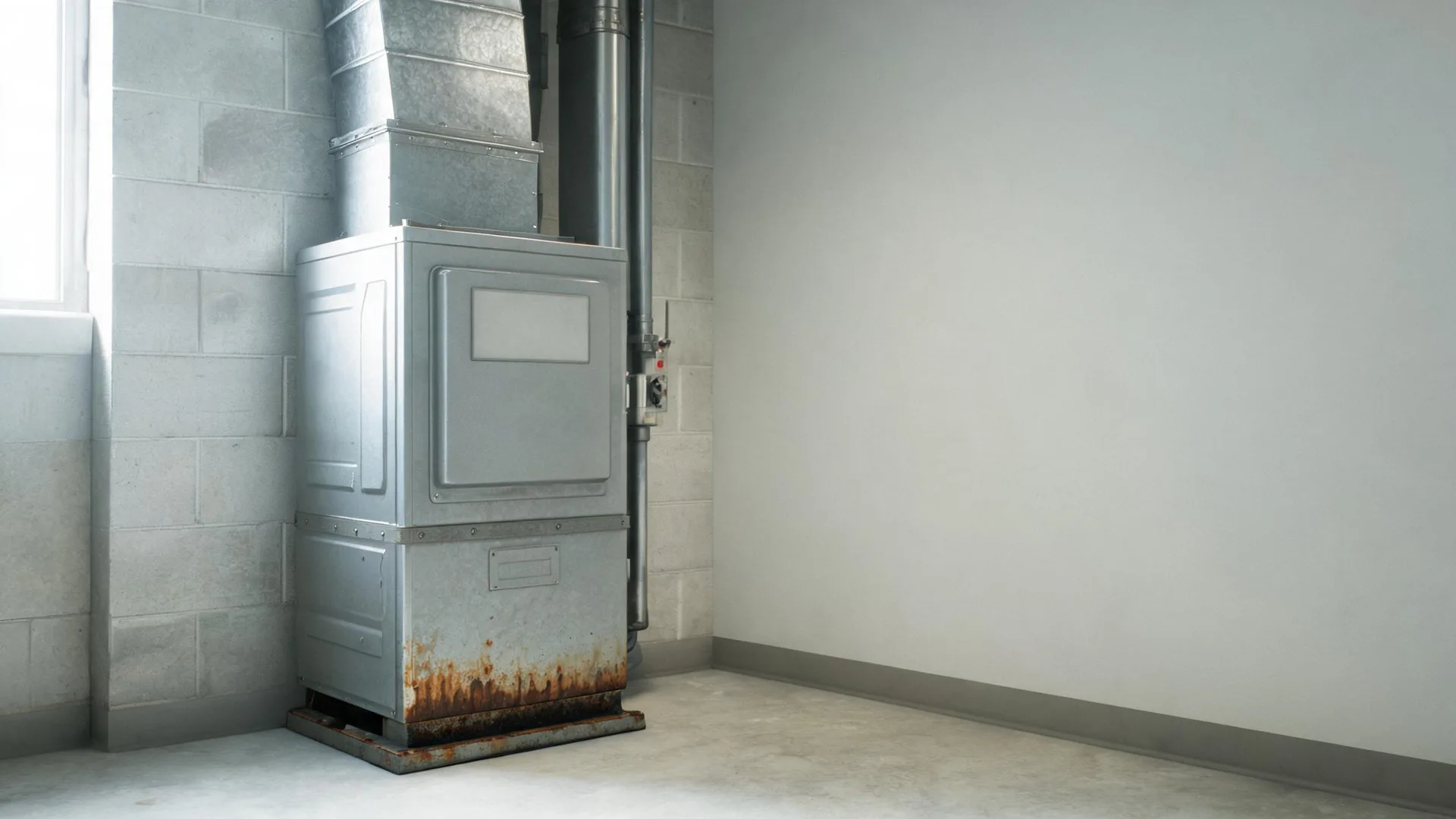
Furnaces around Baker run from September through May. That's most of the year asking the igniter, the blower motor and the heat exchanger to cycle on and off, day after day.
Takes about a minute. No obligation.
Furnaces around Baker run from September through May. That's most of the year asking the igniter, the blower motor and the heat exchanger to cycle on and off, day after day.
A furnace working that many months a year wears into trouble sooner than one that only runs part time. When something starts acting up here, it's worth having a contractor look at the actual cause instead of guessing.
NOAA nClimDiv, 1991–2020 normals
A furnace that won't start can mean a tripped switch, not a dead unit.
Check the thermostat, the power switch and the filter before assuming the worst.



Natural gas ran Montana homes $7.77 per million Btu last year. That's the rate whether the furnace is running clean or struggling to light. A delayed ignition, a dirty burner, a cracked heat exchanger, any of these make the unit work longer to push out the same heat. Across a Baker winter that adds up fast. Get a furnace that's acting up checked before it settles into a habit of running rough for the next several months.
A furnace running nine months a year doesn't get much time to idle. Whatever's causing the trouble now has months of hard running ahead of it. Get it looked at and fixed properly, so it's not the thing you're dealing with all winter.
Find a contractor
A small problem in a furnace rarely stays small once the burners keep firing on it. Take a cracked heat exchanger. Left alone, that crack opens wider with every heat cycle, as the metal expands hot and contracts cold. A failing igniter is the same story. It might light on the fourth try instead of the first for a while, then stop lighting at all. A blower motor with worn bearings will keep pushing air, loud and strained, until it seizes. None of these fix themselves by running more. Heat and cold cycling is exactly what tired parts can't take, so the longer a furnace keeps working with something wrong, the more that part degrades, and the more likely it drags another part down with it.
A furnace in trouble usually says so before it quits outright. Short cycling, where it fires up and shuts off again before the house warms, points to a clogged filter, a cracked heat exchanger or a sensor telling it to stop early. A burner flame that's yellow or flickering instead of steady blue means it isn't burning clean. Cold air out of the vents, a burning smell that doesn't fade after the first few minutes, or the furnace running long stretches without the house catching up all mean something inside isn't doing its job.
A bang when the burners light usually means gas is pooling before it catches, often from a dirty burner or a weak igniter, and that delay stresses the heat exchanger. A rattle that comes and goes with the blower points to a loose part or a motor with worn bearings. Clicking that doesn't end in ignition is the igniter or control board failing to do its job. None of these sounds are normal background noise. A furnace that used to run quiet and now doesn't is telling you a part is wearing out, not settling in.
Estimates for a typical Fallon County home, compared with an older unit built to the previous federal minimum, from EIA household energy data, Montana fuel prices and NOAA climate normals. Your home will differ.
Repair makes sense when one part has failed and the heat exchanger is sound.
Replacement makes sense when the heat exchanger is cracked or the furnace keeps needing parts.
A diagnostic visit starts before the panel comes off. A tech will ask what the furnace is doing, when it started, and whether it happens on every cycle or just sometimes, because that narrows down a lot before any tool comes out. Next comes a look at the thermostat call, the power to the unit, and the gas supply, ruling out the simple stuff first. Then the panel comes off and the tech watches a full cycle start to finish: ignition, flame, blower, shutoff. A meter checks the igniter's resistance or the flame sensor's microamp signal, since both can look fine and still be failing. If the heat exchanger is in question, that gets inspected directly, because that's not something to guess about. By the end, the tech should be able to point to the actual part causing the trouble, not just the symptom it's producing.