Propane runs $22.28 per million Btu
Montana homes paid that much for propane in 2024. A furnace that has to work harder to put out the same heat burns through more of it, and that shows up fast when the fuel itself costs this much.
Takes about a minute. No obligation.
Montana homes paid that much for propane in 2024. A furnace that has to work harder to put out the same heat burns through more of it, and that shows up fast when the fuel itself costs this much.
A clogged filter or a dirty burner makes the furnace run longer to heat the house. In a place where propane costs this much, that extra runtime is the difference a tune-up is meant to catch.
Propane heats 44 percent of the homes in Mineral County, more than any other fuel.
A propane furnace depends on its burner, venting and safety controls working right, not just a clean filter.


A furnace that runs September through June doesn't get much of a break before the next season starts. That long a run means a worn igniter or a burner that's not firing clean has ten months to make itself known, usually on a cold morning when the house needs heat most. A tune-up before September catches that kind of wear while it's still a simple fix. Mineral County has seen 57 winter storms between 2015 and 2024, and a furnace that's already struggling is the wrong one to find out about during a blizzard. Have it checked before the season starts, not after it does.
A tune-up gets the burner and filter clean before the furnace settles in for the season. At $22.28 per million Btu, the fuel it saves by running clean is worth catching now.
Find a contractor
A furnace gives warning before it quits. The burner flame should burn steady and blue. If it starts flickering yellow or orange, the burner isn't getting clean air and is putting soot into the heat exchanger instead of heat into the house. A furnace that used to kick on and reach temperature quick but now runs long stretches is losing efficiency somewhere, often a clogged filter choking airflow or a blower wheel caked with dust. Listen for the start too. A hum before ignition, a delayed boom, or repeated clicking from the igniter trying and failing all point to a part wearing out. Short cycling, where the furnace fires up and shuts off again within a few minutes, usually means a flame sensor that's coated over and can't tell the burner it's still lit. None of these mean the furnace is done. They mean it's due for someone to open the cabinet, clean what's dirty, and test what's wearing out before it fails outright.
A cracked heat exchanger doesn't show on the outside of the cabinet. It happens from repeated heating and cooling cycles over years, and the first sign is usually a flame that moves or flickers when the blower kicks on, not visible damage. A tune-up includes checking the exchanger for cracks and corrosion, because a cracked one can let exhaust mix into the air the blower pushes through the house.
A flame sensor coated with a thin layer of oxidation still looks fine, but it stops telling the control board the burner is lit, and the furnace shuts itself off as a safety measure. An igniter develops hairline cracks from heating and cooling every cycle, and keeps working right up until the moment it doesn't. Cleaning the sensor and testing the igniter's resistance during a tune-up catches both before they leave the house without heat.
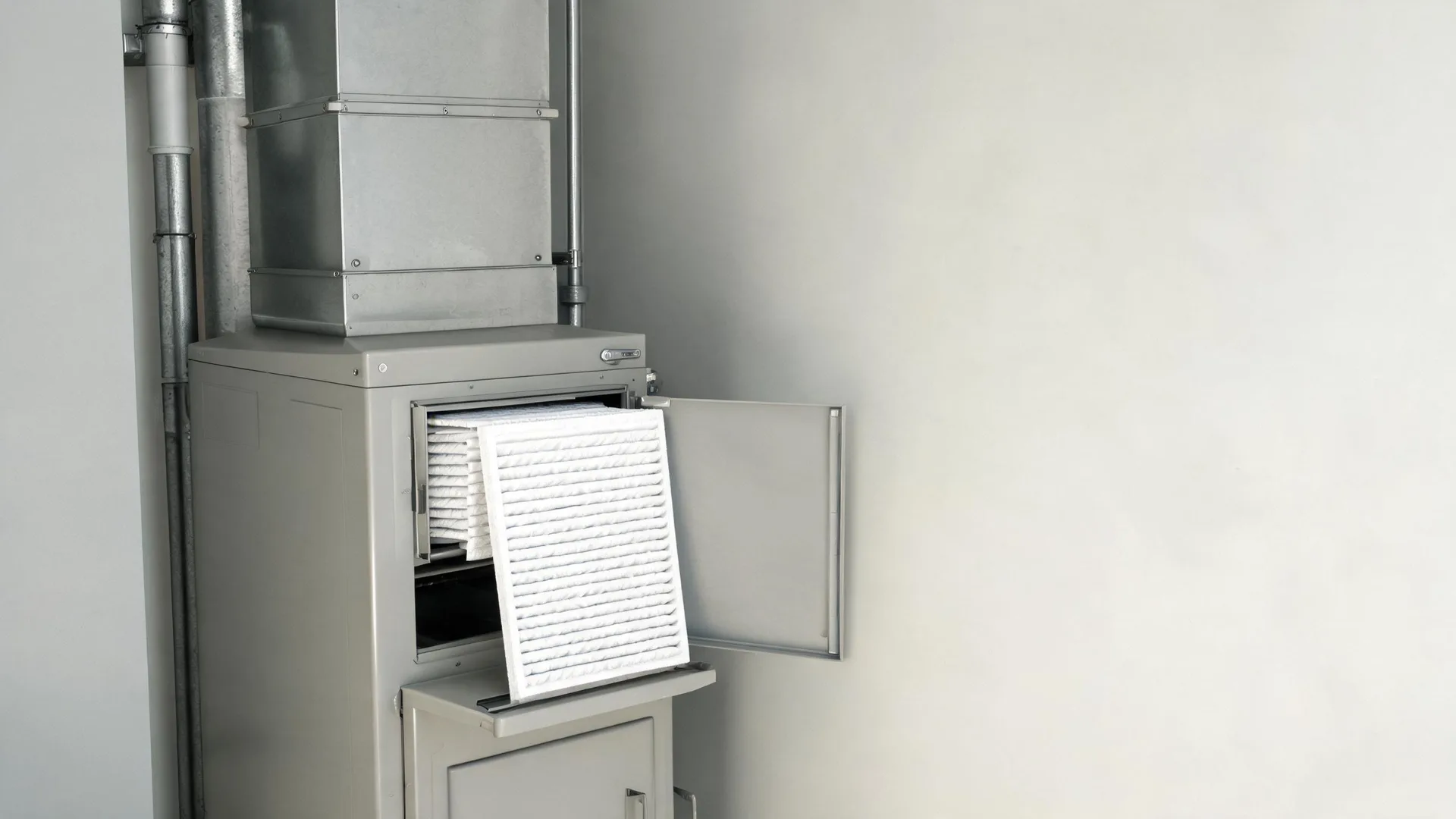
A furnace is a heating machine, but it still depends on airflow to protect itself. The filter sits in that airflow for one reason: keep dust out of the blower wheel and off the coil if the system has one for cooling. When the filter loads up, the blower has to pull harder to move the same air, and some furnaces will overheat and shut down on a limit switch when that happens. A coil caked with dust loses its ability to transfer heat properly, which makes the whole system work longer to do the same job. The drain matters more on the cooling side, but on furnaces with a condensing design, a clogged condensate line backs up and trips a safety switch that won't let the burner fire at all. None of these parts are complicated, but neglect one and it will eventually stop the other two from working right.
A tune-up starts with the burner. A tech pulls it to clean off scale and check that the flame pattern is even across every port, because a burner firing unevenly puts more wear on the heat exchanger above it. The gas valve gets tested too, checking that it opens to the right pressure, since too much pressure cracks a heat exchanger early and too little leaves the furnace struggling to reach temperature. Electrical connections get checked for looseness, since a connection that's barely hanging on will arc and fail at the worst time. The blower motor gets inspected and oiled if it takes oil, and the wheel itself gets cleaned if dust has built up on the blades. Last comes a check of the vent pipe and flue, making sure exhaust has a clear path out of the house instead of finding its way back in.